

Reports
Reports
Value of Pet Care Diabetes Drugs Market in 2025 was USD 2.1 Billion and is forecasted to witness growth in future reaching USD 4.7 Billion by 2036 with a Compound Annual Growth Rate (CAGR) of 8.4% from 2026 to 2036. The factors driving the growth of the market include increasing incidences of diabetes in dogs and cats, rise in expenditure towards health care of pets and increase in preference for easy-to-treat therapies for chronic disorders. The market growth is further propelled by approval of oral diabetic therapy for felines.
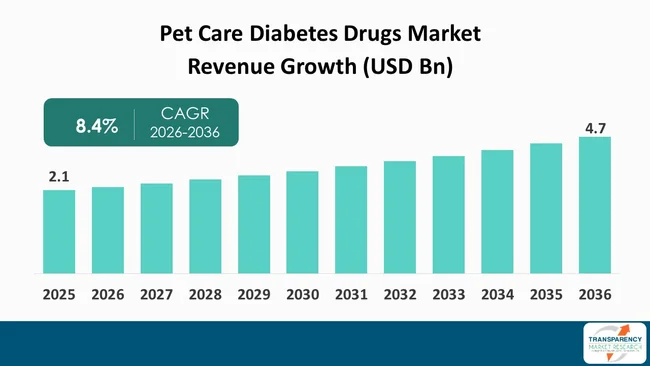
The Pet Care Diabetes Drugs Market is projected to grow significantly owing to increasing cases of diabetes in companion animals, particularly in dogs and cats. The prevalence of diabetes as a disease in veterinary practice has become very significant due to the fact that the disease requires lifelong drug treatments, monitoring of glucose levels and consultations from veterinary experts. Thus, there is a constant need for insulin products, oral antidiabetic drugs and other supporting products associated with diabetes care.
Insulin-based therapies will continue dominating the market because insulin is currently the preferred therapy for treating diabetes in dogs and is also popular for treating diabetes in cats. Vetsulin and ProZinc products have become very acceptable by veterinarians for the use in managing diabetes. The pet care diabetes drugs market is changing due to the availability of approved oral diabetic drugs for cats. Bexacat and Senvelgo are innovative products that have brought about a new class of products that can be used to treat cats with diabetes who have never been administered insulin before.
North America is projected to continue in its leadership role because of the high pet ownership rate, high expenditure on veterinary care, developed infrastructure of veterinary hospitals, and quick adoption of animal medicines after receiving approval. The United States is the main country in the North American region as there are some FDA approved drugs in the market, namely, Bexacat, Senvelgo, Vetsulin, and ProZinc.
The key areas of competition will include oral cat diabetes drugs, long acting insulin, convenient dosing, glucose monitoring and veterinary hospital pharmacies distribution. Companies having good veterinary educational experience, prescriptions products portfolio, and chronic diseases treatment will have better positioning in the market.
Pet Care Diabetes Drugs Market includes various prescription drugs and antidiabetic agents used to treat pet diabetes, which is characterized by either lack of production or insufficient utilization of insulin by the body. Diabetes in pets is caused by the body’s inability to make sufficient insulin and utilize it effectively, leading to high blood sugar. The common symptoms of diabetes include frequent thirst, frequent urination, loss of weight, fatigue, and hunger.
The pet care diabetes drugs market comprises of insulin therapy, SGLT2 inhibitors, and other antidiabetic therapies. Insulin therapy is used extensively in dogs and cats, whereas SGLT2 inhibitors are generally used in diabetic cats only. The drugs are primarily sold via veterinarians' pharmacies, retail pharmacies of veterinarians, and online pharmacies. The rise in humanizing pets, increased awareness regarding chronic pet diseases, and better availability of diagnostic tests at veterinary clinics are fueling the market growth.
| Attribute | Detail |
|---|---|
| Pet Care Diabetes Drugs Market Drivers |
|
Increased incidences of diabetes in companion animals have been one of the major drivers of growth in the Pet Care Diabetes Drugs Market. Diabetes in dogs and cats demands consistent treatment, which will result in consistent demand for drugs. According to the American Animal Hospital Association, diabetes mellitus is one of the most frequently seen diseases in both canine and feline medicine and includes treatments like insulin therapy, diet, and monitoring of blood glucose levels. Therefore, diabetes is one of the important areas in veterinary hospitals and companion animal pharma companies.
Large numbers of pets are another factor driving the market. According to the American Pet Products Association, the expenditure by the U.S. pet industry was estimated at USD 152 Billion in 2024 and expected to reach USD 157 Billion in 2025. The same organization also estimates the number of pet owners in 2024 to be 94 million U.S. households. Large numbers of pet-owners create more dogs and cats for the diagnoses and treatments of various diseases including diabetes.
The need for continuous therapy will also fuel drug demand. Most dogs with diabetes are treated using insulin, while cats can either be given insulin or oral treatment depending on their medical conditions. Drugs like Vetsulin, ProZinc, Bexacat, and Senvelgo are some of the common drugs that are used in this sector. Veterinary hospital pharmacies have a very strong position in the market since diagnosis, prescription, dose administration, and management of the therapy process are done by veterinarians.
The approval of oral cat diabetes medicines is another major trend influencing the Pet Care Diabetes Drugs market. Until now, pet diabetes treatment has largely been conducted using the injectable form of insulin, which poses challenges for pet owners in its frequent administration. In particular, cats have proven especially challenging in this regard due to handling challenges, owner reluctance, and treatment compliance. Orally-administrated medicine addresses these challenges to some extent and helps facilitate diabetes treatment in suitable cats.
As per the FDA, Bexacat became the first oral new animal drug approved for improving glycemic control in cats without underlying health problems who have diabetes mellitus and have not received any previous treatment with insulin. FDA also highlighted that Bexacat is the first SGLT2 inhibitor new animal drug approved for a non-human animal species. As mentioned by Elanco Animal Health, approximately 600,000 cats are diagnosed with diabetes in their lifetime in the United States. It represents a significant addressable patient pool for feline diabetes medicines.
Further market development has been made possible by the FDA approval of Senvelgo, which is a once daily oral liquid medicine for diabetic cats by Boehringer Ingelheim. As per Boehringer Ingelheim, Senvelgo is the first once daily oral liquid prescription medication to improve glycemic control in cats suffering from diabetes mellitus. Oral liquids make it easy to administer medications to patients and are therefore convenient. These approvals have helped diversify the market from being an insulin-based market to one that treats diabetes in general. Oral SGLT2 inhibitors are forecasted to gain popularity at a fast pace due to their convenience in treating eligible cats, whereas insulin will continue to dominate canine therapy.
| Attribute | Detail |
|---|---|
| Pet Care Diabetes Drugs Market Opportunities |
|
The development of convenient oral and long-acting diabetes medicines offers good growth prospects in the Pet Care Diabetes Drugs Market. The treatment of pets with diabetes is typically a long-term process, and most of the pet owners experience challenges in the process of administration of daily injections, checking the blood sugar level, controlling diet, and regular visits to the veterinarian. Treatment products that help to simplify the treatment will ensure better treatment compliance and a greater number of pets getting proper treatment.
Oral diabetic drugs for cats provide a good example of such an opportunity. The cases of Bexacat and Senvelgo demonstrate that the diabetic cats that are eligible for treatment can use oral SGLT2 inhibitors in their treatment, rather than traditional insulin injections. This provides a new product line in the treatment of feline diabetes. Such an opportunity is especially relevant since cat owners may not start treatment when there is a problem with insulin injections.
Long-acting insulin represents another area of market opportunity. As reported in July 2024, Dechra Limited acquired the dog and cat long-acting insulin programs of Akston Biosciences Corporation. According to Akston Biosciences, the acquisition meant the transfer of development, manufacturing, and global marketing rights to both programs. The significance of the news lies in the potential reduction of dosing and increase of convenience for pets' owners if the drug passes approval.
The market opportunity extends to connected diabetes care. The technologies like glucose monitoring devices, veterinary hospitals’ pharmacy assistance, online refills, and remote data exchange between pet owners and veterinarians could help to enhance the treatment process. Pharmaceutical companies who combine the drug with monitoring, educating, and refilling services should be ready to receive profits from the chronic care model.
| Attribute | Detail |
|---|---|
| Leading Product Type |
|
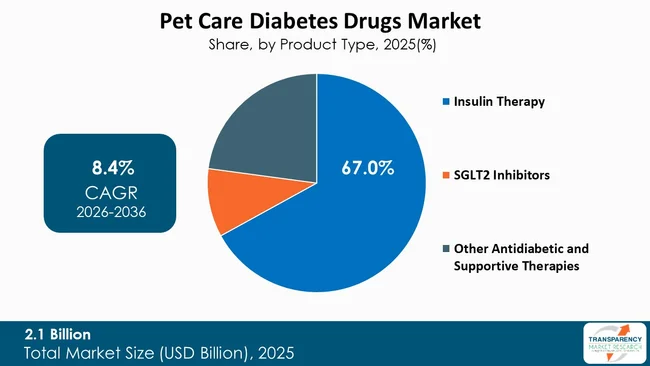
Insulin Therapy is the dominating part of the Pet Care Diabetes Drugs Market and constitutes 67.0% of the market share. The dominance of insulin therapy can be attributed to the fact that it still continues to remain the most effective treatment of diabetic dogs and is used extensively for cats. Generally, dogs suffering from diabetes need insulin therapy as there is an association between insulin deficiency and diabetes in dogs. On the other hand, cats can either be provided with insulin or newer oral drugs depending on their condition.
This market segment benefits from well-known veterinary products. Vetsulin is used for reducing hyperglycemia and associated clinical signs in diabetic dogs and cats. Similarly, ProZinc is also considered as one of the veterinary insulin alternatives for diabetes in dogs and cats. As per the American Animal Hospital Association, Vetsulin has been approved by FDA to be used in dogs and cats while PZI insulin, like ProZinc, is considered as one of the acceptable veterinary insulins for both cats and dogs.
Repetition in prescribing will be advantageous to the use of insulin treatment. The diabetic animals will require constant medication and therefore repeated visits to the veterinary clinic for testing and re-prescription. These will translate into continued sales of products for the pharmacies. The rise in the use of SGLT2 inhibitors in the case of diabetic cats notwithstanding, insulin treatments will dominate in the segment due to the fact that some diabetic cats cannot take oral medication.
| Attribute | Detail |
|---|---|
| Leading Region |
|
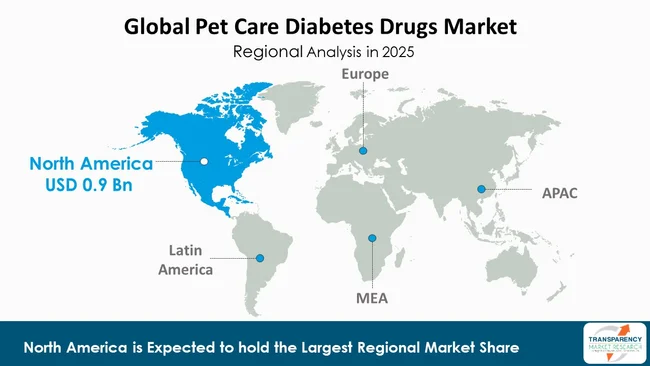
North America commands the Pet Care Diabetes Drugs Market share of around 43.0%. This leadership of North America can be attributed to high levels of pet ownership, developed veterinary system, good availability of approved companion animal drugs, and increased expenditure on chronic illness management of pets. United States is the leading country market of the region due to its large dog and cat population and good availability of veterinary hospitals, retail veterinary pharmacies, and online pet pharmacies.
According to estimates by the American Pet Products Association, in 2024, pet industry expenditures in the U.S. reached USD 152 Billion and were estimated to rise to USD 157 Billion in 2025. As per the same source, the number of households owning pets in the U.S. in 2024 was 94 million. Such a large base of pets helps in generating constant demand for the diagnosis and treatment of chronic ailments in pets including diabetes.
The North American market also enjoys the availability of FDA approved drugs. Bexacat, Senvelgo, Vetsulin and ProZinc are some of the major drugs that have been mentioned within the treatment market. The veterinary hospitals play a significant role in the region since the diagnosis of the disease involves blood glucose measurement, urinalysis, dosage information, follow-up and patient education. Retail and online pharmacies are also becoming significant since diabetes treatment becomes recurrent. Due to the increasing humanization of pets and veterinary reach, it is likely for North America to retain its dominance.
Pet Care Diabetes Drugs Market competition is relatively concentrated among firms that are mainly involved in manufacturing of approved drugs for insulin, oral feline diabetes, veterinary pharmaceuticals, glucose testing, and chronic diseases in companion animals. The most important players in terms of producing pharmaceuticals for diabetes in the pet care sector include Boehringer Ingelheim International GmbH, MSD Animal Health, Elanco Animal Health Incorporated, Dechra Pharmaceuticals Limited, and Akston Biosciences Corporation. Boehringer Ingelheim is leading in ProZinc and Senvelgo, whereas Merck Animal Health participates through Vetsulin, which is used for treating diabetic dogs and cats. Elanco Animal Health has increased importance in oral feline diabetes with Bexacat.
Other firms that operate in the same industry include Zoetis Inc., Virbac S.A., Ceva Santé Animale, Vetoquinol S.A., Bimeda Holdings PLC, Norbrook Laboratories Limited, Covetrus, Inc., IDEXX Laboratories, Inc., Heska Corporation, Antech Diagnostics, Inc., Henry Schein, Inc., PetMed Express, Inc., Chewy, Inc., Trividia Health, Inc., and Neogen Corporation. The potential for growth within the industry will be through oral SGLT2 inhibitors for cats, development of long acting insulin, provision of pharmaceutical services within the veterinarian clinics, glucose monitoring services, and e-prescriptions.
| Attribute | Detail |
|---|---|
| Market Size Value in 2025 (Base Year) | USD 2.1 Billion |
| Market Forecast Value in 2036 | USD 4.7 Billion |
| Growth Rate (CAGR 2026-2036) | 8.4% |
| Forecast Period | 2026-2036 |
| Historical Data Available for | 2021-2025 |
| Quantitative Units | USD Billion for Value |
| Pet Care Diabetes Drugs Market Analysis | It includes segment analysis as well as regional-level analysis. Moreover, qualitative analysis includes drivers, restraints, opportunities, key trends, value chain analysis, and key trend analysis. |
| Competition Landscape |
|
| Format | Electronic (PDF) + Excel |
| Segmentation | By Product Type
|
| Regions Covered |
|
| Countries Covered |
|
| Companies Profiled |
|
| Customization Scope | Available upon request |
| Pricing | Available upon request |
The global Pet Care Diabetes Drugs Industry was valued at USD 2.1 Billion in 2025.
The global Pet Care Diabetes Drugs Industry is projected to reach USD 4.7 Billion by 2036, driven by the increasing prevalence of diabetes in companion animals, rising veterinary healthcare expenditure, and growing adoption of advanced diabetes therapies.
The Pet Care Diabetes Drugs Market is expected to expand at a CAGR of 8.4% from 2026 to 2036. Growth is supported by increasing diagnosis of diabetes in dogs and cats, growing adoption of oral antidiabetic therapies, and advancements in veterinary diabetes management.
Insulin Therapy is the leading product segment, accounting for 67.0% of the industry in 2025. The segment dominates due to its widespread use as the standard treatment for diabetic dogs and its continued clinical adoption for feline diabetes management.
North America dominates the Pet Care Diabetes Drugs Market with a 43.0% revenue share, supported by high pet ownership, advanced veterinary healthcare infrastructure, strong adoption of FDA-approved diabetes therapies, and increasing spending on companion animal health.
Major companies operating in the Pet Care Diabetes Drugs Market include Boehringer Ingelheim International GmbH, Merck & Co., Inc., MSD Animal Health, Elanco Animal Health Incorporated, Dechra Pharmaceuticals Limited, Akston Biosciences Corporation, Zoetis Inc., Virbac S.A., Ceva Santé Animale, Vetoquinol S.A., Bimeda Holdings PLC, Norbrook Laboratories Limited, Covetrus, Inc., IDEXX Laboratories, Inc., Heska Corporation, Antech Diagnostics, Inc., Henry Schein, Inc., PetMed Express, Inc., Chewy,
Copyright © Transparency Market Research, Inc. All Rights reserved
Trust Online


Pet Care Diabetes Drugs Market
