

Reports
Reports
The U.S. nasal irrigation market size was valued at USD 186.9 Million in 2025 and is projected to reach USD 457.5 Million by 2036, expanding at a CAGR of 9.4% from 2026 to 2036. The U.S. nasal irrigation industry is driven by the high prevalence of respiratory conditions such as Allergic Rhinitis and Sinusitis, which increase demand for drug-free symptom relief solutions. Growing consumer preference for non-pharmacological therapies, along with rising awareness of hygiene and preventive healthcare practices, is further supporting market growth.
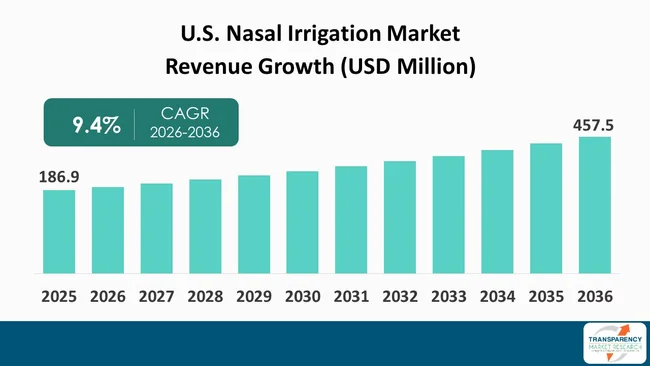
The U.S. nasal irrigation market driven by growing demand for drug-free treatments to relieve symptoms of their respiratory diseases which include Allergic Rhinitis and Sinusitis. The market experiences expansion as consumers choose non-drug treatments while people become more aware of hygienic practices and preventive health methods.
The U.S. nasal irrigation market is expanding due to rising prevalence of respiratory disorders which include Allergic Rhinitis and Chronic Sinusitis. The market for nasal irrigation products grows as consumers increasingly prefer drug-free non-invasive treatments which these products deliver by providing effective symptom relief without any medication side effects. The post-pandemic period has increased public knowledge about personal hygiene together with preventive healthcare, which has resulted in more households using these products.
The market encounters multiple restrictive elements which limit its operations. Improper usage and lack of standardized clinical guidelines lead to side effects such as infections and discomfort, which reduce consumer confidence and usage consistency. The existence of alternative treatments which include antihistamines and decongestants creates competition for nasal irrigation products.
The market presents significant opportunities as product design innovations which include electrically powered irrigation devices and pre-mixed sterile saline solutions are improving user experiences. The market benefits from two factors which include expanding e-commerce and rising healthcare professional recommendations.
The nasal irrigation market refers to the industry focused on products and solutions designed to cleanse the nasal cavity using saline or medicated fluids to remove mucus, allergens, and irritants. These products are widely used for managing conditions such as Allergic Rhinitis, Sinusitis, and common colds, offering a non-pharmacological approach to respiratory care.
| Attribute | Detail |
|---|---|
| Market Drivers |
|
The U.S. nasal irrigation market is expanding as increasing prevalence of respiratory disorders which include Allergic Rhinitis and Sinusitis. Allergic rhinitis affects a large portion of the population, including both adults and children, while sinusitis impacts millions annually, creating a substantial patient pool requiring effective symptom management solutions.
The conditions create symptoms which include nasal congestion and mucus accumulation together with irritation and breathing difficulties that interfere with daily life activities and reduce overall quality of life. The demand for non-invasive procedure, cost effective and drug-free methods has increased. Nasal irrigation devices, including neti pots and squeeze bottles, help cleanse nasal passages by flushing out allergens, pollutants, and excess mucus, thereby providing immediate symptom relief.
The incidence of respiratory disorders has increased as increasing exposure to environmental pollutants and seasonal allergies have become more common and their daily routines have changed. This led to Consumers show increased understanding about nasal hygiene together with preventive healthcare methods which they need to practice.
Market expansion receives additional support from the rising demand for self-care products together with home treatment solutions which offer users easy-to-use and nearby treatment options. The U.S. nasal irrigation market will experience substantial growth during the upcoming years as the rising prevalence of allergic rhinitis and sinusitis together with the increasing demand for preventive methods and non-drug treatments.
The U.S. nasal irrigation market will expand due to increasing awareness of personal hygiene and preventive healthcare practices. Consumers are demonstrating a stronger commitment to health management by adopting preventive measures rather than relying on post-symptom treatment. Health education programs together with digital health content and healthcare professionals' advice about maintaining regular hygiene practices have created this new trend.
The rising incidence of Allergic Rhinitis and Sinusitis has brought people to focus on respiratory health as these conditions now exist at higher rates than before. People now understand that they must keep their nasal passages clean as this practice helps them avoid infections and reduces allergen exposure while they experience improved breathing comfort. People now use nasal irrigation as their preferred method to maintain their daily cleanliness because it provides an easy and effective way to prevent nasal problems.
People now practice common nasal cleansing methods as they have grown more concerned about the dangers created by air pollution and dust and seasonal allergens. Consumers increasingly select non-pharmaceutical products which provide safe extended usage and exhibit minimal adverse effects. Nasal irrigation devices, including neti pots and squeeze bottles, meet this consumer demand by providing a straightforward and natural method for nasal irrigation.
The U.S. nasal irrigation market experiences continuous growth as people increasingly use preventive care methods while establishing permanent hygiene routines.
| Attribute | Detail |
|---|---|
| Market Opportunity |
|
Eco-friendly and sustainable product designs bring substantial growth potential to the U.S. nasal irrigation market as consumers increasingly recognize environmental impact and shift towards healthier lifestyles. Consumers prefer products which match their sustainability standards through reusable devices, biodegradable materials and packaging which uses minimum plastic. The production of traditional nasal irrigation products which include squeeze bottles and neti pots results in environmental waste as these items contain non-recyclable plastic materials. The demand for eco-friendly products has emerged as consumers want sustainable solutions which use medical-grade silicone, glass and plant-based plastics as their base materials.
The trend allows manufacturers to develop nasal irrigation products which last longer so customers need to buy replacement parts less often. The brand can increase its attractiveness through eco-friendly packaging solutions which include compostable sachets and recyclable containers for its refillable saline solutions. Companies which practice sustainable sourcing and maintain low-carbon manufacturing operations while providing clear product information will create a competitive advantage which helps them foster consumer trust.
Both e-commerce platforms and retail chains now give higher importance to environmentally friendly products, which results in improved product exposure for sustainable nasal irrigation solutions. The nasal irrigation market in the US will experience long-term growth through companies which dedicate resources to sustainable product development and eco-friendly innovations as these initiatives meet consumer demands and regulatory requirements for reduced plastic consumption.
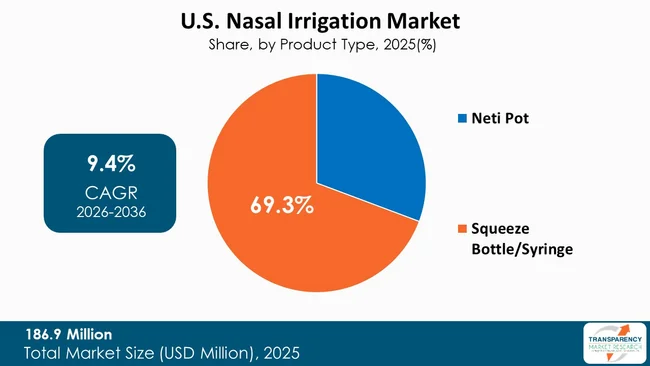
The squeeze bottle/syringe segment held 69.3% share, represents the dominant product type segment driving growth in the U.S. nasal irrigation industry. This leadership position exists as the company provides healthcare solutions which consumers preference for simple, affordable, and effective at-home healthcare solutions
The nasal cavity receives controlled saline solution delivery through these devices which work to remove both mucus and harmful substances from the body. Squeeze bottles allow users to manage pressure better than traditional neti pots as they offer easier operation which makes them more suitable for beginners. The products cost significantly less than electric or battery-operated irrigators which enables more people to use them throughout the entire market
The segment shows its strongest market position as more people in the U.S. develop respiratory diseases which include sinusitis, allergic rhinitis and nasal congestion. The increased demand for non-drug and non-invasive treatment options drives people to choose saline-based irrigation devices for their medical needs
Consumers want self-care solutions which they can use at home so they show more interest in purchasing squeeze bottles and syringes. The company maintains its market leadership through product development which creates ergonomic designs and pre-measured saline products that improve user safety and usability
RhinoSystems, Inc. - Naväge Nasal Care, Squip (a Division of NeilMed Pharmaceuticals, Inc.), Maoever Care, Ascent Consumer Products Inc., Himalayan Institute, B.F. Ascher & Co., NeilMed Pharmaceuticals Inc, Mercury Medical, Nasopure, and Others are the key players governing the global Nasal Irrigation Market
Each of these players has been profiled in the U.S. Nasal Irrigation Market research report based on parameters such as company overview, financial overview, business strategies, product portfolio, business segments, and recent developments
| Attribute | Detail |
|---|---|
| Size in 2025 | USD 186.9 Million |
| Forecast Value in 2036 | USD 457.5 Million |
| CAGR | 9.4% |
| Forecast Period | 2026-2036 |
| Historical Data Available for | 2021-2025 |
| Quantitative Units | USD Million for Value |
| Market Analysis | It includes segment analysis as well as regional level analysis. Qualitative analysis includes drivers, restraints, opportunities, key trends, value chain analysis, and key trend analysis. |
| Competition Landscape |
|
| Format | Electronic (PDF) + Excel |
| Segmentation | Product Type
|
| Countries Covered |
|
| Companies Profiled |
|
| Customization Scope | Available upon request |
| Pricing | Available upon request |
The market was valued at USD 186.9 Million in 2025
It is projected to reach USD 457.5 Million by the end of 2036
Rising prevalence of respiratory disorders such as Allergic Rhinitis and Sinusitis and Growing awareness of personal hygiene and preventive healthcare practices
It is anticipated to grow at a CAGR of 9.4% from 2026 to 2036
RhinoSystems, Inc. - Naväge Nasal Care, Squip (a Division of NeilMed Pharmaceuticals, Inc.), Maoever Care, Ascent Consumer Products Inc., Himalayan Institute, B.F. Ascher & Co., NeilMed Pharmaceuticals Inc., Mercury Medical, Nasopure, and others.
Table 01: U.S. Nasal Irrigation Market Value (USD Million) Forecast, by Product Type, 2021 to 2036
Table 02: U.S. Nasal Irrigation Market Value (USD Million) Forecast, by Age Group, 2021 to 2036
Table 03: U.S. Nasal Irrigation Market Value (USD Million) Forecast, by Indication, 2021 to 2036
Table 04: U.S. Nasal Irrigation Market Value (USD Million) Forecast, by Distribution Channel, 2021 to 2036
Table 05: U.S. Nasal Irrigation Market Value (USD Million) Forecast, by Online, 2021 to 2036
Table 06: U.S. Nasal Irrigation Market Value (USD Million) Forecast, by Offline, 2021 to 2036
Figure 01: U.S. Nasal Irrigation Market Value (USD Million) Forecast, 2021 to 2036
Figure 02: U.S. Nasal Irrigation Market Value Share Analysis, by Product Type, 2025 and 2036
Figure 03: U.S. Nasal Irrigation Market Attractiveness Analysis, by Product Type, 2026 to 2036
Figure 04: U.S. Nasal Irrigation Market Revenue (USD Million), by Neti Pot, 2021 to 2036
Figure 05: U.S. Nasal Irrigation Market Revenue (USD Million), by Squeeze Bottle/Syringe, 2021 to 2036
Figure 06: U.S. Nasal Irrigation Market Value Share Analysis, by Age Group, 2025 and 2036
Figure 07: U.S. Nasal Irrigation Market Attractiveness Analysis, by Age Group, 2026 to 2036
Figure 08: U.S. Nasal Irrigation Market Revenue (USD Million), by Pediatrics, 2021 to 2036
Figure 09: U.S. Nasal Irrigation Market Revenue (USD Million), by Adults, 2021 to 2036
Figure 10: U.S. Nasal Irrigation Market Revenue (USD Million), by Geriatrics, 2021 to 2036
Figure 11: U.S. Nasal Irrigation Market Value Share Analysis, by Indication, 2025 and 2036
Figure 12: U.S. Nasal Irrigation Market Attractiveness Analysis, by Indication, 2026 to 2036
Figure 13: U.S. Nasal Irrigation Market Revenue (USD Million), by Sinusitis, 2021 to 2036
Figure 14: U.S. Nasal Irrigation Market Revenue (USD Million), by Allergic Rhinitis, 2021 to 2036
Figure 15: U.S. Nasal Irrigation Market Revenue (USD Million), by Respiratory Tract Infection, 2021 to 2036
Figure 16: U.S. Nasal Irrigation Market Revenue (USD Million), by Others, 2021 to 2036
Figure 17: U.S. Nasal Irrigation Maraket Value Share Analysis, by Distribution Channel, 2025 and 2036
Figure 18: U.S. Nasal Irrigation Market Attractiveness Analysis, by Distribution Channel, 2026 to 2036
Figure 19: U.S. Nasal Irrigation Market Revenue (USD Million), by Online, 2021 to 2036
Figure 20: U.S. Nasal Irrigation Market Revenue (USD Million), by Offline, 2021 to 2036
Copyright © Transparency Market Research, Inc. All Rights reserved
Trust Online


U.S. Nasal Irrigation Market
