

Reports
Reports
The global non-small cell lung cancer therapeutics market was valued at US$ 28.1 Bn in 2025 and is projected to reach US$ 75.5 Bn by 2036, expanding at a CAGR of 9.4% from 2026 to 2036. The market growth is driven by increasing global incidence of NSCLC, driven by factors like smoking and air pollution, and the advancements in treatment options, particularly immunotherapy and targeted therapies.
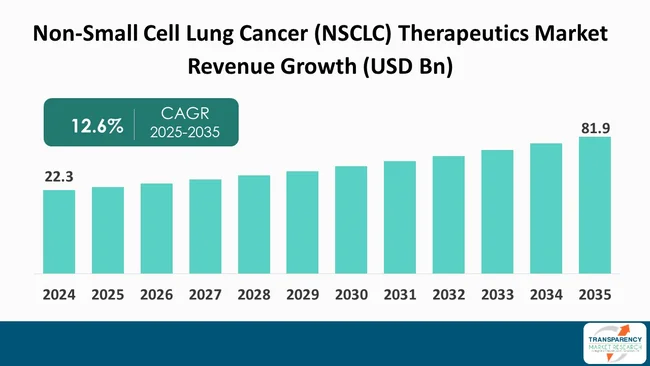
Increased use of companion diagnostics and robust development of biomarker testing lead to better patient stratification, which, in turn, implies that a greater number of targeted therapies are utilized. Enhanced diagnostic reimbursement and public-private screening collaborations further shorten the time-to-treatment and make it possible to allocate resources more efficiently throughout the oncology care pathways as a result of improved operational efficiency, thereby further contributing in the non-small cell lung cancer (NSCLC) therapeutics market growth.
Good reimbursement-related reforms and rising oncology budgets are instrumental in providing access to premium therapies. At the same time patient, advocacy, outcome-based contracting, and the expansion of clinical trial networks contribute to the pace of adoption. Further digitalization of healthcare is also instrumental in care coordination, adherence monitoring, and increasing the capabilities for the remote management of complex treatment regimens.
Competitive rivalry is influenced by strategies such as forming strategic alliances, engaging in licensing transactions, and making targeted acquisitions to secure pipelines. Firms mutually agree on the co-development of companion diagnostics, invest in scaling up the manufacturing of their products, initiate patient access and educational programs, and use real-world evidence as a tool to create a differentiated market position.
NSCLC therapeutics refer to the medical treatments that are aimed at the alleviation and control of NSCLC that is the major cause of lung cancer, making up approximately 85% of the total cases of lung cancer. These medicines are mostly focused on decreasing disease progression and tumor burden apart from increasing overall survival through a personalized and specific medical intervention.
The therapy for non-small cell lung cancer depends on several factors including tumor stage, histology, and genetic mutations. For many years, chemotherapy was the only method and the main way of treatment. However, in most cases, due to their greater effectiveness and lower side-effects, targeted therapies and immunotherapies are now miles ahead of the conventional treatment regimens.
Targeted treatments focus on particular molecules that affect tumor growth through mutations in specific genes, including EGFR, ALK, ROS1, and KRAS. Immunotherapy begins with stimulating the patient’s own immune system to attack and kill cancer through three different pathways by using inhibitors of PD-1, PD-L1, or CTLA-4.
In fact, non-small cell lung cancer drug developments have gone a long way with the support of molecular diagnostics, biomarker testing, and personalized medicine. The use of companion diagnostics allows patients to be given the most effective mutation-specific treatments, which leads to better results, improved quality of life, and a step towards precision oncology in lung cancer care.
| Attribute | Detail |
|---|---|
| Non-Small Cell Lung Cancer Therapeutics Market Drivers |
|
The increasing patient pool has, in fact, been the reason for governments and healthcare organizations to implement and upgrade screening programs and get more people diagnosed at an early stage. Such growth in diagnostics naturally expands the market by providing timely intervention and thus, the increased adoption of first-line treatments.
To deal with the rising number of patients, healthcare systems and pharmaceutical companies have been increasing their expenditure on advanced therapeutics over the last few years. Consequently, the processes involved in drug development, clinical trials, and regulatory approvals for novel targeted and immunotherapeutic agents have been getting faster.
Innovations in treatment options have been amongst the major reasons for the growth of the non-small cell lung cancer therapeutics market. These innovations have changed patient outcomes and also redefined clinical practices. The innovations in targeted therapy, immunotherapy, and combination regimens have resulted in survival rates to be quite a lot higher and treatments to be much more tolerable than in the case of chemotherapy being used alone.
The most commonly used therapies for non-small cell lung cancer are immune-based therapies using immune checkpoint inhibitors that work by changing the nature of PD-L1 and PD-1 pathways. The mechanisms of action of these drugs restore or allow the immune system to regain its ability to kill cancer cells; therefore these drugs are the best candidates for being the first line of therapy for all stages of the disease and beyond.
Moreover, therapies comprising immunotherapy combined with either targeted or chemotherapeutic agents are the main drivers to market growth. The therapeutic pipeline is getting stronger due to the ongoing R&D efforts, the increasing number of clinical trials, and the regulatory approvals for new agents. As a result of these improvements, the effectiveness and accessibility of NSCLC treatment are elevated, thus the market gets expanded, thus improving the quality of life of lung cancer patients globally.
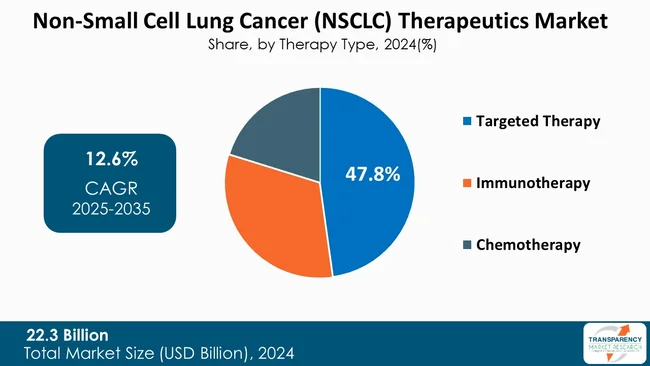
The targeted therapy segment captures the majority share in the non-small cell lung cancer therapeutics market as a large percentage of patients with NSCLC carry actionable genetic mutations like EGFR, ALK, ROS1, and KRAS. Response rates higher, survival improved, and tolerability better that of traditional chemotherapy are some of the benefits these drugs bring. The segment's supremacy is additionally being solidified by the incessant introduction of novel targeted agents, broadened biomarker testing, and the increasing use of precision medicine.
| Attribute | Detail |
|---|---|
| Leading Region |
|
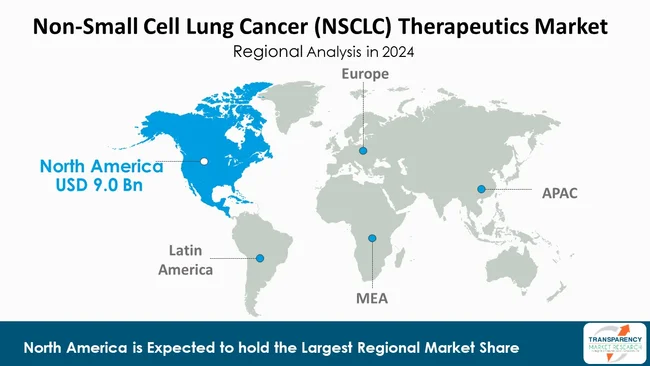
According to the recent analysis of the non-small cell lung cancer therapeutics market, North America accounted for the largest market share of 42.3% in 2025. This may be due to the highly developed healthcare system of the region, resulting in increasing diagnostic awareness and wide accessibility of precision medicine. This includes well-established reimbursement mechanisms and early use of novel advanced treatment approaches, such as targeted therapies and immunotherapies.
New methods of drug development and the drug market depict a highly optimistic case in this field due to the existence of big pharmaceutical companies, a large network for clinical trials, and solid support from regulatory agencies such as the FDA. The increase in spending on biomarker testing is also facilitating that North America keeps its first mover advantage in the global NSCLC therapeutics market.
Companies operating in the non-small cell lung cancer therapeutics market are making changes in their operations in the form of licensing agreements, strategic collaborations, and mergers to widen their product pipelines.
AstraZeneca, Johnson & Johnson, Merck & Co., Inc., Pfizer Inc., Eli Lilly and Company, Novartis AG, Bristol-Myers Squibb Company, Takeda Pharmaceutical Company Limited, AbbVie Inc., Sanofi, Amgen Inc., Boehringer Ingelheim International GmbH, Amneal Pharmaceuticals LLC, DAIICHI SANKYO COMPANY, LIMITED and Teva Pharmaceutical Industries Ltd. are some of the leading players operating in the global non-small cell lung cancer therapeutics market.
Each of these players has been profiled in the non-small cell lung cancer therapeutics market research report based on parameters such as company overview, financial overview, business strategies, product portfolio, business segments, and recent developments.
| Attribute | Detail |
|---|---|
| Size in 2025 | US$ 28.1 Bn |
| Forecast Value in 2036 | US$ 75.5 Bn |
| CAGR | 9.4% |
| Forecast Period | 2026 2036 |
| Historical Data Available for | 2021 2024 |
| Quantitative Units | US$ Bn |
| Non-Small Cell Lung Cancer Therapeutics Market Analysis | It includes segment analysis as well as regional level analysis. Moreover, qualitative analysis includes drivers, restraints, opportunities, key trends, value chain analysis, and key trend analysis. |
| Competition Landscape |
|
| Format | Electronic (PDF) + Excel |
| Segmentation | Cancer Type
|
| Regions Covered |
|
| Countries Covered |
|
| Companies Profiled |
|
| Customization Scope | Available upon request |
| Pricing | Available upon request |
The global non-small cell lung cancer therapeutics market was valued at US$ 28.1 Bn in 2025
The global non-small cell lung cancer therapeutics industry is projected to reach more than US$ 75.5 Bn by the end of 2036
The increasing global incidence of NSCLC, driven by factors like smoking and air pollution, advancements in treatment options, particularly immunotherapy and targeted therapies, a rising geriatric population, and improved access to healthcare in developing economies, are some of the factors driving the expansion of non-small cell lung cancer therapeutics market.
The CAGR is anticipated to be 9.4% from 2026 to 2036
AstraZeneca, Johnson & Johnson, Merck & Co., Inc., Pfizer Inc., Eli Lilly and Company, Novartis AG, Bristol-Myers Squibb Company, Takeda Pharmaceutical Company Limited, AbbVie Inc., Sanofi, Amgen Inc., Boehringer Ingelheim International GmbH, Amneal Pharmaceuticals LLC, DAIICHI SANKYO COMPANY, LIMITED, and Teva Pharmaceutical Industries Ltd.
Table 01: Global Non-Small Cell Lung Cancer Therapeutics Market Value (US$ Bn) Forecast, By Cancer Type, 2021 to 2036
Table 02: Global Non-Small Cell Lung Cancer Therapeutics Market Value (US$ Bn) Forecast, By Therapy Type, 2021 to 2036
Table 03: Global Non-Small Cell Lung Cancer Therapeutics Market Value (US$ Bn) Forecast, By Targeted Therapy, 2021 to 2036
Table 04: Global Non-Small Cell Lung Cancer Therapeutics Market Value (US$ Bn) Forecast, By Immunotherapy, 2021 to 2036
Table 05: Global Non-Small Cell Lung Cancer Therapeutics Market Value (US$ Bn) Forecast, By Chemotherapy, 2021 to 2036
Table 06: Global Non-Small Cell Lung Cancer Therapeutics Market Value (US$ Bn) Forecast, By Drug Type, 2021 to 2036
Table 07: Global Non-Small Cell Lung Cancer Therapeutics Market Value (US$ Bn) Forecast, By Route of Administration, 2021 to 2036
Table 08: Global Non-Small Cell Lung Cancer Therapeutics Market Value (US$ Bn) Forecast, By Distribution Channel, 2021 to 2036
Table 09: Global Non-Small Cell Lung Cancer Therapeutics Market Value (US$ Bn) Forecast, By Region, 2021 to 2036
Table 10: North America Non-Small Cell Lung Cancer Therapeutics Market Value (US$ Bn) Forecast, by Country, 2021 to 2036
Table 11: North America Non-Small Cell Lung Cancer Therapeutics Market Value (US$ Bn) Forecast, By Cancer Type, 2021 to 2036
Table 12: North America Non-Small Cell Lung Cancer Therapeutics Market Value (US$ Bn) Forecast, By Therapy Type, 2021 to 2036
Table 13: North America Non-Small Cell Lung Cancer Therapeutics Market Value (US$ Bn) Forecast, By Targeted Therapy, 2021 to 2036
Table 14: North America Non-Small Cell Lung Cancer Therapeutics Market Value (US$ Bn) Forecast, By Immunotherapy, 2021 to 2036
Table 15: North America Non-Small Cell Lung Cancer Therapeutics Market Value (US$ Bn) Forecast, By Chemotherapy, 2021 to 2036
Table 16: North America Non-Small Cell Lung Cancer Therapeutics Market Value (US$ Bn) Forecast, By Drug Type, 2021 to 2036
Table 17: North America Non-Small Cell Lung Cancer Therapeutics Market Value (US$ Bn) Forecast, By Route of Administration, 2021 to 2036
Table 18: North America Non-Small Cell Lung Cancer Therapeutics Market Value (US$ Bn) Forecast, By Distribution Channel, 2021 to 2036
Table 19: U.S. Non-Small Cell Lung Cancer Therapeutics Market Value (US$ Bn) Forecast, By Cancer Type, 2021 to 2036
Table 20: U.S. Non-Small Cell Lung Cancer Therapeutics Market Value (US$ Bn) Forecast, By Therapy Type, 2021 to 2036
Table 21: U.S. Non-Small Cell Lung Cancer Therapeutics Market Value (US$ Bn) Forecast, By Targeted Therapy, 2021 to 2036
Table 22: U.S. Non-Small Cell Lung Cancer Therapeutics Market Value (US$ Bn) Forecast, By Immunotherapy, 2021 to 2036
Table 23: U.S. Non-Small Cell Lung Cancer Therapeutics Market Value (US$ Bn) Forecast, By Chemotherapy, 2021 to 2036
Table 24: U.S. Non-Small Cell Lung Cancer Therapeutics Market Value (US$ Bn) Forecast, By Drug Type, 2021 to 2036
Table 25: U.S. Non-Small Cell Lung Cancer Therapeutics Market Value (US$ Bn) Forecast, By Route of Administration, 2021 to 2036
Table 26: U.S. Non-Small Cell Lung Cancer Therapeutics Market Value (US$ Bn) Forecast, By Distribution Channel, 2021 to 2036
Table 27: Canada Non-Small Cell Lung Cancer Therapeutics Market Value (US$ Bn) Forecast, By Cancer Type, 2021 to 2036
Table 28: Canada Non-Small Cell Lung Cancer Therapeutics Market Value (US$ Bn) Forecast, By Therapy Type, 2021 to 2036
Table 29: Canada Non-Small Cell Lung Cancer Therapeutics Market Value (US$ Bn) Forecast, By Targeted Therapy, 2021 to 2036
Table 30: Canada Non-Small Cell Lung Cancer Therapeutics Market Value (US$ Bn) Forecast, By Immunotherapy, 2021 to 2036
Table 31: Canada Non-Small Cell Lung Cancer Therapeutics Market Value (US$ Bn) Forecast, By Chemotherapy, 2021 to 2036
Table 32: Canada Non-Small Cell Lung Cancer Therapeutics Market Value (US$ Bn) Forecast, By Drug Type, 2021 to 2036
Table 33: Canada Non-Small Cell Lung Cancer Therapeutics Market Value (US$ Bn) Forecast, By Route of Administration, 2021 to 2036
Table 34: Canada Non-Small Cell Lung Cancer Therapeutics Market Value (US$ Bn) Forecast, By Distribution Channel, 2021 to 2036
Table 35: Europe Non-Small Cell Lung Cancer Therapeutics Market Value (US$ Bn) Forecast, by Country/Sub-region, 2021 to 2036
Table 36: Europe Non-Small Cell Lung Cancer Therapeutics Market Value (US$ Bn) Forecast, By Cancer Type, 2021 to 2036
Table 37: Europe Non-Small Cell Lung Cancer Therapeutics Market Value (US$ Bn) Forecast, By Therapy Type, 2021 to 2036
Table 38: Europe Non-Small Cell Lung Cancer Therapeutics Market Value (US$ Bn) Forecast, By Targeted Therapy, 2021 to 2036
Table 39: Europe Non-Small Cell Lung Cancer Therapeutics Market Value (US$ Bn) Forecast, By Immunotherapy, 2021 to 2036
Table 40: Europe Non-Small Cell Lung Cancer Therapeutics Market Value (US$ Bn) Forecast, By Chemotherapy, 2021 to 2036
Table 41: Europe Non-Small Cell Lung Cancer Therapeutics Market Value (US$ Bn) Forecast, By Drug Type, 2021 to 2036
Table 42: Europe Non-Small Cell Lung Cancer Therapeutics Market Value (US$ Bn) Forecast, By Route of Administration, 2021 to 2036
Table 43: Europe Non-Small Cell Lung Cancer Therapeutics Market Value (US$ Bn) Forecast, By Distribution Channel, 2021 to 2036
Table 44: Germany Non-Small Cell Lung Cancer Therapeutics Market Value (US$ Bn) Forecast, By Cancer Type, 2021 to 2036
Table 45: Germany Non-Small Cell Lung Cancer Therapeutics Market Value (US$ Bn) Forecast, By Therapy Type, 2021 to 2036
Table 46: Germany Non-Small Cell Lung Cancer Therapeutics Market Value (US$ Bn) Forecast, By Targeted Therapy, 2021 to 2036
Table 47: Germany Non-Small Cell Lung Cancer Therapeutics Market Value (US$ Bn) Forecast, By Immunotherapy, 2021 to 2036
Table 48: Germany Non-Small Cell Lung Cancer Therapeutics Market Value (US$ Bn) Forecast, By Chemotherapy, 2021 to 2036
Table 49: Germany Non-Small Cell Lung Cancer Therapeutics Market Value (US$ Bn) Forecast, By Drug Type, 2021 to 2036
Table 50: Germany Non-Small Cell Lung Cancer Therapeutics Market Value (US$ Bn) Forecast, By Route of Administration, 2021 to 2036
Table 51: Germany Non-Small Cell Lung Cancer Therapeutics Market Value (US$ Bn) Forecast, By Distribution Channel, 2021 to 2036
Table 52: U.K. Non-Small Cell Lung Cancer Therapeutics Market Value (US$ Bn) Forecast, By Cancer Type, 2021 to 2036
Table 53: U.K. Non-Small Cell Lung Cancer Therapeutics Market Value (US$ Bn) Forecast, By Therapy Type, 2021 to 2036
Table 54: U.K. Non-Small Cell Lung Cancer Therapeutics Market Value (US$ Bn) Forecast, By Targeted Therapy, 2021 to 2036
Table 55: U.K. Non-Small Cell Lung Cancer Therapeutics Market Value (US$ Bn) Forecast, By Immunotherapy, 2021 to 2036
Table 56: U.K. Non-Small Cell Lung Cancer Therapeutics Market Value (US$ Bn) Forecast, By Chemotherapy, 2021 to 2036
Table 57: U.K. Non-Small Cell Lung Cancer Therapeutics Market Value (US$ Bn) Forecast, By Drug Type, 2021 to 2036
Table 58: U.K. Non-Small Cell Lung Cancer Therapeutics Market Value (US$ Bn) Forecast, By Route of Administration, 2021 to 2036
Table 59: U.K. Non-Small Cell Lung Cancer Therapeutics Market Value (US$ Bn) Forecast, By Distribution Channel, 2021 to 2036
Table 60: France Non-Small Cell Lung Cancer Therapeutics Market Value (US$ Bn) Forecast, By Cancer Type, 2021 to 2036
Table 61: France Non-Small Cell Lung Cancer Therapeutics Market Value (US$ Bn) Forecast, By Therapy Type, 2021 to 2036
Table 62: France Non-Small Cell Lung Cancer Therapeutics Market Value (US$ Bn) Forecast, By Targeted Therapy, 2021 to 2036
Table 63: France Non-Small Cell Lung Cancer Therapeutics Market Value (US$ Bn) Forecast, By Immunotherapy, 2021 to 2036
Table 64: France Non-Small Cell Lung Cancer Therapeutics Market Value (US$ Bn) Forecast, By Chemotherapy, 2021 to 2036
Table 65: France Non-Small Cell Lung Cancer Therapeutics Market Value (US$ Bn) Forecast, By Drug Type, 2021 to 2036
Table 66: France Non-Small Cell Lung Cancer Therapeutics Market Value (US$ Bn) Forecast, By Route of Administration, 2021 to 2036
Table 67: France Non-Small Cell Lung Cancer Therapeutics Market Value (US$ Bn) Forecast, By Distribution Channel, 2021 to 2036
Table 68: Italy Non-Small Cell Lung Cancer Therapeutics Market Value (US$ Bn) Forecast, By Cancer Type, 2021 to 2036
Table 69: Italy Non-Small Cell Lung Cancer Therapeutics Market Value (US$ Bn) Forecast, By Therapy Type, 2021 to 2036
Table 70: Italy Non-Small Cell Lung Cancer Therapeutics Market Value (US$ Bn) Forecast, By Targeted Therapy, 2021 to 2036
Table 71: Italy Non-Small Cell Lung Cancer Therapeutics Market Value (US$ Bn) Forecast, By Immunotherapy, 2021 to 2036
Table 72: Italy Non-Small Cell Lung Cancer Therapeutics Market Value (US$ Bn) Forecast, By Chemotherapy, 2021 to 2036
Table 73: Italy Non-Small Cell Lung Cancer Therapeutics Market Value (US$ Bn) Forecast, By Drug Type, 2021 to 2036
Table 74: Italy Non-Small Cell Lung Cancer Therapeutics Market Value (US$ Bn) Forecast, By Route of Administration, 2021 to 2036
Table 75: Italy Non-Small Cell Lung Cancer Therapeutics Market Value (US$ Bn) Forecast, By Distribution Channel, 2021 to 2036
Table 76: Spain Non-Small Cell Lung Cancer Therapeutics Market Value (US$ Bn) Forecast, By Cancer Type, 2021 to 2036
Table 77: Spain Non-Small Cell Lung Cancer Therapeutics Market Value (US$ Bn) Forecast, By Therapy Type, 2021 to 2036
Table 78: Spain Non-Small Cell Lung Cancer Therapeutics Market Value (US$ Bn) Forecast, By Targeted Therapy, 2021 to 2036
Table 79: Spain Non-Small Cell Lung Cancer Therapeutics Market Value (US$ Bn) Forecast, By Immunotherapy, 2021 to 2036
Table 80: Spain Non-Small Cell Lung Cancer Therapeutics Market Value (US$ Bn) Forecast, By Chemotherapy, 2021 to 2036
Table 81: Spain Non-Small Cell Lung Cancer Therapeutics Market Value (US$ Bn) Forecast, By Drug Type, 2021 to 2036
Table 82: Spain Non-Small Cell Lung Cancer Therapeutics Market Value (US$ Bn) Forecast, By Route of Administration, 2021 to 2036
Table 83: Spain Non-Small Cell Lung Cancer Therapeutics Market Value (US$ Bn) Forecast, By Distribution Channel, 2021 to 2036
Table 84: The Netherlands Non-Small Cell Lung Cancer Therapeutics Market Value (US$ Bn) Forecast, By Cancer Type, 2021 to 2036
Table 85: The Netherlands Non-Small Cell Lung Cancer Therapeutics Market Value (US$ Bn) Forecast, By Therapy Type, 2021 to 2036
Table 86: The Netherlands Non-Small Cell Lung Cancer Therapeutics Market Value (US$ Bn) Forecast, By Targeted Therapy, 2021 to 2036
Table 87: The Netherlands Non-Small Cell Lung Cancer Therapeutics Market Value (US$ Bn) Forecast, By Immunotherapy, 2021 to 2036
Table 88: The Netherlands Non-Small Cell Lung Cancer Therapeutics Market Value (US$ Bn) Forecast, By Chemotherapy, 2021 to 2036
Table 89: The Netherlands Non-Small Cell Lung Cancer Therapeutics Market Value (US$ Bn) Forecast, By Drug Type, 2021 to 2036
Table 90: The Netherlands Non-Small Cell Lung Cancer Therapeutics Market Value (US$ Bn) Forecast, By Route of Administration, 2021 to 2036
Table 91: The Netherlands Non-Small Cell Lung Cancer Therapeutics Market Value (US$ Bn) Forecast, By Distribution Channel, 2021 to 2036
Table 92: Rest of Europe Non-Small Cell Lung Cancer Therapeutics Market Value (US$ Bn) Forecast, By Cancer Type, 2021 to 2036
Table 93: Rest of Europe Non-Small Cell Lung Cancer Therapeutics Market Value (US$ Bn) Forecast, By Therapy Type, 2021 to 2036
Table 94: Rest of Europe Non-Small Cell Lung Cancer Therapeutics Market Value (US$ Bn) Forecast, By Targeted Therapy, 2021 to 2036
Table 95: Rest of Europe Non-Small Cell Lung Cancer Therapeutics Market Value (US$ Bn) Forecast, By Immunotherapy, 2021 to 2036
Table 96: Rest of Europe Non-Small Cell Lung Cancer Therapeutics Market Value (US$ Bn) Forecast, By Chemotherapy, 2021 to 2036
Table 97: Rest of Europe Non-Small Cell Lung Cancer Therapeutics Market Value (US$ Bn) Forecast, By Drug Type, 2021 to 2036
Table 98: Rest of Europe Non-Small Cell Lung Cancer Therapeutics Market Value (US$ Bn) Forecast, By Route of Administration, 2021 to 2036
Table 99: Rest of Europe Non-Small Cell Lung Cancer Therapeutics Market Value (US$ Bn) Forecast, By Distribution Channel, 2021 to 2036
Table 100: Asia Pacific Non-Small Cell Lung Cancer Therapeutics Market Value (US$ Bn) Forecast, by Country/Sub-region, 2021 to 2036
Table 101: Asia Pacific Non-Small Cell Lung Cancer Therapeutics Market Value (US$ Bn) Forecast, By Cancer Type, 2021 to 2036
Table 102: Asia Pacific Non-Small Cell Lung Cancer Therapeutics Market Value (US$ Bn) Forecast, By Therapy Type, 2021 to 2036
Table 103: Asia Pacific Non-Small Cell Lung Cancer Therapeutics Market Value (US$ Bn) Forecast, By Targeted Therapy, 2021 to 2036
Table 104: Asia Pacific Non-Small Cell Lung Cancer Therapeutics Market Value (US$ Bn) Forecast, By Immunotherapy, 2021 to 2036
Table 105: Asia Pacific Non-Small Cell Lung Cancer Therapeutics Market Value (US$ Bn) Forecast, By Chemotherapy, 2021 to 2036
Table 106: Asia Pacific Non-Small Cell Lung Cancer Therapeutics Market Value (US$ Bn) Forecast, By Drug Type, 2021 to 2036
Table 107: Asia Pacific Non-Small Cell Lung Cancer Therapeutics Market Value (US$ Bn) Forecast, By Route of Administration, 2021 to 2036
Table 108: Asia Pacific Non-Small Cell Lung Cancer Therapeutics Market Value (US$ Bn) Forecast, By Distribution Channel, 2021 to 2036
Table 109: China Non-Small Cell Lung Cancer Therapeutics Market Value (US$ Bn) Forecast, By Cancer Type, 2021 to 2036
Table 110: China Non-Small Cell Lung Cancer Therapeutics Market Value (US$ Bn) Forecast, By Therapy Type, 2021 to 2036
Table 111: China Non-Small Cell Lung Cancer Therapeutics Market Value (US$ Bn) Forecast, By Targeted Therapy, 2021 to 2036
Table 112: China Non-Small Cell Lung Cancer Therapeutics Market Value (US$ Bn) Forecast, By Immunotherapy, 2021 to 2036
Table 113: China Non-Small Cell Lung Cancer Therapeutics Market Value (US$ Bn) Forecast, By Chemotherapy, 2021 to 2036
Table 114: China Non-Small Cell Lung Cancer Therapeutics Market Value (US$ Bn) Forecast, By Drug Type, 2021 to 2036
Table 115: China Non-Small Cell Lung Cancer Therapeutics Market Value (US$ Bn) Forecast, By Route of Administration, 2021 to 2036
Table 116: China Non-Small Cell Lung Cancer Therapeutics Market Value (US$ Bn) Forecast, By Distribution Channel, 2021 to 2036
Table 117: India Non-Small Cell Lung Cancer Therapeutics Market Value (US$ Bn) Forecast, By Cancer Type, 2021 to 2036
Table 118: India Non-Small Cell Lung Cancer Therapeutics Market Value (US$ Bn) Forecast, By Therapy Type, 2021 to 2036
Table 119: India Non-Small Cell Lung Cancer Therapeutics Market Value (US$ Bn) Forecast, By Targeted Therapy, 2021 to 2036
Table 120: India Non-Small Cell Lung Cancer Therapeutics Market Value (US$ Bn) Forecast, By Immunotherapy, 2021 to 2036
Table 121: India Non-Small Cell Lung Cancer Therapeutics Market Value (US$ Bn) Forecast, By Chemotherapy, 2021 to 2036
Table 122: India Non-Small Cell Lung Cancer Therapeutics Market Value (US$ Bn) Forecast, By Drug Type, 2021 to 2036
Table 123: India Non-Small Cell Lung Cancer Therapeutics Market Value (US$ Bn) Forecast, By Route of Administration, 2021 to 2036
Table 124: India Non-Small Cell Lung Cancer Therapeutics Market Value (US$ Bn) Forecast, By Distribution Channel, 2021 to 2036
Table 125: Japan Non-Small Cell Lung Cancer Therapeutics Market Value (US$ Bn) Forecast, By Cancer Type, 2021 to 2036
Table 126: Japan Non-Small Cell Lung Cancer Therapeutics Market Value (US$ Bn) Forecast, By Therapy Type, 2021 to 2036
Table 127: Japan Non-Small Cell Lung Cancer Therapeutics Market Value (US$ Bn) Forecast, By Targeted Therapy, 2021 to 2036
Table 128: Japan Non-Small Cell Lung Cancer Therapeutics Market Value (US$ Bn) Forecast, By Immunotherapy, 2021 to 2036
Table 129: Japan Non-Small Cell Lung Cancer Therapeutics Market Value (US$ Bn) Forecast, By Chemotherapy, 2021 to 2036
Table 130: Japan Non-Small Cell Lung Cancer Therapeutics Market Value (US$ Bn) Forecast, By Drug Type, 2021 to 2036
Table 131: Japan Non-Small Cell Lung Cancer Therapeutics Market Value (US$ Bn) Forecast, By Route of Administration, 2021 to 2036
Table 132: Japan Non-Small Cell Lung Cancer Therapeutics Market Value (US$ Bn) Forecast, By Distribution Channel, 2021 to 2036
Table 133: South Korea Non-Small Cell Lung Cancer Therapeutics Market Value (US$ Bn) Forecast, By Cancer Type, 2021 to 2036
Table 134: South Korea Non-Small Cell Lung Cancer Therapeutics Market Value (US$ Bn) Forecast, By Therapy Type, 2021 to 2036
Table 135: South Korea Non-Small Cell Lung Cancer Therapeutics Market Value (US$ Bn) Forecast, By Targeted Therapy, 2021 to 2036
Table 136: South Korea Non-Small Cell Lung Cancer Therapeutics Market Value (US$ Bn) Forecast, By Immunotherapy, 2021 to 2036
Table 137: South Korea Non-Small Cell Lung Cancer Therapeutics Market Value (US$ Bn) Forecast, By Chemotherapy, 2021 to 2036
Table 138: South Korea Non-Small Cell Lung Cancer Therapeutics Market Value (US$ Bn) Forecast, By Drug Type, 2021 to 2036
Table 139: South Korea Non-Small Cell Lung Cancer Therapeutics Market Value (US$ Bn) Forecast, By Route of Administration, 2021 to 2036
Table 140: South Korea Non-Small Cell Lung Cancer Therapeutics Market Value (US$ Bn) Forecast, By Distribution Channel, 2021 to 2036
Table 141: Australia & New Zealand Non-Small Cell Lung Cancer Therapeutics Market Value (US$ Bn) Forecast, By Cancer Type, 2021 to 2036
Table 142: Australia & New Zealand Non-Small Cell Lung Cancer Therapeutics Market Value (US$ Bn) Forecast, By Therapy Type, 2021 to 2036
Table 143: Australia & New Zealand Non-Small Cell Lung Cancer Therapeutics Market Value (US$ Bn) Forecast, By Targeted Therapy, 2021 to 2036
Table 144: Australia & New Zealand Non-Small Cell Lung Cancer Therapeutics Market Value (US$ Bn) Forecast, By Immunotherapy, 2021 to 2036
Table 145: Australia & New Zealand Non-Small Cell Lung Cancer Therapeutics Market Value (US$ Bn) Forecast, By Chemotherapy, 2021 to 2036
Table 146: Australia & New Zealand Non-Small Cell Lung Cancer Therapeutics Market Value (US$ Bn) Forecast, By Drug Type, 2021 to 2036
Table 147: Australia & New Zealand Non-Small Cell Lung Cancer Therapeutics Market Value (US$ Bn) Forecast, By Route of Administration, 2021 to 2036
Table 148: Australia & New Zealand Non-Small Cell Lung Cancer Therapeutics Market Value (US$ Bn) Forecast, By Distribution Channel, 2021 to 2036
Table 149: ASEAN Non-Small Cell Lung Cancer Therapeutics Market Value (US$ Bn) Forecast, By Cancer Type, 2021 to 2036
Table 150: ASEAN Non-Small Cell Lung Cancer Therapeutics Market Value (US$ Bn) Forecast, By Therapy Type, 2021 to 2036
Table 151: ASEAN Non-Small Cell Lung Cancer Therapeutics Market Value (US$ Bn) Forecast, By Targeted Therapy, 2021 to 2036
Table 152: ASEAN Non-Small Cell Lung Cancer Therapeutics Market Value (US$ Bn) Forecast, By Immunotherapy, 2021 to 2036
Table 153: ASEAN Non-Small Cell Lung Cancer Therapeutics Market Value (US$ Bn) Forecast, By Chemotherapy, 2021 to 2036
Table 154: ASEAN Non-Small Cell Lung Cancer Therapeutics Market Value (US$ Bn) Forecast, By Drug Type, 2021 to 2036
Table 155: ASEAN Non-Small Cell Lung Cancer Therapeutics Market Value (US$ Bn) Forecast, By Route of Administration, 2021 to 2036
Table 156: ASEAN Non-Small Cell Lung Cancer Therapeutics Market Value (US$ Bn) Forecast, By Distribution Channel, 2021 to 2036
Table 157: Rest of Asia Pacific Non-Small Cell Lung Cancer Therapeutics Market Value (US$ Bn) Forecast, By Cancer Type, 2021 to 2036
Table 158: Rest of Asia Pacific Non-Small Cell Lung Cancer Therapeutics Market Value (US$ Bn) Forecast, By Therapy Type, 2021 to 2036
Table 159: Rest of Asia Pacific Non-Small Cell Lung Cancer Therapeutics Market Value (US$ Bn) Forecast, By Targeted Therapy, 2021 to 2036
Table 160: Rest of Asia Pacific Non-Small Cell Lung Cancer Therapeutics Market Value (US$ Bn) Forecast, By Immunotherapy, 2021 to 2036
Table 161: Rest of Asia Pacific Non-Small Cell Lung Cancer Therapeutics Market Value (US$ Bn) Forecast, By Chemotherapy, 2021 to 2036
Table 162: Rest of Asia Pacific Non-Small Cell Lung Cancer Therapeutics Market Value (US$ Bn) Forecast, By Drug Type, 2021 to 2036
Table 163: Rest of Asia Pacific Non-Small Cell Lung Cancer Therapeutics Market Value (US$ Bn) Forecast, By Route of Administration, 2021 to 2036
Table 164: Rest of Asia Pacific Non-Small Cell Lung Cancer Therapeutics Market Value (US$ Bn) Forecast, By Distribution Channel, 2021 to 2036
Table 165: Latin America Non-Small Cell Lung Cancer Therapeutics Market Value (US$ Bn) Forecast, by Country/Sub-region, 2021 to 2036
Table 166: Latin America Non-Small Cell Lung Cancer Therapeutics Market Value (US$ Bn) Forecast, By Cancer Type, 2021 to 2036
Table 167: Latin America Non-Small Cell Lung Cancer Therapeutics Market Value (US$ Bn) Forecast, By Therapy Type, 2021 to 2036
Table 168: Latin America Non-Small Cell Lung Cancer Therapeutics Market Value (US$ Bn) Forecast, By Targeted Therapy, 2021 to 2036
Table 169: Latin America Non-Small Cell Lung Cancer Therapeutics Market Value (US$ Bn) Forecast, By Immunotherapy, 2021 to 2036
Table 170: Latin America Non-Small Cell Lung Cancer Therapeutics Market Value (US$ Bn) Forecast, By Chemotherapy, 2021 to 2036
Table 171: Latin America Non-Small Cell Lung Cancer Therapeutics Market Value (US$ Bn) Forecast, By Drug Type, 2021 to 2036
Table 172: Latin America Non-Small Cell Lung Cancer Therapeutics Market Value (US$ Bn) Forecast, By Route of Administration, 2021 to 2036
Table 173: Latin America Non-Small Cell Lung Cancer Therapeutics Market Value (US$ Bn) Forecast, By Distribution Channel, 2021 to 2036
Table 174: Brazil Non-Small Cell Lung Cancer Therapeutics Market Value (US$ Bn) Forecast, By Cancer Type, 2021 to 2036
Table 175: Brazil Non-Small Cell Lung Cancer Therapeutics Market Value (US$ Bn) Forecast, By Therapy Type, 2021 to 2036
Table 176: Brazil Non-Small Cell Lung Cancer Therapeutics Market Value (US$ Bn) Forecast, By Targeted Therapy, 2021 to 2036
Table 177: Brazil Non-Small Cell Lung Cancer Therapeutics Market Value (US$ Bn) Forecast, By Immunotherapy, 2021 to 2036
Table 178: Brazil Non-Small Cell Lung Cancer Therapeutics Market Value (US$ Bn) Forecast, By Chemotherapy, 2021 to 2036
Table 179: Brazil Non-Small Cell Lung Cancer Therapeutics Market Value (US$ Bn) Forecast, By Drug Type, 2021 to 2036
Table 180: Brazil Non-Small Cell Lung Cancer Therapeutics Market Value (US$ Bn) Forecast, By Route of Administration, 2021 to 2036
Table 181: Brazil Non-Small Cell Lung Cancer Therapeutics Market Value (US$ Bn) Forecast, By Distribution Channel, 2021 to 2036
Table 182: Argentina Non-Small Cell Lung Cancer Therapeutics Market Value (US$ Bn) Forecast, By Cancer Type, 2021 to 2036
Table 183: Argentina Non-Small Cell Lung Cancer Therapeutics Market Value (US$ Bn) Forecast, By Therapy Type, 2021 to 2036
Table 184: Argentina Non-Small Cell Lung Cancer Therapeutics Market Value (US$ Bn) Forecast, By Targeted Therapy, 2021 to 2036
Table 185: Argentina Non-Small Cell Lung Cancer Therapeutics Market Value (US$ Bn) Forecast, By Immunotherapy, 2021 to 2036
Table 186: Argentina Non-Small Cell Lung Cancer Therapeutics Market Value (US$ Bn) Forecast, By Chemotherapy, 2021 to 2036
Table 187: Argentina Non-Small Cell Lung Cancer Therapeutics Market Value (US$ Bn) Forecast, By Drug Type, 2021 to 2036
Table 188: Argentina Non-Small Cell Lung Cancer Therapeutics Market Value (US$ Bn) Forecast, By Route of Administration, 2021 to 2036
Table 189: Argentina Non-Small Cell Lung Cancer Therapeutics Market Value (US$ Bn) Forecast, By Distribution Channel, 2021 to 2036
Table 190: Mexico Non-Small Cell Lung Cancer Therapeutics Market Value (US$ Bn) Forecast, By Cancer Type, 2021 to 2036
Table 191: Mexico Non-Small Cell Lung Cancer Therapeutics Market Value (US$ Bn) Forecast, By Therapy Type, 2021 to 2036
Table 192: Mexico Non-Small Cell Lung Cancer Therapeutics Market Value (US$ Bn) Forecast, By Targeted Therapy, 2021 to 2036
Table 193: Mexico Non-Small Cell Lung Cancer Therapeutics Market Value (US$ Bn) Forecast, By Immunotherapy, 2021 to 2036
Table 194: Mexico Non-Small Cell Lung Cancer Therapeutics Market Value (US$ Bn) Forecast, By Chemotherapy, 2021 to 2036
Table 195: Mexico Non-Small Cell Lung Cancer Therapeutics Market Value (US$ Bn) Forecast, By Drug Type, 2021 to 2036
Table 196: Mexico Non-Small Cell Lung Cancer Therapeutics Market Value (US$ Bn) Forecast, By Route of Administration, 2021 to 2036
Table 197: Mexico Non-Small Cell Lung Cancer Therapeutics Market Value (US$ Bn) Forecast, By Distribution Channel, 2021 to 2036
Table 198: Rest of Latin America Non-Small Cell Lung Cancer Therapeutics Market Value (US$ Bn) Forecast, By Cancer Type, 2021 to 2036
Table 199: Rest of Latin America Non-Small Cell Lung Cancer Therapeutics Market Value (US$ Bn) Forecast, By Therapy Type, 2021 to 2036
Table 200: Rest of Latin America Non-Small Cell Lung Cancer Therapeutics Market Value (US$ Bn) Forecast, By Targeted Therapy, 2021 to 2036
Table 201: Rest of Latin America Non-Small Cell Lung Cancer Therapeutics Market Value (US$ Bn) Forecast, By Immunotherapy, 2021 to 2036
Table 202: Rest of Latin America Non-Small Cell Lung Cancer Therapeutics Market Value (US$ Bn) Forecast, By Chemotherapy, 2021 to 2036
Table 203: Rest of Latin America Non-Small Cell Lung Cancer Therapeutics Market Value (US$ Bn) Forecast, By Drug Type, 2021 to 2036
Table 204: Rest of Latin America Non-Small Cell Lung Cancer Therapeutics Market Value (US$ Bn) Forecast, By Route of Administration, 2021 to 2036
Table 205: Rest of Latin America Non-Small Cell Lung Cancer Therapeutics Market Value (US$ Bn) Forecast, By Distribution Channel, 2021 to 2036
Table 206: Middle East & Africa Non-Small Cell Lung Cancer Therapeutics Market Value (US$ Bn) Forecast, by Country/Sub-region, 2021 to 2036
Table 207: Middle East & Africa Non-Small Cell Lung Cancer Therapeutics Market Value (US$ Bn) Forecast, By Cancer Type, 2021 to 2036
Table 208: Middle East & Africa Non-Small Cell Lung Cancer Therapeutics Market Value (US$ Bn) Forecast, By Therapy Type, 2021 to 2036
Table 209: Middle East & Africa Non-Small Cell Lung Cancer Therapeutics Market Value (US$ Bn) Forecast, By Targeted Therapy, 2021 to 2036
Table 210: Middle East & Africa Non-Small Cell Lung Cancer Therapeutics Market Value (US$ Bn) Forecast, By Immunotherapy, 2021 to 2036
Table 211: Middle East & Africa Non-Small Cell Lung Cancer Therapeutics Market Value (US$ Bn) Forecast, By Chemotherapy, 2021 to 2036
Table 212: Middle East & Africa Non-Small Cell Lung Cancer Therapeutics Market Value (US$ Bn) Forecast, By Drug Type, 2021 to 2036
Table 213: Middle East & Africa Non-Small Cell Lung Cancer Therapeutics Market Value (US$ Bn) Forecast, By Route of Administration, 2021 to 2036
Table 214: Middle East & Africa Non-Small Cell Lung Cancer Therapeutics Market Value (US$ Bn) Forecast, By Distribution Channel, 2021 to 2036
Table 215: GCC Countries Non-Small Cell Lung Cancer Therapeutics Market Value (US$ Bn) Forecast, By Cancer Type, 2021 to 2036
Table 216: GCC Countries Non-Small Cell Lung Cancer Therapeutics Market Value (US$ Bn) Forecast, By Therapy Type, 2021 to 2036
Table 217: GCC Countries Non-Small Cell Lung Cancer Therapeutics Market Value (US$ Bn) Forecast, By Targeted Therapy, 2021 to 2036
Table 218: GCC Countries Non-Small Cell Lung Cancer Therapeutics Market Value (US$ Bn) Forecast, By Immunotherapy, 2021 to 2036
Table 219: GCC Countries Non-Small Cell Lung Cancer Therapeutics Market Value (US$ Bn) Forecast, By Chemotherapy, 2021 to 2036
Table 220: GCC Countries Non-Small Cell Lung Cancer Therapeutics Market Value (US$ Bn) Forecast, By Drug Type, 2021 to 2036
Table 221: GCC Countries Non-Small Cell Lung Cancer Therapeutics Market Value (US$ Bn) Forecast, By Route of Administration, 2021 to 2036
Table 222: GCC Countries Non-Small Cell Lung Cancer Therapeutics Market Value (US$ Bn) Forecast, By Distribution Channel, 2021 to 2036
Table 223: South Africa Non-Small Cell Lung Cancer Therapeutics Market Value (US$ Bn) Forecast, By Cancer Type, 2021 to 2036
Table 224: South Africa Non-Small Cell Lung Cancer Therapeutics Market Value (US$ Bn) Forecast, By Therapy Type, 2021 to 2036
Table 225: South Africa Non-Small Cell Lung Cancer Therapeutics Market Value (US$ Bn) Forecast, By Targeted Therapy, 2021 to 2036
Table 226: South Africa Non-Small Cell Lung Cancer Therapeutics Market Value (US$ Bn) Forecast, By Immunotherapy, 2021 to 2036
Table 227: South Africa Non-Small Cell Lung Cancer Therapeutics Market Value (US$ Bn) Forecast, By Chemotherapy, 2021 to 2036
Table 228: South Africa Non-Small Cell Lung Cancer Therapeutics Market Value (US$ Bn) Forecast, By Drug Type, 2021 to 2036
Table 229: South Africa Non-Small Cell Lung Cancer Therapeutics Market Value (US$ Bn) Forecast, By Route of Administration, 2021 to 2036
Table 230: South Africa Non-Small Cell Lung Cancer Therapeutics Market Value (US$ Bn) Forecast, By Distribution Channel, 2021 to 2036
Table 231: Rest of Middle East & Africa Non-Small Cell Lung Cancer Therapeutics Market Value (US$ Bn) Forecast, By Cancer Type, 2021 to 2036
Table 232: Rest of Middle East & Africa Non-Small Cell Lung Cancer Therapeutics Market Value (US$ Bn) Forecast, By Therapy Type, 2021 to 2036
Table 233: Rest of Middle East & Africa Non-Small Cell Lung Cancer Therapeutics Market Value (US$ Bn) Forecast, By Targeted Therapy, 2021 to 2036
Table 234: Rest of Middle East & Africa Non-Small Cell Lung Cancer Therapeutics Market Value (US$ Bn) Forecast, By Immunotherapy, 2021 to 2036
Table 235: Rest of Middle East & Africa Non-Small Cell Lung Cancer Therapeutics Market Value (US$ Bn) Forecast, By Chemotherapy, 2021 to 2036
Table 236: Rest of Middle East & Africa Non-Small Cell Lung Cancer Therapeutics Market Value (US$ Bn) Forecast, By Drug Type, 2021 to 2036
Table 237: Rest of Middle East & Africa Non-Small Cell Lung Cancer Therapeutics Market Value (US$ Bn) Forecast, By Route of Administration, 2021 to 2036
Table 238: Rest of Middle East & Africa Non-Small Cell Lung Cancer Therapeutics Market Value (US$ Bn) Forecast, By Distribution Channel, 2021 to 2036
Figure 01: Global Non-Small Cell Lung Cancer Therapeutics Market Value Share Analysis, By Cancer Type, 2025 and 2036
Figure 02: Global Non-Small Cell Lung Cancer Therapeutics Market Attractiveness Analysis, By Cancer Type, 2026 to 2036
Figure 03: Global Non-Small Cell Lung Cancer Therapeutics Market Revenue (US$ Bn), by Adenocarcinoma, 2021 to 2036
Figure 04: Global Non-Small Cell Lung Cancer Therapeutics Market Revenue (US$ Bn), by Squamous Cell Carcinoma, 2021 to 2036
Figure 05: Global Non-Small Cell Lung Cancer Therapeutics Market Revenue (US$ Bn), by Large Cell (undifferentiated) Carcinoma, 2021 to 2036
Figure 06: Global Non-Small Cell Lung Cancer Therapeutics Market Revenue (US$ Bn), by Others, 2021 to 2036
Figure 07: Global Non-Small Cell Lung Cancer Therapeutics Market Value Share Analysis, By Therapy Type, 2025 and 2036
Figure 08: Global Non-Small Cell Lung Cancer Therapeutics Market Attractiveness Analysis, By Therapy Type, 2026 to 2036
Figure 09: Global Non-Small Cell Lung Cancer Therapeutics Market Revenue (US$ Bn), by Targeted Therapy, 2021 to 2036
Figure 10: Global Non-Small Cell Lung Cancer Therapeutics Market Revenue (US$ Bn), by Immunotherapy, 2021 to 2036
Figure 11: Global Non-Small Cell Lung Cancer Therapeutics Market Revenue (US$ Bn), by Chemotherapy, 2021 to 2036
Figure 12: Global Non-Small Cell Lung Cancer Therapeutics Market Revenue (US$ Bn), by Radiation Therapy Adjuncts / Radiosensitizers, 2021 to 2036
Figure 13: Global Non-Small Cell Lung Cancer Therapeutics Market Revenue (US$ Bn), by Combination Therapies, 2021 to 2036
Figure 14: Global Non-Small Cell Lung Cancer Therapeutics Market Value Share Analysis, By Drug Type, 2025 and 2036
Figure 15: Global Non-Small Cell Lung Cancer Therapeutics Market Attractiveness Analysis, By Drug Type, 2026 to 2036
Figure 16: Global Non-Small Cell Lung Cancer Therapeutics Market Revenue (US$ Bn), by Branded Drugs, 2021 to 2036
Figure 17: Global Non-Small Cell Lung Cancer Therapeutics Market Revenue (US$ Bn), by Generic Drugs, 2021 to 2036
Figure 18: Global Non-Small Cell Lung Cancer Therapeutics Market Value Share Analysis, By Route of Administration, 2025 and 2036
Figure 19: Global Non-Small Cell Lung Cancer Therapeutics Market Attractiveness Analysis, By Route of Administration, 2026 to 2036
Figure 20: Global Non-Small Cell Lung Cancer Therapeutics Market Revenue (US$ Bn), by Oral Diabetes, 2021 to 2036
Figure 21: Global Non-Small Cell Lung Cancer Therapeutics Market Revenue (US$ Bn), by Parenteral, 2021 to 2036
Figure 22: Global Non-Small Cell Lung Cancer Therapeutics Market Value Share Analysis, By Distribution Channel, 2025 and 2036
Figure 23: Global Non-Small Cell Lung Cancer Therapeutics Market Attractiveness Analysis, By Distribution Channel, 2026 to 2036
Figure 24: Global Non-Small Cell Lung Cancer Therapeutics Market Revenue (US$ Bn), by Hospital Pharmacies, 2021 to 2036
Figure 25: Global Non-Small Cell Lung Cancer Therapeutics Market Revenue (US$ Bn), by Retail Pharmacies, 2021 to 2036
Figure 26: Global Non-Small Cell Lung Cancer Therapeutics Market Revenue (US$ Bn), by Online Pharmacies, 2021 to 2036
Figure 27: Global Non-Small Cell Lung Cancer Therapeutics Market Value Share Analysis, By Region, 2025 and 2036
Figure 28: Global Non-Small Cell Lung Cancer Therapeutics Market Attractiveness Analysis, By Region, 2026 to 2036
Figure 29: North America Non-Small Cell Lung Cancer Therapeutics Market Value (US$ Bn) Forecast, 2021 to 2036
Figure 30: North America Non-Small Cell Lung Cancer Therapeutics Market Value Share Analysis, by Country, 2025 and 2036
Figure 31: North America Non-Small Cell Lung Cancer Therapeutics Market Attractiveness Analysis, by Country, 2026 to 2036
Figure 32: North America Non-Small Cell Lung Cancer Therapeutics Market Value Share Analysis, By Cancer Type, 2025 and 2036
Figure 33: North America Non-Small Cell Lung Cancer Therapeutics Market Attractiveness Analysis, By Cancer Type, 2026 to 2036
Figure 34: North America Non-Small Cell Lung Cancer Therapeutics Market Value Share Analysis, By Therapy Type, 2025 and 2036
Figure 35: North America Non-Small Cell Lung Cancer Therapeutics Market Attractiveness Analysis, By Therapy Type, 2026 to 2036
Figure 36: North America Non-Small Cell Lung Cancer Therapeutics Market Value Share Analysis, By Drug Type, 2025 and 2036
Figure 37: North America Non-Small Cell Lung Cancer Therapeutics Market Attractiveness Analysis, By Drug Type, 2026 to 2036
Figure 38: North America Non-Small Cell Lung Cancer Therapeutics Market Value Share Analysis, By Route of Administration, 2025 and 2036
Figure 39: North America Non-Small Cell Lung Cancer Therapeutics Market Attractiveness Analysis, By Route of Administration, 2026 to 2036
Figure 40: North America Non-Small Cell Lung Cancer Therapeutics Market Value Share Analysis, By Distribution Channel, 2025 and 2036
Figure 41: North America Non-Small Cell Lung Cancer Therapeutics Market Attractiveness Analysis, By Distribution Channel, 2026 to 2036
Figure 42: U.S. Non-Small Cell Lung Cancer Therapeutics Market Value (US$ Bn) Forecast, 2021 to 2036
Figure 43: U.S. Non-Small Cell Lung Cancer Therapeutics Market Value Share Analysis, By Cancer Type, 2025 and 2036
Figure 44: U.S. Non-Small Cell Lung Cancer Therapeutics Market Attractiveness Analysis, By Cancer Type, 2026 to 2036
Figure 45: U.S. Non-Small Cell Lung Cancer Therapeutics Market Value Share Analysis, By Therapy Type, 2025 and 2036
Figure 46: U.S. Non-Small Cell Lung Cancer Therapeutics Market Attractiveness Analysis, By Therapy Type, 2026 to 2036
Figure 47: U.S. Non-Small Cell Lung Cancer Therapeutics Market Value Share Analysis, By Drug Type, 2025 and 2036
Figure 48: U.S. Non-Small Cell Lung Cancer Therapeutics Market Attractiveness Analysis, By Drug Type, 2026 to 2036
Figure 49: U.S. Non-Small Cell Lung Cancer Therapeutics Market Value Share Analysis, By Route of Administration, 2025 and 2036
Figure 50: U.S. Non-Small Cell Lung Cancer Therapeutics Market Attractiveness Analysis, By Route of Administration, 2026 to 2036
Figure 51: U.S. Non-Small Cell Lung Cancer Therapeutics Market Value Share Analysis, By Distribution Channel, 2025 and 2036
Figure 52: U.S. Non-Small Cell Lung Cancer Therapeutics Market Attractiveness Analysis, By Distribution Channel, 2026 to 2036
Figure 53: Canada Non-Small Cell Lung Cancer Therapeutics Market Value (US$ Bn) Forecast, 2021 to 2036
Figure 54: Canada Non-Small Cell Lung Cancer Therapeutics Market Value Share Analysis, By Cancer Type, 2025 and 2036
Figure 55: Canada Non-Small Cell Lung Cancer Therapeutics Market Attractiveness Analysis, By Cancer Type, 2026 to 2036
Figure 56: Canada Non-Small Cell Lung Cancer Therapeutics Market Value Share Analysis, By Therapy Type, 2025 and 2036
Figure 57: Canada Non-Small Cell Lung Cancer Therapeutics Market Attractiveness Analysis, By Therapy Type, 2026 to 2036
Figure 58: Canada Non-Small Cell Lung Cancer Therapeutics Market Value Share Analysis, By Drug Type, 2025 and 2036
Figure 59: Canada Non-Small Cell Lung Cancer Therapeutics Market Attractiveness Analysis, By Drug Type, 2026 to 2036
Figure 60: Canada Non-Small Cell Lung Cancer Therapeutics Market Value Share Analysis, By Route of Administration, 2025 and 2036
Figure 61: Canada Non-Small Cell Lung Cancer Therapeutics Market Attractiveness Analysis, By Route of Administration, 2026 to 2036
Figure 62: Canada Non-Small Cell Lung Cancer Therapeutics Market Value Share Analysis, By Distribution Channel, 2025 and 2036
Figure 63: Canada Non-Small Cell Lung Cancer Therapeutics Market Attractiveness Analysis, By Distribution Channel, 2026 to 2036
Figure 64: Europe Non-Small Cell Lung Cancer Therapeutics Market Value (US$ Bn) Forecast, 2021 to 2036
Figure 65: Europe Non-Small Cell Lung Cancer Therapeutics Market Value Share Analysis, by Country/Sub-region, 2025 and 2036
Figure 66: Europe Non-Small Cell Lung Cancer Therapeutics Market Attractiveness Analysis, by Country/Sub-region, 2026 to 2036
Figure 67: Europe Non-Small Cell Lung Cancer Therapeutics Market Value Share Analysis, By Cancer Type, 2025 and 2036
Figure 68: Europe Non-Small Cell Lung Cancer Therapeutics Market Attractiveness Analysis, By Cancer Type, 2026 to 2036
Figure 69: Europe Non-Small Cell Lung Cancer Therapeutics Market Value Share Analysis, By Therapy Type, 2025 and 2036
Figure 70: Europe Non-Small Cell Lung Cancer Therapeutics Market Attractiveness Analysis, By Therapy Type, 2026 to 2036
Figure 71: Europe Non-Small Cell Lung Cancer Therapeutics Market Value Share Analysis, By Drug Type, 2025 and 2036
Figure 72: Europe Non-Small Cell Lung Cancer Therapeutics Market Attractiveness Analysis, By Drug Type, 2026 to 2036
Figure 73: Europe Non-Small Cell Lung Cancer Therapeutics Market Value Share Analysis, By Route of Administration, 2025 and 2036
Figure 74: Europe Non-Small Cell Lung Cancer Therapeutics Market Attractiveness Analysis, By Route of Administration, 2026 to 2036
Figure 75: Europe Non-Small Cell Lung Cancer Therapeutics Market Value Share Analysis, By Distribution Channel, 2025 and 2036
Figure 76: Europe Non-Small Cell Lung Cancer Therapeutics Market Attractiveness Analysis, By Distribution Channel, 2026 to 2036
Figure 77: Germany Non-Small Cell Lung Cancer Therapeutics Market Value (US$ Bn) Forecast, 2021 to 2036
Figure 78: Germany Non-Small Cell Lung Cancer Therapeutics Market Value Share Analysis, By Cancer Type, 2025 and 2036
Figure 79: Germany Non-Small Cell Lung Cancer Therapeutics Market Attractiveness Analysis, By Cancer Type, 2026 to 2036
Figure 80: Germany Non-Small Cell Lung Cancer Therapeutics Market Value Share Analysis, By Therapy Type, 2025 and 2036
Figure 81: Germany Non-Small Cell Lung Cancer Therapeutics Market Attractiveness Analysis, By Therapy Type, 2026 to 2036
Figure 82: Germany Non-Small Cell Lung Cancer Therapeutics Market Value Share Analysis, By Drug Type, 2025 and 2036
Figure 83: Germany Non-Small Cell Lung Cancer Therapeutics Market Attractiveness Analysis, By Drug Type, 2026 to 2036
Figure 84: Germany Non-Small Cell Lung Cancer Therapeutics Market Value Share Analysis, By Route of Administration, 2025 and 2036
Figure 85: Germany Non-Small Cell Lung Cancer Therapeutics Market Attractiveness Analysis, By Route of Administration, 2026 to 2036
Figure 86: Germany Non-Small Cell Lung Cancer Therapeutics Market Value Share Analysis, By Distribution Channel, 2025 and 2036
Figure 87: Germany Non-Small Cell Lung Cancer Therapeutics Market Attractiveness Analysis, By Distribution Channel, 2026 to 2036
Figure 88: U.K. Non-Small Cell Lung Cancer Therapeutics Market Value (US$ Bn) Forecast, 2021 to 2036
Figure 89: U.K. Non-Small Cell Lung Cancer Therapeutics Market Value Share Analysis, By Cancer Type, 2025 and 2036
Figure 90: U.K. Non-Small Cell Lung Cancer Therapeutics Market Attractiveness Analysis, By Cancer Type, 2026 to 2036
Figure 91: U.K. Non-Small Cell Lung Cancer Therapeutics Market Value Share Analysis, By Therapy Type, 2025 and 2036
Figure 92: U.K. Non-Small Cell Lung Cancer Therapeutics Market Attractiveness Analysis, By Therapy Type, 2026 to 2036
Figure 93: U.K. Non-Small Cell Lung Cancer Therapeutics Market Value Share Analysis, By Drug Type, 2025 and 2036
Figure 94: U.K. Non-Small Cell Lung Cancer Therapeutics Market Attractiveness Analysis, By Drug Type, 2026 to 2036
Figure 95: U.K. Non-Small Cell Lung Cancer Therapeutics Market Value Share Analysis, By Route of Administration, 2025 and 2036
Figure 96: U.K. Non-Small Cell Lung Cancer Therapeutics Market Attractiveness Analysis, By Route of Administration, 2026 to 2036
Figure 97: U.K. Non-Small Cell Lung Cancer Therapeutics Market Value Share Analysis, By Distribution Channel, 2025 and 2036
Figure 98: U.K. Non-Small Cell Lung Cancer Therapeutics Market Attractiveness Analysis, By Distribution Channel, 2026 to 2036
Figure 99: France Non-Small Cell Lung Cancer Therapeutics Market Value (US$ Bn) Forecast, 2021 to 2036
Figure 100: France Non-Small Cell Lung Cancer Therapeutics Market Value Share Analysis, By Cancer Type, 2025 and 2036
Figure 101: France Non-Small Cell Lung Cancer Therapeutics Market Attractiveness Analysis, By Cancer Type, 2026 to 2036
Figure 102: France Non-Small Cell Lung Cancer Therapeutics Market Value Share Analysis, By Therapy Type, 2025 and 2036
Figure 103: France Non-Small Cell Lung Cancer Therapeutics Market Attractiveness Analysis, By Therapy Type, 2026 to 2036
Figure 104: France Non-Small Cell Lung Cancer Therapeutics Market Value Share Analysis, By Drug Type, 2025 and 2036
Figure 105: France Non-Small Cell Lung Cancer Therapeutics Market Attractiveness Analysis, By Drug Type, 2026 to 2036
Figure 106: France Non-Small Cell Lung Cancer Therapeutics Market Value Share Analysis, By Route of Administration, 2025 and 2036
Figure 107: France Non-Small Cell Lung Cancer Therapeutics Market Attractiveness Analysis, By Route of Administration, 2026 to 2036
Figure 108: France Non-Small Cell Lung Cancer Therapeutics Market Value Share Analysis, By Distribution Channel, 2025 and 2036
Figure 109: France Non-Small Cell Lung Cancer Therapeutics Market Attractiveness Analysis, By Distribution Channel, 2026 to 2036
Figure 110: Italy Non-Small Cell Lung Cancer Therapeutics Market Value (US$ Bn) Forecast, 2021 to 2036
Figure 111: Italy Non-Small Cell Lung Cancer Therapeutics Market Value Share Analysis, By Cancer Type, 2025 and 2036
Figure 112: Italy Non-Small Cell Lung Cancer Therapeutics Market Attractiveness Analysis, By Cancer Type, 2026 to 2036
Figure 113: Italy Non-Small Cell Lung Cancer Therapeutics Market Value Share Analysis, By Therapy Type, 2025 and 2036
Figure 114: Italy Non-Small Cell Lung Cancer Therapeutics Market Attractiveness Analysis, By Therapy Type, 2026 to 2036
Figure 115: Italy Non-Small Cell Lung Cancer Therapeutics Market Value Share Analysis, By Drug Type, 2025 and 2036
Figure 116: Italy Non-Small Cell Lung Cancer Therapeutics Market Attractiveness Analysis, By Drug Type, 2026 to 2036
Figure 117: Italy Non-Small Cell Lung Cancer Therapeutics Market Value Share Analysis, By Route of Administration, 2025 and 2036
Figure 118: Italy Non-Small Cell Lung Cancer Therapeutics Market Attractiveness Analysis, By Route of Administration, 2026 to 2036
Figure 119: Italy Non-Small Cell Lung Cancer Therapeutics Market Value Share Analysis, By Distribution Channel, 2025 and 2036
Figure 120: Italy Non-Small Cell Lung Cancer Therapeutics Market Attractiveness Analysis, By Distribution Channel, 2026 to 2036
Figure 121: Spain Non-Small Cell Lung Cancer Therapeutics Market Value (US$ Bn) Forecast, 2021 to 2036
Figure 122: Spain Non-Small Cell Lung Cancer Therapeutics Market Value Share Analysis, By Cancer Type, 2025 and 2036
Figure 123: Spain Non-Small Cell Lung Cancer Therapeutics Market Attractiveness Analysis, By Cancer Type, 2026 to 2036
Figure 124: Spain Non-Small Cell Lung Cancer Therapeutics Market Value Share Analysis, By Therapy Type, 2025 and 2036
Figure 125: Spain Non-Small Cell Lung Cancer Therapeutics Market Attractiveness Analysis, By Therapy Type, 2026 to 2036
Figure 126: Spain Non-Small Cell Lung Cancer Therapeutics Market Value Share Analysis, By Drug Type, 2025 and 2036
Figure 127: Spain Non-Small Cell Lung Cancer Therapeutics Market Attractiveness Analysis, By Drug Type, 2026 to 2036
Figure 128: Spain Non-Small Cell Lung Cancer Therapeutics Market Value Share Analysis, By Route of Administration, 2025 and 2036
Figure 129: Spain Non-Small Cell Lung Cancer Therapeutics Market Attractiveness Analysis, By Route of Administration, 2026 to 2036
Figure 130: Spain Non-Small Cell Lung Cancer Therapeutics Market Value Share Analysis, By Distribution Channel, 2025 and 2036
Figure 131: Spain Non-Small Cell Lung Cancer Therapeutics Market Attractiveness Analysis, By Distribution Channel, 2026 to 2036
Figure 132: The Netherlands Non-Small Cell Lung Cancer Therapeutics Market Value (US$ Bn) Forecast, 2021 to 2036
Figure 133: The Netherlands Non-Small Cell Lung Cancer Therapeutics Market Value Share Analysis, By Cancer Type, 2025 and 2036
Figure 134: The Netherlands Non-Small Cell Lung Cancer Therapeutics Market Attractiveness Analysis, By Cancer Type, 2026 to 2036
Figure 135: The Netherlands Non-Small Cell Lung Cancer Therapeutics Market Value Share Analysis, By Therapy Type, 2025 and 2036
Figure 136: The Netherlands Non-Small Cell Lung Cancer Therapeutics Market Attractiveness Analysis, By Therapy Type, 2026 to 2036
Figure 137: The Netherlands Non-Small Cell Lung Cancer Therapeutics Market Value Share Analysis, By Drug Type, 2025 and 2036
Figure 138: The Netherlands Non-Small Cell Lung Cancer Therapeutics Market Attractiveness Analysis, By Drug Type, 2026 to 2036
Figure 139: The Netherlands Non-Small Cell Lung Cancer Therapeutics Market Value Share Analysis, By Route of Administration, 2025 and 2036
Figure 140: The Netherlands Non-Small Cell Lung Cancer Therapeutics Market Attractiveness Analysis, By Route of Administration, 2026 to 2036
Figure 141: The Netherlands Non-Small Cell Lung Cancer Therapeutics Market Value Share Analysis, By Distribution Channel, 2025 and 2036
Figure 142: The Netherlands Non-Small Cell Lung Cancer Therapeutics Market Attractiveness Analysis, By Distribution Channel, 2026 to 2036
Figure 143: Rest of Europe Non-Small Cell Lung Cancer Therapeutics Market Value (US$ Bn) Forecast, 2021 to 2036
Figure 144: Rest of Europe Non-Small Cell Lung Cancer Therapeutics Market Value Share Analysis, By Cancer Type, 2025 and 2036
Figure 145: Rest of Europe Non-Small Cell Lung Cancer Therapeutics Market Attractiveness Analysis, By Cancer Type, 2026 to 2036
Figure 146: Rest of Europe Non-Small Cell Lung Cancer Therapeutics Market Value Share Analysis, By Therapy Type, 2025 and 2036
Figure 147: Rest of Europe Non-Small Cell Lung Cancer Therapeutics Market Attractiveness Analysis, By Therapy Type, 2026 to 2036
Figure 148: Rest of Europe Non-Small Cell Lung Cancer Therapeutics Market Value Share Analysis, By Drug Type, 2025 and 2036
Figure 149: Rest of Europe Non-Small Cell Lung Cancer Therapeutics Market Attractiveness Analysis, By Drug Type, 2026 to 2036
Figure 150: Rest of Europe Non-Small Cell Lung Cancer Therapeutics Market Value Share Analysis, By Route of Administration, 2025 and 2036
Figure 151: Rest of Europe Non-Small Cell Lung Cancer Therapeutics Market Attractiveness Analysis, By Route of Administration, 2026 to 2036
Figure 152: Rest of Europe Non-Small Cell Lung Cancer Therapeutics Market Value Share Analysis, By Distribution Channel, 2025 and 2036
Figure 153: Rest of Europe Non-Small Cell Lung Cancer Therapeutics Market Attractiveness Analysis, By Distribution Channel, 2026 to 2036
Figure 154: Asia Pacific Non-Small Cell Lung Cancer Therapeutics Market Value (US$ Bn) Forecast, 2021 to 2036
Figure 155: Asia Pacific Non-Small Cell Lung Cancer Therapeutics Market Value Share Analysis, by Country/Sub-region, 2025 and 2036
Figure 156: Asia Pacific Non-Small Cell Lung Cancer Therapeutics Market Attractiveness Analysis, by Country/Sub-region, 2026 to 2036
Figure 157: Asia Pacific Non-Small Cell Lung Cancer Therapeutics Market Value Share Analysis, By Cancer Type, 2025 and 2036
Figure 158: Asia Pacific Non-Small Cell Lung Cancer Therapeutics Market Attractiveness Analysis, By Cancer Type, 2026 to 2036
Figure 159: Asia Pacific Non-Small Cell Lung Cancer Therapeutics Market Value Share Analysis, By Therapy Type, 2025 and 2036
Figure 160: Asia Pacific Non-Small Cell Lung Cancer Therapeutics Market Attractiveness Analysis, By Therapy Type, 2026 to 2036
Figure 161: Asia Pacific Non-Small Cell Lung Cancer Therapeutics Market Value Share Analysis, By Drug Type, 2025 and 2036
Figure 162: Asia Pacific Non-Small Cell Lung Cancer Therapeutics Market Attractiveness Analysis, By Drug Type, 2026 to 2036
Figure 163: Asia Pacific Non-Small Cell Lung Cancer Therapeutics Market Value Share Analysis, By Route of Administration, 2025 and 2036
Figure 164: Asia Pacific Non-Small Cell Lung Cancer Therapeutics Market Attractiveness Analysis, By Route of Administration, 2026 to 2036
Figure 165: Asia Pacific Non-Small Cell Lung Cancer Therapeutics Market Value Share Analysis, By Distribution Channel, 2025 and 2036
Figure 166: Asia Pacific Non-Small Cell Lung Cancer Therapeutics Market Attractiveness Analysis, By Distribution Channel, 2026 to 2036
Figure 167: China Non-Small Cell Lung Cancer Therapeutics Market Value (US$ Bn) Forecast, 2021 to 2036
Figure 168: China Non-Small Cell Lung Cancer Therapeutics Market Value Share Analysis, By Cancer Type, 2025 and 2036
Figure 169: China Non-Small Cell Lung Cancer Therapeutics Market Attractiveness Analysis, By Cancer Type, 2026 to 2036
Figure 170: China Non-Small Cell Lung Cancer Therapeutics Market Value Share Analysis, By Therapy Type, 2025 and 2036
Figure 171: China Non-Small Cell Lung Cancer Therapeutics Market Attractiveness Analysis, By Therapy Type, 2026 to 2036
Figure 172: China Non-Small Cell Lung Cancer Therapeutics Market Value Share Analysis, By Drug Type, 2025 and 2036
Figure 173: China Non-Small Cell Lung Cancer Therapeutics Market Attractiveness Analysis, By Drug Type, 2026 to 2036
Figure 174: China Non-Small Cell Lung Cancer Therapeutics Market Value Share Analysis, By Route of Administration, 2025 and 2036
Figure 175: China Non-Small Cell Lung Cancer Therapeutics Market Attractiveness Analysis, By Route of Administration, 2026 to 2036
Figure 176: China Non-Small Cell Lung Cancer Therapeutics Market Value Share Analysis, By Distribution Channel, 2025 and 2036
Figure 177: China Non-Small Cell Lung Cancer Therapeutics Market Attractiveness Analysis, By Distribution Channel, 2026 to 2036
Figure 178: India Non-Small Cell Lung Cancer Therapeutics Market Value (US$ Bn) Forecast, 2021 to 2036
Figure 179: India Non-Small Cell Lung Cancer Therapeutics Market Value Share Analysis, By Cancer Type, 2025 and 2036
Figure 180: India Non-Small Cell Lung Cancer Therapeutics Market Attractiveness Analysis, By Cancer Type, 2026 to 2036
Figure 181: India Non-Small Cell Lung Cancer Therapeutics Market Value Share Analysis, By Therapy Type, 2025 and 2036
Figure 182: India Non-Small Cell Lung Cancer Therapeutics Market Attractiveness Analysis, By Therapy Type, 2026 to 2036
Figure 183: India Non-Small Cell Lung Cancer Therapeutics Market Value Share Analysis, By Drug Type, 2025 and 2036
Figure 184: India Non-Small Cell Lung Cancer Therapeutics Market Attractiveness Analysis, By Drug Type, 2026 to 2036
Figure 185: India Non-Small Cell Lung Cancer Therapeutics Market Value Share Analysis, By Route of Administration, 2025 and 2036
Figure 186: India Non-Small Cell Lung Cancer Therapeutics Market Attractiveness Analysis, By Route of Administration, 2026 to 2036
Figure 187: India Non-Small Cell Lung Cancer Therapeutics Market Value Share Analysis, By Distribution Channel, 2025 and 2036
Figure 188: India Non-Small Cell Lung Cancer Therapeutics Market Attractiveness Analysis, By Distribution Channel, 2026 to 2036
Figure 189: Japan Non-Small Cell Lung Cancer Therapeutics Market Value (US$ Bn) Forecast, 2021 to 2036
Figure 190: Japan Non-Small Cell Lung Cancer Therapeutics Market Value Share Analysis, By Cancer Type, 2025 and 2036
Figure 191: Japan Non-Small Cell Lung Cancer Therapeutics Market Attractiveness Analysis, By Cancer Type, 2026 to 2036
Figure 192: Japan Non-Small Cell Lung Cancer Therapeutics Market Value Share Analysis, By Therapy Type, 2025 and 2036
Figure 193: Japan Non-Small Cell Lung Cancer Therapeutics Market Attractiveness Analysis, By Therapy Type, 2026 to 2036
Figure 194: Japan Non-Small Cell Lung Cancer Therapeutics Market Value Share Analysis, By Drug Type, 2025 and 2036
Figure 195: Japan Non-Small Cell Lung Cancer Therapeutics Market Attractiveness Analysis, By Drug Type, 2026 to 2036
Figure 196: Japan Non-Small Cell Lung Cancer Therapeutics Market Value Share Analysis, By Route of Administration, 2025 and 2036
Figure 197: Japan Non-Small Cell Lung Cancer Therapeutics Market Attractiveness Analysis, By Route of Administration, 2026 to 2036
Figure 198: Japan Non-Small Cell Lung Cancer Therapeutics Market Value Share Analysis, By Distribution Channel, 2025 and 2036
Figure 199: Japan Non-Small Cell Lung Cancer Therapeutics Market Attractiveness Analysis, By Distribution Channel, 2026 to 2036
Figure 200: South Korea Non-Small Cell Lung Cancer Therapeutics Market Value (US$ Bn) Forecast, 2021 to 2036
Figure 201: South Korea Non-Small Cell Lung Cancer Therapeutics Market Value Share Analysis, By Cancer Type, 2025 and 2036
Figure 202: South Korea Non-Small Cell Lung Cancer Therapeutics Market Attractiveness Analysis, By Cancer Type, 2026 to 2036
Figure 203: South Korea Non-Small Cell Lung Cancer Therapeutics Market Value Share Analysis, By Therapy Type, 2025 and 2036
Figure 204: South Korea Non-Small Cell Lung Cancer Therapeutics Market Attractiveness Analysis, By Therapy Type, 2026 to 2036
Figure 205: South Korea Non-Small Cell Lung Cancer Therapeutics Market Value Share Analysis, By Drug Type, 2025 and 2036
Figure 206: South Korea Non-Small Cell Lung Cancer Therapeutics Market Attractiveness Analysis, By Drug Type, 2026 to 2036
Figure 207: South Korea Non-Small Cell Lung Cancer Therapeutics Market Value Share Analysis, By Route of Administration, 2025 and 2036
Figure 208: South Korea Non-Small Cell Lung Cancer Therapeutics Market Attractiveness Analysis, By Route of Administration, 2026 to 2036
Figure 209: South Korea Non-Small Cell Lung Cancer Therapeutics Market Value Share Analysis, By Distribution Channel, 2025 and 2036
Figure 210: South Korea Non-Small Cell Lung Cancer Therapeutics Market Attractiveness Analysis, By Distribution Channel, 2026 to 2036
Figure 211: Australia & New Zealand Non-Small Cell Lung Cancer Therapeutics Market Value (US$ Bn) Forecast, 2021 to 2036
Figure 212: Australia & New Zealand Non-Small Cell Lung Cancer Therapeutics Market Value Share Analysis, By Cancer Type, 2025 and 2036
Figure 213: Australia & New Zealand Non-Small Cell Lung Cancer Therapeutics Market Attractiveness Analysis, By Cancer Type, 2026 to 2036
Figure 214: Australia & New Zealand Non-Small Cell Lung Cancer Therapeutics Market Value Share Analysis, By Therapy Type, 2025 and 2036
Figure 215: Australia & New Zealand Non-Small Cell Lung Cancer Therapeutics Market Attractiveness Analysis, By Therapy Type, 2026 to 2036
Figure 216: Australia & New Zealand Non-Small Cell Lung Cancer Therapeutics Market Value Share Analysis, By Drug Type, 2025 and 2036
Figure 217: Australia & New Zealand Non-Small Cell Lung Cancer Therapeutics Market Attractiveness Analysis, By Drug Type, 2026 to 2036
Figure 218: Australia & New Zealand Non-Small Cell Lung Cancer Therapeutics Market Value Share Analysis, By Route of Administration, 2025 and 2036
Figure 219: Australia & New Zealand Non-Small Cell Lung Cancer Therapeutics Market Attractiveness Analysis, By Route of Administration, 2026 to 2036
Figure 220: Australia & New Zealand Non-Small Cell Lung Cancer Therapeutics Market Value Share Analysis, By Distribution Channel, 2025 and 2036
Figure 221: Australia & New Zealand Non-Small Cell Lung Cancer Therapeutics Market Attractiveness Analysis, By Distribution Channel, 2026 to 2036
Figure 222: ASEAN Non-Small Cell Lung Cancer Therapeutics Market Value (US$ Bn) Forecast, 2021 to 2036
Figure 223: ASEAN Non-Small Cell Lung Cancer Therapeutics Market Value Share Analysis, By Cancer Type, 2025 and 2036
Figure 224: ASEAN Non-Small Cell Lung Cancer Therapeutics Market Attractiveness Analysis, By Cancer Type, 2026 to 2036
Figure 225: ASEAN Non-Small Cell Lung Cancer Therapeutics Market Value Share Analysis, By Therapy Type, 2025 and 2036
Figure 226: ASEAN Non-Small Cell Lung Cancer Therapeutics Market Attractiveness Analysis, By Therapy Type, 2026 to 2036
Figure 227: ASEAN Non-Small Cell Lung Cancer Therapeutics Market Value Share Analysis, By Drug Type, 2025 and 2036
Figure 228: ASEAN Non-Small Cell Lung Cancer Therapeutics Market Attractiveness Analysis, By Drug Type, 2026 to 2036
Figure 229: ASEAN Non-Small Cell Lung Cancer Therapeutics Market Value Share Analysis, By Route of Administration, 2025 and 2036
Figure 230: ASEAN Non-Small Cell Lung Cancer Therapeutics Market Attractiveness Analysis, By Route of Administration, 2026 to 2036
Figure 231: ASEAN Non-Small Cell Lung Cancer Therapeutics Market Value Share Analysis, By Distribution Channel, 2025 and 2036
Figure 232: ASEAN Non-Small Cell Lung Cancer Therapeutics Market Attractiveness Analysis, By Distribution Channel, 2026 to 2036
Figure 233: Rest of Asia Pacific Non-Small Cell Lung Cancer Therapeutics Market Value (US$ Bn) Forecast, 2021 to 2036
Figure 234: Rest of Asia Pacific Non-Small Cell Lung Cancer Therapeutics Market Value Share Analysis, By Cancer Type, 2025 and 2036
Figure 235: Rest of Asia Pacific Non-Small Cell Lung Cancer Therapeutics Market Attractiveness Analysis, By Cancer Type, 2026 to 2036
Figure 236: Rest of Asia Pacific Non-Small Cell Lung Cancer Therapeutics Market Value Share Analysis, By Therapy Type, 2025 and 2036
Figure 237: Rest of Asia Pacific Non-Small Cell Lung Cancer Therapeutics Market Attractiveness Analysis, By Therapy Type, 2026 to 2036
Figure 238: Rest of Asia Pacific Non-Small Cell Lung Cancer Therapeutics Market Value Share Analysis, By Drug Type, 2025 and 2036
Figure 239: Rest of Asia Pacific Non-Small Cell Lung Cancer Therapeutics Market Attractiveness Analysis, By Drug Type, 2026 to 2036
Figure 240: Rest of Asia Pacific Non-Small Cell Lung Cancer Therapeutics Market Value Share Analysis, By Route of Administration, 2025 and 2036
Figure 241: Rest of Asia Pacific Non-Small Cell Lung Cancer Therapeutics Market Attractiveness Analysis, By Route of Administration, 2026 to 2036
Figure 242: Rest of Asia Pacific Non-Small Cell Lung Cancer Therapeutics Market Value Share Analysis, By Distribution Channel, 2025 and 2036
Figure 243: Rest of Asia Pacific Non-Small Cell Lung Cancer Therapeutics Market Attractiveness Analysis, By Distribution Channel, 2026 to 2036
Figure 244: Latin America Non-Small Cell Lung Cancer Therapeutics Market Value (US$ Bn) Forecast, 2021 to 2036
Figure 245: Latin America Non-Small Cell Lung Cancer Therapeutics Market Value Share Analysis, by Country/Sub-region, 2025 and 2036
Figure 246: Latin America Non-Small Cell Lung Cancer Therapeutics Market Attractiveness Analysis, by Country/Sub-region, 2026 to 2036
Figure 247: Latin America Non-Small Cell Lung Cancer Therapeutics Market Value Share Analysis, By Cancer Type, 2025 and 2036
Figure 248: Latin America Non-Small Cell Lung Cancer Therapeutics Market Attractiveness Analysis, By Cancer Type, 2026 to 2036
Figure 249: Latin America Non-Small Cell Lung Cancer Therapeutics Market Value Share Analysis, By Therapy Type, 2025 and 2036
Figure 250: Latin America Non-Small Cell Lung Cancer Therapeutics Market Attractiveness Analysis, By Therapy Type, 2026 to 2036
Figure 251: Latin America Non-Small Cell Lung Cancer Therapeutics Market Value Share Analysis, By Drug Type, 2025 and 2036
Figure 252: Latin America Non-Small Cell Lung Cancer Therapeutics Market Attractiveness Analysis, By Drug Type, 2026 to 2036
Figure 253: Latin America Non-Small Cell Lung Cancer Therapeutics Market Value Share Analysis, By Route of Administration, 2025 and 2036
Figure 254: Latin America Non-Small Cell Lung Cancer Therapeutics Market Attractiveness Analysis, By Route of Administration, 2026 to 2036
Figure 255: Latin America Non-Small Cell Lung Cancer Therapeutics Market Value Share Analysis, By Distribution Channel, 2025 and 2036
Figure 256: Latin America Non-Small Cell Lung Cancer Therapeutics Market Attractiveness Analysis, By Distribution Channel, 2026 to 2036
Figure 257: Brazil Non-Small Cell Lung Cancer Therapeutics Market Value (US$ Bn) Forecast, 2021 to 2036
Figure 258: Brazil Non-Small Cell Lung Cancer Therapeutics Market Value Share Analysis, By Cancer Type, 2025 and 2036
Figure 259: Brazil Non-Small Cell Lung Cancer Therapeutics Market Attractiveness Analysis, By Cancer Type, 2026 to 2036
Figure 260: Brazil Non-Small Cell Lung Cancer Therapeutics Market Value Share Analysis, By Therapy Type, 2025 and 2036
Figure 261: Brazil Non-Small Cell Lung Cancer Therapeutics Market Attractiveness Analysis, By Therapy Type, 2026 to 2036
Figure 262: Brazil Non-Small Cell Lung Cancer Therapeutics Market Value Share Analysis, By Drug Type, 2025 and 2036
Figure 263: Brazil Non-Small Cell Lung Cancer Therapeutics Market Attractiveness Analysis, By Drug Type, 2026 to 2036
Figure 264: Brazil Non-Small Cell Lung Cancer Therapeutics Market Value Share Analysis, By Route of Administration, 2025 and 2036
Figure 265: Brazil Non-Small Cell Lung Cancer Therapeutics Market Attractiveness Analysis, By Route of Administration, 2026 to 2036
Figure 266: Brazil Non-Small Cell Lung Cancer Therapeutics Market Value Share Analysis, By Distribution Channel, 2025 and 2036
Figure 267: Brazil Non-Small Cell Lung Cancer Therapeutics Market Attractiveness Analysis, By Distribution Channel, 2026 to 2036
Figure 268: Argentina Non-Small Cell Lung Cancer Therapeutics Market Value (US$ Bn) Forecast, 2021 to 2036
Figure 269: Argentina Non-Small Cell Lung Cancer Therapeutics Market Value Share Analysis, By Cancer Type, 2025 and 2036
Figure 270: Argentina Non-Small Cell Lung Cancer Therapeutics Market Attractiveness Analysis, By Cancer Type, 2026 to 2036
Figure 271: Argentina Non-Small Cell Lung Cancer Therapeutics Market Value Share Analysis, By Therapy Type, 2025 and 2036
Figure 272: Argentina Non-Small Cell Lung Cancer Therapeutics Market Attractiveness Analysis, By Therapy Type, 2026 to 2036
Figure 273: Argentina Non-Small Cell Lung Cancer Therapeutics Market Value Share Analysis, By Drug Type, 2025 and 2036
Figure 274: Argentina Non-Small Cell Lung Cancer Therapeutics Market Attractiveness Analysis, By Drug Type, 2026 to 2036
Figure 275: Argentina Non-Small Cell Lung Cancer Therapeutics Market Value Share Analysis, By Route of Administration, 2025 and 2036
Figure 276: Argentina Non-Small Cell Lung Cancer Therapeutics Market Attractiveness Analysis, By Route of Administration, 2026 to 2036
Figure 277: Argentina Non-Small Cell Lung Cancer Therapeutics Market Value Share Analysis, By Distribution Channel, 2025 and 2036
Figure 278: Argentina Non-Small Cell Lung Cancer Therapeutics Market Attractiveness Analysis, By Distribution Channel, 2026 to 2036
Figure 279: Mexico Non-Small Cell Lung Cancer Therapeutics Market Value (US$ Bn) Forecast, 2021 to 2036
Figure 280: Mexico Non-Small Cell Lung Cancer Therapeutics Market Value Share Analysis, By Cancer Type, 2025 and 2036
Figure 281: Mexico Non-Small Cell Lung Cancer Therapeutics Market Attractiveness Analysis, By Cancer Type, 2026 to 2036
Figure 282: Mexico Non-Small Cell Lung Cancer Therapeutics Market Value Share Analysis, By Therapy Type, 2025 and 2036
Figure 283: Mexico Non-Small Cell Lung Cancer Therapeutics Market Attractiveness Analysis, By Therapy Type, 2026 to 2036
Figure 284: Mexico Non-Small Cell Lung Cancer Therapeutics Market Value Share Analysis, By Drug Type, 2025 and 2036
Figure 285: Mexico Non-Small Cell Lung Cancer Therapeutics Market Attractiveness Analysis, By Drug Type, 2026 to 2036
Figure 286: Mexico Non-Small Cell Lung Cancer Therapeutics Market Value Share Analysis, By Route of Administration, 2025 and 2036
Figure 287: Mexico Non-Small Cell Lung Cancer Therapeutics Market Attractiveness Analysis, By Route of Administration, 2026 to 2036
Figure 288: Mexico Non-Small Cell Lung Cancer Therapeutics Market Value Share Analysis, By Distribution Channel, 2025 and 2036
Figure 289: Mexico Non-Small Cell Lung Cancer Therapeutics Market Attractiveness Analysis, By Distribution Channel, 2026 to 2036
Figure 290: Rest of Latin America Non-Small Cell Lung Cancer Therapeutics Market Value (US$ Bn) Forecast, 2021 to 2036
Figure 291: Rest of Latin America Non-Small Cell Lung Cancer Therapeutics Market Value Share Analysis, By Cancer Type, 2025 and 2036
Figure 292: Rest of Latin America Non-Small Cell Lung Cancer Therapeutics Market Attractiveness Analysis, By Cancer Type, 2026 to 2036
Figure 293: Rest of Latin America Non-Small Cell Lung Cancer Therapeutics Market Value Share Analysis, By Therapy Type, 2025 and 2036
Figure 294: Rest of Latin America Non-Small Cell Lung Cancer Therapeutics Market Attractiveness Analysis, By Therapy Type, 2026 to 2036
Figure 295: Rest of Latin America Non-Small Cell Lung Cancer Therapeutics Market Value Share Analysis, By Drug Type, 2025 and 2036
Figure 296: Rest of Latin America Non-Small Cell Lung Cancer Therapeutics Market Attractiveness Analysis, By Drug Type, 2026 to 2036
Figure 297: Rest of Latin America Non-Small Cell Lung Cancer Therapeutics Market Value Share Analysis, By Route of Administration, 2025 and 2036
Figure 298: Rest of Latin America Non-Small Cell Lung Cancer Therapeutics Market Attractiveness Analysis, By Route of Administration, 2026 to 2036
Figure 299: Rest of Latin America Non-Small Cell Lung Cancer Therapeutics Market Value Share Analysis, By Distribution Channel, 2025 and 2036
Figure 300: Rest of Latin America Non-Small Cell Lung Cancer Therapeutics Market Attractiveness Analysis, By Distribution Channel, 2026 to 2036
Figure 301: Middle East & Africa Non-Small Cell Lung Cancer Therapeutics Market Value (US$ Bn) Forecast, 2021 to 2036
Figure 302: Middle East & Africa Non-Small Cell Lung Cancer Therapeutics Market Value Share Analysis, by Country/Sub-region, 2025 and 2036
Figure 303: Middle East & Africa Non-Small Cell Lung Cancer Therapeutics Market Attractiveness Analysis, by Country/Sub-region, 2026 to 2036
Figure 304: Middle East & Africa Non-Small Cell Lung Cancer Therapeutics Market Value Share Analysis, By Cancer Type, 2025 and 2036
Figure 305: Middle East & Africa Non-Small Cell Lung Cancer Therapeutics Market Attractiveness Analysis, By Cancer Type, 2026 to 2036
Figure 306: Middle East & Africa Non-Small Cell Lung Cancer Therapeutics Market Value Share Analysis, By Therapy Type, 2025 and 2036
Figure 307: Middle East & Africa Non-Small Cell Lung Cancer Therapeutics Market Attractiveness Analysis, By Therapy Type, 2026 to 2036
Figure 308: Middle East & Africa Non-Small Cell Lung Cancer Therapeutics Market Value Share Analysis, By Drug Type, 2025 and 2036
Figure 309: Middle East & Africa Non-Small Cell Lung Cancer Therapeutics Market Attractiveness Analysis, By Drug Type, 2026 to 2036
Figure 310: Middle East & Africa Non-Small Cell Lung Cancer Therapeutics Market Value Share Analysis, By Route of Administration, 2025 and 2036
Figure 311: Middle East & Africa Non-Small Cell Lung Cancer Therapeutics Market Attractiveness Analysis, By Route of Administration, 2026 to 2036
Figure 312: Middle East & Africa Non-Small Cell Lung Cancer Therapeutics Market Value Share Analysis, By Distribution Channel, 2025 and 2036
Figure 313: Middle East & Africa Non-Small Cell Lung Cancer Therapeutics Market Attractiveness Analysis, By Distribution Channel, 2026 to 2036
Figure 314: GCC Countries Non-Small Cell Lung Cancer Therapeutics Market Value (US$ Bn) Forecast, 2021 to 2036
Figure 315: GCC Countries Non-Small Cell Lung Cancer Therapeutics Market Value Share Analysis, By Cancer Type, 2025 and 2036
Figure 316: GCC Countries Non-Small Cell Lung Cancer Therapeutics Market Attractiveness Analysis, By Cancer Type, 2026 to 2036
Figure 317: GCC Countries Non-Small Cell Lung Cancer Therapeutics Market Value Share Analysis, By Therapy Type, 2025 and 2036
Figure 318: GCC Countries Non-Small Cell Lung Cancer Therapeutics Market Attractiveness Analysis, By Therapy Type, 2026 to 2036
Figure 319: GCC Countries Non-Small Cell Lung Cancer Therapeutics Market Value Share Analysis, By Drug Type, 2025 and 2036
Figure 320: GCC Countries Non-Small Cell Lung Cancer Therapeutics Market Attractiveness Analysis, By Drug Type, 2026 to 2036
Figure 321: GCC Countries Non-Small Cell Lung Cancer Therapeutics Market Value Share Analysis, By Route of Administration, 2025 and 2036
Figure 322: GCC Countries Non-Small Cell Lung Cancer Therapeutics Market Attractiveness Analysis, By Route of Administration, 2026 to 2036
Figure 323: GCC Countries Non-Small Cell Lung Cancer Therapeutics Market Value Share Analysis, By Distribution Channel, 2025 and 2036
Figure 324: GCC Countries Non-Small Cell Lung Cancer Therapeutics Market Attractiveness Analysis, By Distribution Channel, 2026 to 2036
Figure 325: South Africa Non-Small Cell Lung Cancer Therapeutics Market Value (US$ Bn) Forecast, 2021 to 2036
Figure 326: South Africa Non-Small Cell Lung Cancer Therapeutics Market Value Share Analysis, By Cancer Type, 2025 and 2036
Figure 327: South Africa Non-Small Cell Lung Cancer Therapeutics Market Attractiveness Analysis, By Cancer Type, 2026 to 2036
Figure 328: South Africa Non-Small Cell Lung Cancer Therapeutics Market Value Share Analysis, By Therapy Type, 2025 and 2036
Figure 329: South Africa Non-Small Cell Lung Cancer Therapeutics Market Attractiveness Analysis, By Therapy Type, 2026 to 2036
Figure 330: South Africa Non-Small Cell Lung Cancer Therapeutics Market Value Share Analysis, By Drug Type, 2025 and 2036
Figure 331: South Africa Non-Small Cell Lung Cancer Therapeutics Market Attractiveness Analysis, By Drug Type, 2026 to 2036
Figure 332: South Africa Non-Small Cell Lung Cancer Therapeutics Market Value Share Analysis, By Route of Administration, 2025 and 2036
Figure 333: South Africa Non-Small Cell Lung Cancer Therapeutics Market Attractiveness Analysis, By Route of Administration, 2026 to 2036
Figure 334: South Africa Non-Small Cell Lung Cancer Therapeutics Market Value Share Analysis, By Distribution Channel, 2025 and 2036
Figure 335: South Africa Non-Small Cell Lung Cancer Therapeutics Market Attractiveness Analysis, By Distribution Channel, 2026 to 2036
Figure 336: Rest of Middle East & Africa Non-Small Cell Lung Cancer Therapeutics Market Value (US$ Bn) Forecast, 2021 to 2036
Figure 337: Rest of Middle East & Africa Non-Small Cell Lung Cancer Therapeutics Market Value Share Analysis, By Cancer Type, 2025 and 2036
Figure 338: Rest of Middle East & Africa Non-Small Cell Lung Cancer Therapeutics Market Attractiveness Analysis, By Cancer Type, 2026 to 2036
Figure 339: Rest of Middle East & Africa Non-Small Cell Lung Cancer Therapeutics Market Value Share Analysis, By Therapy Type, 2025 and 2036
Figure 340: Rest of Middle East & Africa Non-Small Cell Lung Cancer Therapeutics Market Attractiveness Analysis, By Therapy Type, 2026 to 2036
Figure 341: Rest of Middle East & Africa Non-Small Cell Lung Cancer Therapeutics Market Value Share Analysis, By Drug Type, 2025 and 2036
Figure 342: Rest of Middle East & Africa Non-Small Cell Lung Cancer Therapeutics Market Attractiveness Analysis, By Drug Type, 2026 to 2036
Figure 343: Rest of Middle East & Africa Non-Small Cell Lung Cancer Therapeutics Market Value Share Analysis, By Route of Administration, 2025 and 2036
Figure 344: Rest of Middle East & Africa Non-Small Cell Lung Cancer Therapeutics Market Attractiveness Analysis, By Route of Administration, 2026 to 2036
Figure 345: Rest of Middle East & Africa Non-Small Cell Lung Cancer Therapeutics Market Value Share Analysis, By Distribution Channel, 2025 and 2036
Figure 346: Rest of Middle East & Africa Non-Small Cell Lung Cancer Therapeutics Market Attractiveness Analysis, By Distribution Channel, 2026 to 2036
Copyright © Transparency Market Research, Inc. All Rights reserved
Trust Online


Non-Small Cell Lung Cancer Therapeutics Market
