

Reports
Reports
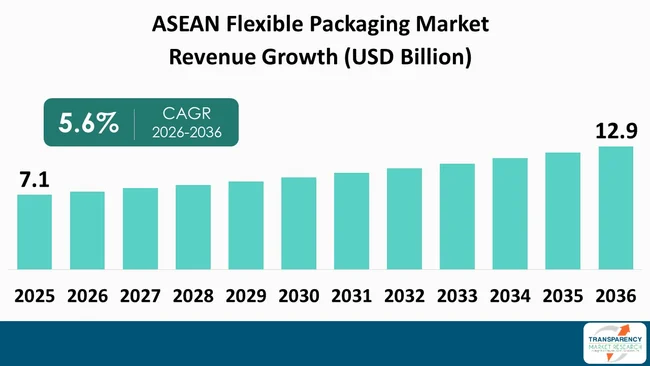
The ASEAN flexible packaging market size was valued atUSD 7.1 Billion in 2025and is projected to reachUSD 12.9 Billion by 2036, expanding at aCAGR of 5.6% from 2026 to 2036. The market growth is driven by increasing consumption of packaged food across ASEAN and expanding e-commerce & retail distribution networks.
People who live in cities now choose packaged products that offer easy handling and extended storage capability according to their modern lifestyle needs. Companies in the food & beverages and personal care sectors now choose to use lightweight packaging solutions. The flexible materials create both - lower shipping expenses and better operational performance throughout the supply chain. The advantages of this solution drive its use in manufacturing and retail operations throughout the various regions.
The growth of online shopping has increased the demand for packaging materials that provide both - protection and low weight. Flexible packaging enables shipping of smaller packages, which need less extra packaging material. Manufacturers today choose multilayer films and laminated materials as these options deliver better protection against external elements. The solutions extend product shelf life while preserving the original product quality.
The circular packaging system and waste reduction methods receive support from both - governmental entities and industry organizations. Research about recyclable flexible packaging structures receives funding through these programs. The transition gradually influences procurement decisions across regional packaging converters.
The consumer markets in this area remain extensive and show ongoing growth. The World Bank reports that ASEAN now has a population which exceeds 677 million people. The massive number of consumers creates ongoing demand for packaged food products and household items. Flexible packaging therefore remains central to ASEAN’s evolving packaging ecosystem.
Flexible packaging refers to the materials that allow for easy shaping into folded products that can be sealed. The lightweight flexible formats provide protection to their contents. The food & beverages, pharmaceutical, and personal care product manufacturing industries use these packaging solutions. The packaging solution allows manufacturers to create custom packages that match their complete range of product requirements.
The market includes multiple product formats that manufacturers designed for various applications. Pouches and sachets serve as common packaging solutions for food products and condiments and personal care items. Bags make up the standard packaging method used in three different areas which include retail and agriculture and industrial operations. Films and wraps function as protective materials which safeguard food during storage and transportation. Lightweight materials help companies decrease their shipping expenses while using less energy for product distribution. The packaging industry uses advanced sealing methods which help keep products fresh and extend their storage life. Packaging converters develop new multilayer systems which provide enhanced protection through improved barrier performance. The latest innovations provide better protection against moisture and oxygen and light exposure.
| Attribute | Detail |
|---|---|
| ASEAN Flexible Packaging Market Drivers |
|
The ASEAN economies see an upsurge in their packaged food product consumption. People living in cities now prefer to buy food items which require less time to prepare. The packaging of ready-to-eat meals and snacks and beverages needs protective materials. Products that use flexible packaging can maintain their original state while being moved to different locations. The trend drives people to demand lightweight packaging materials, which leads to their ongoing adoption.
The modern retail sector drives up consumer demand for packaged products. Supermarkets and convenience stores need packaging systems that function well for displaying products and storing them. Products displayed on shelves with flexible packaging designs achieve improved visibility and protection from damage. Packaging systems using less material help manufacturers with their shipping operations. These advantages drive food supply chains to adopt this system.
Food processing industries across ASEAN continue expanding production capabilities. Packaging systems for manufacturers need to deliver product freshness and safety. Flexible packaging materials create effective moisture and oxygen protection barriers. These properties help maintain food quality during transportation. The packaging requirements increase because regional food manufacturing operations expand.
The Food and Agriculture Organization reports that global food production reached 9.9 billion tons recently. Flexible packaging enables products to stay fresh during distribution while extending their shelf life. Food manufacturers therefore continue adopting lightweight packaging materials. The ASEAN markets display an increased demand for flexible packaging because of these industry developments.
e-Commerce activity is expanding rapidly across ASEAN consumer markets. Online retail platforms need protective packaging that can handle their complicated shipping needs. Flexible packaging provides lightweight packaging solutions that are ideal for both - shipping and storage needs. Retailers select packaging options that decrease both - their shipping expenses and packaging space needs. Flexible materials create higher demand due to their special features.
Digital commerce creates new purchasing patterns that spread throughout the entire region. Consumers now buy their food products and personal care items and household products through online platforms. Packaging must therefore ensure product protection during transportation. Flexible packaging provides reliable sealing that maintains its performance throughout its entire lifespan. Such properties make it suitable for e-Commerce distribution systems.
Packaging demand receives support from retail infrastructure development. Supermarkets, hypermarkets, and convenience stores continue expanding across ASEAN cities. Retail channels need effective packaging solutions that can display products while maintaining their storage capacity. Flexible packaging enables retailers to manage shelf space and delivery operations with greater efficiency. Manufacturers therefore adopt these materials across various product categories.
According to the ASEAN Secretariat, the region has more than 460 million internet users. Large digital populations encourage rapid growth of online retail markets. e-Commerce platforms require durable packaging for delivery operations. Flexible packaging therefore becomes essential for protecting goods during shipment. These factors collectively strengthen demand across the ASEAN flexible packaging market.
The ASEAN flexible packaging market creates new business possibilities as sustainability issues drive various environmental needs. The increasing waste reduction initiatives of governments together with their efforts to manage materials responsibly. Packaging manufacturers introduce new materials that can be recycled and which can decompose through environmental contact. The innovations accomplish their goal as they decrease environmental harm while they keep products safe from damage. Sustainable packaging therefore becomes an important growth avenue.
All brand owners within food and personal care industries use eco-friendly packaging methods. Companies create new packaging designs which require less materials for their operations. Lightweight flexible packaging supports downgauging initiatives and reduced plastic consumption. These materials simplify recycling processes and improve circular economy compatibility. The development of sustainable materials receives benefits from technological advancements which enhance their barrier characteristics. Manufacturers therefore maintain product safety while reducing environmental impact. The new developments create market expansion possibilities for producers of flexible packaging solutions.
The United Nations Environment Programme reports that global plastic waste reached 353 million tons recently. The increasing waste problem forces businesses to implement solutions which use sustainable packaging methods. Recycling programs together with responsible packaging design guidelines receive support from both - governments and environmental organizations. The flexible packaging industry focuses its efforts on developing materials which can be recycled and composted. New products can be created through sustainable packaging developments which provide businesses with new opportunities.
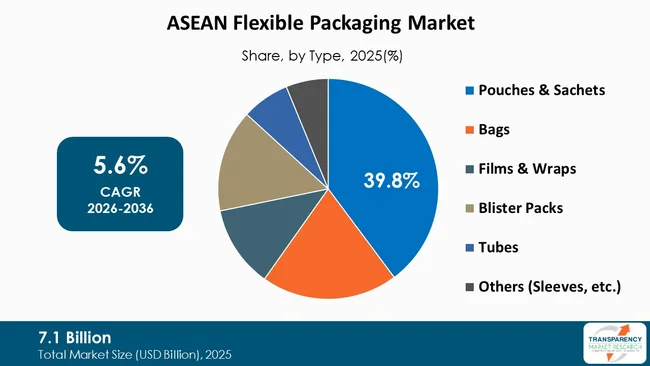
The ASEAN flexible packaging market primarily uses pouches and sachets as its main product packaging option. The segment controls 39.8% of the entire regional flexible packaging market. The format is a common packaging solution for the food & beverages industry and personal care industry. The combination of lightweight materials and effective sealing methods enables companies to deliver products to consumers through mass distribution channels. Manufacturers therefore choose pouches as their main packaging solution for products that require high-volume distribution.
Small portion products find their best packaging solution through these particular packaging formats. Sachets enable price-sensitive consumers to buy products at an affordable cost. Sachet packaging serves as the common choice for food condiments and instant beverages and personal care products. Compact packaging solutions enable users to decrease both transportation and storage needs. The benefits of these advantages create widespread market acceptance throughout ASEAN countries.
Pouches enable products to showcase their visual characteristics while providing businesses with branding possibilities. The flexible surfaces of products enable manufacturers to create detailed printing designs and product identification labels.
New technological developments enhance both - barrier defense systems and sealing performance. Multilayer pouch structures protect products from moisture and oxygen exposure. The protection system maintains product safety throughout all stages of transportation and storage. Food manufacturers experience advantages from enhanced product freshness and quality preservation. Pouches maintain their crucial status in the regional packaging system. Pouches and sachets maintain their market leadership because of their practical use and cost-effectiveness and their capacity to create distinct brand identities.
| Attribute | Detail |
|---|---|
| Leading Country |
|
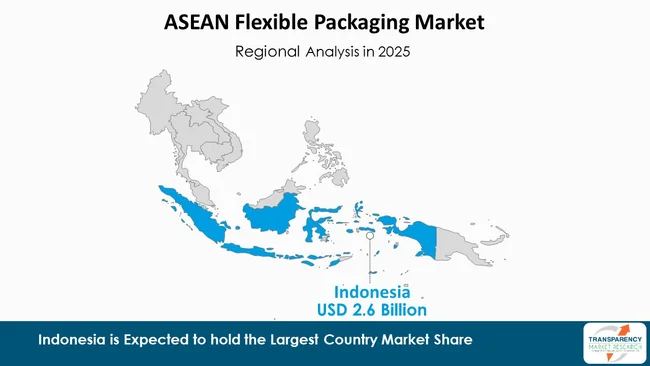
Indonesia leads the ASEAN flexible packaging industry. The country holds 36.2% of the total flexible packaging market share across the region. The country directly demands packaged food and household items because it has a vast number of consumers. The combination of urban development and retail growth leads to higher demand for packaging materials. The Indonesian consumer goods sector depends on flexible packaging as its main packaging solution.
The country operates a food processing sector which experiences rapid growth. Local manufacturers produce packaged snacks, beverages, sauces, and instant foods. Flexible packaging materials deliver dual benefits because they provide lightweight protective properties and maintain product freshness for extended periods. Food producers depend on pouches sachets and films as their primary tools for operating packaging tasks. The requirement for packaging materials leads to increased capacity of domestic packaging facilities.
The Indonesian retail market experiences continuous transformations through its fast-changing process. Supermarkets and convenience stores and e-commerce platforms extend their distribution operations throughout the country. The various retail formats need packaging materials which deliver both operational efficiency and budget-friendly solutions. Flexible packaging materials help optimize transportation processes and storage methods. The retail supply chains create ongoing requirements which packaging suppliers need to meet. The Indonesian market maintains its leading position because of strong consumer demand and industrial expansion.
Amcor, Constantia Flexibles, Huhtamaki, Mondi Group, PAC Worldwide, ProAmpac, PT Argha Karya Prima Industry Tbk, PT Trias Sentosa Tbk, SCG Packaging Public Company Limited, Scientex Berhad, Sealed Air, Sonoco Products Company, Thong Guan Industries Berhad, UFlex Limited, Weifu Films and others are some of the leading manufacturers operating in the ASEAN flexible packaging market.
Each of these companies has been profiled in the ASEAN flexible packaging market report based on parameters such as company overview, business strategies, financial overview, business segments, product portfolio, and recent developments.
| Attribute | Detail |
|---|---|
| Market Size Value in 2025 (Base Year) | USD 7.1 Billion |
| Market Forecast Value in 2036 | USD 12.9 Billion |
| Growth Rate (CAGR 2026 to 2036) | 5.6% |
| Forecast Period | 2026-2036 |
| Historical data Available for | 2021-2024 |
| Quantitative Units | USD Billion for Value and Tons for Volume |
| Market Analysis | ASEAN qualitative analysis includes drivers, restraints, opportunities, key trends, key market indicators, Porter’s Five Forces analysis, value chain analysis, SWOT analysis, etc. Furthermore, at the regional level, qualitative analysis includes key trends, price trends, and key supplier analysis. |
| Competition Landscape | Market Player - Competition Dashboard and Revenue Share Analysis 2025 Company Profiles (Details - Company Overview, Sales Area/Geographical Presence, Revenue, Strategy & Business Overview) |
| Format | Electronic (PDF) + Excel |
| Market Segmentations | By Type
|
| Regions Covered |
|
| Countries Covered |
|
| Companies Profiled |
|
| Customization Scope | Available upon Request |
| Pricing | Available upon Request |
The ASEAN flexible packaging market was valued at USD 7.1 Billion in 2025
The ASEAN flexible packaging industry is projected to reach at USD 12.9 Billion by the end of 2036
Increasing consumption of packaged food across ASEAN and expanding e-commerce & retail distribution networks, are some of the driving factors for this market
The CAGR is anticipated to be 5.6% from 2025 to 2035
Amcor, Constantia Flexibles, Huhtamaki, Mondi Group, PAC Worldwide, ProAmpac, PT Argha Karya Prima Industry Tbk, PT Trias Sentosa Tbk, SCG Packaging Public Company Limited, Scientex Berhad, Sealed Air, Sonoco Products Company, Thong Guan Industries Berhad, UFlex Limited, Weifu Films, and others
Table 1: ASEAN Flexible Packaging Market Value (USD Billion) Projection, 2021 to 2036 By Type
Table 2: ASEAN Flexible Packaging Market Volume (Tons) Projection, 2021 to 2036 By Type
Table 3: ASEAN Flexible Packaging Market Value (USD Billion) Projection, 2021 to 2036 By Material
Table 4: ASEAN Flexible Packaging Market Volume (Tons) Projection, 2021 to 2036 By Material
Table 5: ASEAN Flexible Packaging Market Value (USD Billion) Projection, 2021 to 2036 By End-use
Table 6: ASEAN Flexible Packaging Market Volume (Tons) Projection, 2021 to 2036 By End-use
Table 7: ASEAN Flexible Packaging Market Value (USD Billion) Projection, 2021 to 2036 By Country
Table 8: ASEAN Flexible Packaging Market Volume (Tons) Projection, 2021 to 2036 By Country
Table 9: Indonesia Flexible Packaging Market Value (USD Billion) Projection, 2021 to 2036 By Type
Table 10: Indonesia Flexible Packaging Market Volume (Tons) Projection, 2021 to 2036 By Type
Table 11: Indonesia Flexible Packaging Market Value (USD Billion) Projection, 2021 to 2036 By Material
Table 12: Indonesia Flexible Packaging Market Volume (Tons) Projection, 2021 to 2036 By Material
Table 13: Indonesia Flexible Packaging Market Value (USD Billion) Projection, 2021 to 2036 By End-use
Table 14: Indonesia Flexible Packaging Market Volume (Tons) Projection, 2021 to 2036 By End-use
Table 15: Thailand Flexible Packaging Market Value (USD Billion) Projection, 2021 to 2036 By Type
Table 16: Thailand Flexible Packaging Market Volume (Tons) Projection, 2021 to 2036 By Type
Table 17: Thailand Flexible Packaging Market Value (USD Billion) Projection, 2021 to 2036 By Material
Table 18: Thailand Flexible Packaging Market Volume (Tons) Projection, 2021 to 2036 By Material
Table 19: Thailand Flexible Packaging Market Value (USD Billion) Projection, 2021 to 2036 By End-use
Table 20: Thailand Flexible Packaging Market Volume (Tons) Projection, 2021 to 2036 By End-use
Table 21: Philippines Flexible Packaging Market Value (USD Billion) Projection, 2021 to 2036 By Type
Table 22: Philippines Flexible Packaging Market Volume (Tons) Projection, 2021 to 2036 By Type
Table 23: Philippines Flexible Packaging Market Value (USD Billion) Projection, 2021 to 2036 By Material
Table 24: Philippines Flexible Packaging Market Volume (Tons) Projection, 2021 to 2036 By Material
Table 25: Philippines Flexible Packaging Market Value (USD Billion) Projection, 2021 to 2036 By End-use
Table 26: Philippines Flexible Packaging Market Volume (Tons) Projection, 2021 to 2036 By End-use
Table 27: Vietnam Flexible Packaging Market Value (USD Billion) Projection, 2021 to 2036 By Type
Table 28: Vietnam Flexible Packaging Market Volume (Tons) Projection, 2021 to 2036 By Type
Table 29: Vietnam Flexible Packaging Market Value (USD Billion) Projection, 2021 to 2036 By Material
Table 30: Vietnam Flexible Packaging Market Volume (Tons) Projection, 2021 to 2036 By Material
Table 31: Vietnam Flexible Packaging Market Value (USD Billion) Projection, 2021 to 2036 By End-use
Table 32: Vietnam Flexible Packaging Market Volume (Tons) Projection, 2021 to 2036 By End-use
Table 33: Malaysia Flexible Packaging Market Value (USD Billion) Projection, 2021 to 2036 By Type
Table 34: Malaysia Flexible Packaging Market Volume (Tons) Projection, 2021 to 2036 By Type
Table 35: Malaysia Flexible Packaging Market Value (USD Billion) Projection, 2021 to 2036 By Material
Table 36: Malaysia Flexible Packaging Market Volume (Tons) Projection, 2021 to 2036 By Material
Table 37: Malaysia Flexible Packaging Market Value (USD Billion) Projection, 2021 to 2036 By End-use
Table 38: Malaysia Flexible Packaging Market Volume (Tons) Projection, 2021 to 2036 By End-use
Table 39: Singapore Flexible Packaging Market Value (USD Billion) Projection, 2021 to 2036 By Type
Table 40: Singapore Flexible Packaging Market Volume (Tons) Projection, 2021 to 2036 By Type
Table 41: Singapore Flexible Packaging Market Value (USD Billion) Projection, 2021 to 2036 By Material
Table 42: Singapore Flexible Packaging Market Volume (Tons) Projection, 2021 to 2036 By Material
Table 43: Singapore Flexible Packaging Market Value (USD Billion) Projection, 2021 to 2036 By End-use
Table 44: Singapore Flexible Packaging Market Volume (Tons) Projection, 2021 to 2036 By End-use
Figure 1: ASEAN Flexible Packaging Market Value (USD Billion) Projection, By Type 2021 to 2036
Figure 2: ASEAN Flexible Packaging Market Volume (Tons) Projection, By Type 2021 to 2036
Figure 3: ASEAN Flexible Packaging Market, Incremental Opportunities (USD Billion), Forecast, By Type 2021 to 2036
Figure 4: ASEAN Flexible Packaging Market Value (USD Billion) Projection, By Material 2021 to 2036
Figure 5: ASEAN Flexible Packaging Market Volume (Tons) Projection, By Material 2021 to 2036
Figure 6: ASEAN Flexible Packaging Market, Incremental Opportunities (USD Billion), Forecast, By Material 2021 to 2036
Figure 7: ASEAN Flexible Packaging Market Value (USD Billion) Projection, By End-use 2021 to 2036
Figure 8: ASEAN Flexible Packaging Market Volume (Tons) Projection, By End-use 2021 to 2036
Figure 9: ASEAN Flexible Packaging Market, Incremental Opportunities (USD Billion), Forecast, By End-use 2021 to 2036
Figure 10: ASEAN Flexible Packaging Market Value (USD Billion) Projection, By Country 2021 to 2036
Figure 11: ASEAN Flexible Packaging Market Volume (Tons) Projection, By Country 2021 to 2036
Figure 12: ASEAN Flexible Packaging Market, Incremental Opportunities (USD Billion), Forecast, By Country 2021 to 2036
Figure 13: Indonesia Flexible Packaging Market Value (USD Billion) Projection, By Type 2021 to 2036
Figure 14: Indonesia Flexible Packaging Market Volume (Tons) Projection, By Type 2021 to 2036
Figure 15: Indonesia Flexible Packaging Market, Incremental Opportunities (USD Billion), Forecast, By Type 2021 to 2036
Figure 16: Indonesia Flexible Packaging Market Value (USD Billion) Projection, By Material 2021 to 2036
Figure 17: Indonesia Flexible Packaging Market Volume (Tons) Projection, By Material 2021 to 2036
Figure 18: Indonesia Flexible Packaging Market, Incremental Opportunities (USD Billion), Forecast, By Material 2021 to 2036
Figure 19: Indonesia Flexible Packaging Market Value (USD Billion) Projection, By End-use 2021 to 2036
Figure 20: Indonesia Flexible Packaging Market Volume (Tons) Projection, By End-use 2021 to 2036
Figure 21: Indonesia Flexible Packaging Market, Incremental Opportunities (USD Billion), Forecast, By End-use 2021 to 2036
Figure 22: Thailand Flexible Packaging Market Value (USD Billion) Projection, By Type 2021 to 2036
Figure 23: Thailand Flexible Packaging Market Volume (Tons) Projection, By Type 2021 to 2036
Figure 24: Thailand Flexible Packaging Market, Incremental Opportunities (USD Billion), Forecast, By Type 2021 to 2036
Figure 25: Thailand Flexible Packaging Market Value (USD Billion) Projection, By Material 2021 to 2036
Figure 26: Thailand Flexible Packaging Market Volume (Tons) Projection, By Material 2021 to 2036
Figure 27: Thailand Flexible Packaging Market, Incremental Opportunities (USD Billion), Forecast, By Material 2021 to 2036
Figure 28: Thailand Flexible Packaging Market Value (USD Billion) Projection, By End-use 2021 to 2036
Figure 29: Thailand Flexible Packaging Market Volume (Tons) Projection, By End-use 2021 to 2036
Figure 30: Thailand Flexible Packaging Market, Incremental Opportunities (USD Billion), Forecast, By End-use 2021 to 2036
Figure 31: Philippines Flexible Packaging Market Value (USD Billion) Projection, By Type 2021 to 2036
Figure 32: Philippines Flexible Packaging Market Volume (Tons) Projection, By Type 2021 to 2036
Figure 33: Philippines Flexible Packaging Market, Incremental Opportunities (USD Billion), Forecast, By Type 2021 to 2036
Figure 34: Philippines Flexible Packaging Market Value (USD Billion) Projection, By Material 2021 to 2036
Figure 35: Philippines Flexible Packaging Market Volume (Tons) Projection, By Material 2021 to 2036
Figure 36: Philippines Flexible Packaging Market, Incremental Opportunities (USD Billion), Forecast, By Material 2021 to 2036
Figure 37: Philippines Flexible Packaging Market Value (USD Billion) Projection, By End-use 2021 to 2036
Figure 38: Philippines Flexible Packaging Market Volume (Tons) Projection, By End-use 2021 to 2036
Figure 39: Philippines Flexible Packaging Market, Incremental Opportunities (USD Billion), Forecast, By End-use 2021 to 2036
Figure 40: Vietnam Flexible Packaging Market Value (USD Billion) Projection, By Type 2021 to 2036
Figure 41: Vietnam Flexible Packaging Market Volume (Tons) Projection, By Type 2021 to 2036
Figure 42: Vietnam Flexible Packaging Market, Incremental Opportunities (USD Billion), Forecast, By Type 2021 to 2036
Figure 43: Vietnam Flexible Packaging Market Value (USD Billion) Projection, By Material 2021 to 2036
Figure 44: Vietnam Flexible Packaging Market Volume (Tons) Projection, By Material 2021 to 2036
Figure 45: Vietnam Flexible Packaging Market, Incremental Opportunities (USD Billion), Forecast, By Material 2021 to 2036
Figure 46: Vietnam Flexible Packaging Market Value (USD Billion) Projection, By End-use 2021 to 2036
Figure 47: Vietnam Flexible Packaging Market Volume (Tons) Projection, By End-use 2021 to 2036
Figure 48: Vietnam Flexible Packaging Market, Incremental Opportunities (USD Billion), Forecast, By End-use 2021 to 2036
Figure 49: Malaysia Flexible Packaging Market Value (USD Billion) Projection, By Type 2021 to 2036
Figure 50: Malaysia Flexible Packaging Market Volume (Tons) Projection, By Type 2021 to 2036
Figure 51: Malaysia Flexible Packaging Market, Incremental Opportunities (USD Billion), Forecast, By Type 2021 to 2036
Figure 52: Malaysia Flexible Packaging Market Value (USD Billion) Projection, By Material 2021 to 2036
Figure 53: Malaysia Flexible Packaging Market Volume (Tons) Projection, By Material 2021 to 2036
Figure 54: Malaysia Flexible Packaging Market, Incremental Opportunities (USD Billion), Forecast, By Material 2021 to 2036
Figure 55: Malaysia Flexible Packaging Market Value (USD Billion) Projection, By End-use 2021 to 2036
Figure 56: Malaysia Flexible Packaging Market Volume (Tons) Projection, By End-use 2021 to 2036
Figure 57: Malaysia Flexible Packaging Market, Incremental Opportunities (USD Billion), Forecast, By End-use 2021 to 2036
Figure 58: Singapore Flexible Packaging Market Value (USD Billion) Projection, By Type 2021 to 2036
Figure 59: Singapore Flexible Packaging Market Volume (Tons) Projection, By Type 2021 to 2036
Figure 60: Singapore Flexible Packaging Market, Incremental Opportunities (USD Billion), Forecast, By Type 2021 to 2036
Figure 61: Singapore Flexible Packaging Market Value (USD Billion) Projection, By Material 2021 to 2036
Figure 62: Singapore Flexible Packaging Market Volume (Tons) Projection, By Material 2021 to 2036
Figure 63: Singapore Flexible Packaging Market, Incremental Opportunities (USD Billion), Forecast, By Material 2021 to 2036
Figure 64: Singapore Flexible Packaging Market Value (USD Billion) Projection, By End-use 2021 to 2036
Figure 65: Singapore Flexible Packaging Market Volume (Tons) Projection, By End-use 2021 to 2036
Figure 66: Singapore Flexible Packaging Market, Incremental Opportunities (USD Billion), Forecast, By End-use 2021 to 2036
Copyright © Transparency Market Research, Inc. All Rights reserved
Trust Online


ASEAN Flexible Packaging Market
