

Reports
Reports
The global Flavors and Fragrances market size was valued at USD 45.1 Billion in 2025 and is projected to reach USD 73.6 Billion by 2036, expanding at a CAGR of 4.5% from 2026 to 2036. The growth of the market is driven by increasing consumer demand for enhanced sensory experiences in food, beverages, and personal care, household, and wellness products. Rising preference for natural and clean-label ingredients, expanding applications in processed foods and cosmetics, and continuous innovation in specialty flavor and fragrance formulations are supporting market expansion.
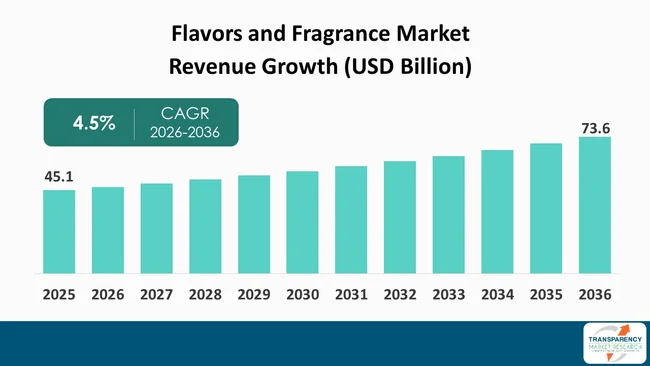
The global flavors and fragrances market is progressing through evolving consumer choice and product customization trends. The focus of the producers is natural ingredients with formulations based on biotechnology and nature alike, and sustainable sourcing. Demand is high for the applications of food, beverages, personal care, home care, and wellness. Product differentiation is increasingly based on sensory features, so flavour and fragrance innovation is a strategic priority. Regulatory compliance and ingredient transparency are influencing the product development decisions of both global and local manufacturers.
Driven by the expansion of food processing, demand for sophisticated flavoring systems is growing globally. Companies are focusing on encapsulation technologies, clean-label formulations, and plant-based aromatic compounds. Fragrance makers are also broadening their ranges for high-end personal care and household goods. The drive toward sustainability is leading to the adoption of renewable feedstocks and sustainable extraction methods. The innovation pipelines are being enhanced as a result of the strategic relationships between the suppliers of ingredients and the manufacturers of consumer goods.
The IFA upholds BRE global standards, which support the safety of ingredients used in fragrances and responsible usage. These regulations guide how formulations are developed with respect to various end-use industries. Consumer demand for genuine taste and olfactory quality is driving ongoing research investment. Players are increasingly implementing digital technologies to optimize formulation and sensory evaluation. Shifting consumption trends and premiumisation strategies continue to support long-term growth outlooks.
The global flavors and fragrances market is an important part of the specialty ingredients market. Flavors are utilized to enhance taste profiles in food, beverages, and nutrition products. Fragrances contribute unique sensory properties to personal care, home care, and health applications. They allow manufacturers to enhance product appeal and consumer experiences. Application sectors are driving market growth, and innovation continues to be related.
There are natural processes, such as extraction and fermentation that could be used to produce solutions from natural products; there are also advanced formulation technologies. Fragrance houses manipulate raw fragrance materials to create unique scent blends for various uses. The growing need for luxury finished products is restraining the continuous improvement in the product. During production, enterprises are paying attention to the traceability, sustainability, and regulatory compliance of their raw materials. Research activity is focused increasingly on cleaner formulations and greener sourcing methods.
The market caters to a diverse clientele of food processors, beverage producers, cosmetic manufacturers, and household goods manufacturers. Product personalization is now considered vital to tackling regional styles and dynamics of consumer demands. Technological developments are increasing the accuracy of formulations and product consistency. Product uniformity is also improved as a result. Manufacturers are also investing more in research and development to meet the demands of the growing industry.
| Attribute | Detail |
|---|---|
| Market Drivers |
|
Growing urbanization and a fast pace of living are responsible for increasing demand for processed food and convenience food products in the world. Consumers want more convenience in the form of ready meals, snacks, and functional drinks. These products need to be developed with more advanced flavour systems so that they are still tasty while having different taste profiles. Food manufacturers are spending big bucks on new flavor technologies to adapt to shifting consumer preferences. Hence, flavor companies in the global flavors and fragrances market are increasing their offerings by adding customized solutions, banks of taste based on locale solutions.
Producers of convenience foods depend on flavor ingredients to drive appeal on the sensory level and the satisfaction of consumers. Product introductions are increasingly based on novel flavors and focused on premium positioning. Manufacturers are developing clean-label products as well as those with superior taste attributes. The demand for plant-based and alternative protein products escalates the need for flavour innovation. Flavor experts are an important factor in boosting product acceptance and repeat purchasing.
The global food import bill was projected to reach USD 2.2 trillion in 2024, reflecting sustained demand for processed and packaged food products worldwide. Food manufacturers are major users of flavor ingredients in snacks, beverages, bakery, dairy, and convenience foods. Growing distribution in the retail sector also makes packaged food more readily available. Consumer demand for international cuisines is contributing to a continued trend in flavor diversity within categories including snacks, yogurt, and beer.
Rising consumption of personal and household care products is driving growth in the fragrances segment. Consumers are shifting their perception of the importance of fragrance quality in relation to product performance from a mass product to a premium market. Producers are creating unique scent profiles to drive brand differentiation and consumer loyalty. Innovation in fragrance is emerging as a key competitive differentiator in global consumer goods markets. This trend is driving continuous investment in fragrance R&D within the global flavors and fragrances market.
Specialized scent formulations are needed for the personal care sectors of skin care, hair care, deodorants, and bath products. Household care uses of detergents and fabric care products, as well as air fresheners, also rely on fragrance innovation. Shoppers are also increasingly interested in products that can provide enduring and one-of-a-kind sensory experiences. Premiumization trends will continue to fuel the need for more complex fragrance blends. Producers are catering to broader fragrance ranges and more sophisticated formulation capabilities.
The International Fragrance Association, the leader in promoting industry self-regulation, updates the maintained globally applicable standards for the use and safety of fragrance ingredients. These standards promote consumer confidence and responsible industry conduct. Product development increasingly includes integrated safety assessments. Regulatory compliance is also driving investments in sophisticated testing methodologies and formulations. With demand for personal care and household products growing worldwide, fragrance providers are well-positioned to benefit from continued expansion.
The increasing demand for natural and sustainable ingredients is expected to offer immense growth potential in the global flavors and fragrances market. Product ingredients are more likely to be scrutinized by consumers before purchase. Producers are answering demand by formulating botanical extracts, essential oils and other naturally derived ingredients. Ingredient sourcing and production methods are also being impacted by sustainability pledges. These trends bode well for suppliers with robust natural ingredient capabilities.
Food & beverage companies are growing clean label portfolios within multiple categories. Personal care companies are also advertising products with ingredients derived from nature. Transparency of ingredients has also become a key purchasing consideration for green consumers. Firms that can guarantee traceability and responsible sourcing get a leg up on their competitors. This change is promoting more investment into sustainable agricultural supply chains.
All these with the growing responsible usage of ingredients and industry sustainable practices. Rising regulatory pressure related to product transparency is further supporting the adoption of natural ingredients. Producers are also utilizing biotechnology and fermentation as production methods. These solutions can potentially enhance sustainability and provide consistent product quality. Growing consumer awareness of their environmental obligations is expected to provide the flavour and fragrance value chains with lucrative growth opportunities in the coming years.
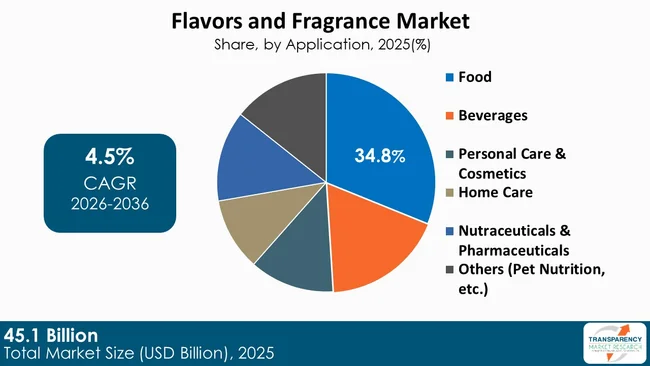
The food segment is the largest segment in the global flavors and fragrances market, accounting for 34.8%. Flavor ingredients are actively used by food manufacturers to influence taste for both consistency and product differentiation. The demand is strong in the bakery, confectionery, dairy, salty snacks, and convenience food industries. R&D efforts are increasingly focused on personal and bespoke flavour profiles. This trend continues to support the consumption of flavouring ingredients in global food applications.
Consumer demand for premium and international food experiences continues to drive flavour diversification. To cater to taste preferences, manufacturers are inventing region-based flavour profiles. Natural flavour solutions are sought after in clean-label product formulations, contributing to a growing demand. Specialized flavor blends are needed to enhance sensory acceptance and consumer satisfaction of plant-based foods. These trends accentuate the significance of flavor providers within food manufacturing ecosystems.
New formulation technologies are enabling flavor stability and performance improvements. Food businesses are dedicating funds to research to create healthier and more attractive products. The ability to customize flavors has become an essential feature for product differentiation strategies. New product introductions and R&D innovation in frozen and dairy products are primarily driving the market growth. As a result, sales of the food segment are anticipated to hold a majority share in the global flavors and fragrances market.
| Attribute | Detail |
|---|---|
| Leading Region |
|
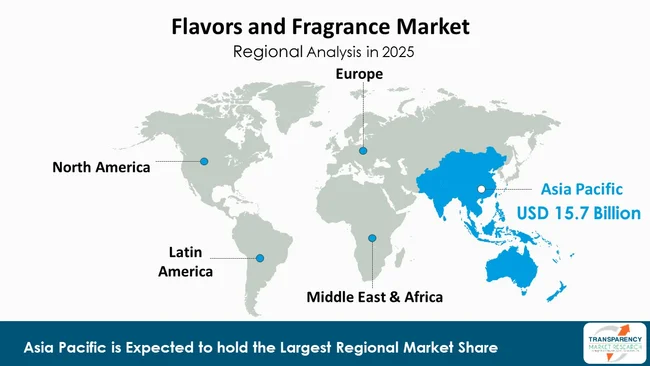
The Asia Pacific is the dominant regional market for the global flavor and fragrance industry and accounts for 30.5% of the market share. The region is supported by the growing food processing industry and the increasing production of consumer goods. Urbanization is still on the rise, which has a knock-on effect on the demand for packaged food and personal care products. Companies are rolling out more localized flavor and fragrance solutions for their products. These elements combined result in a strong growth for the regional market.
The region is home to manufacturing plants that deliver products to both national and international markets. Consumer preferences for high-end products are driving constant product innovation. Customized flavor systems for local tastes are a growing demand from food and drink companies.
The increasing investments in R&D, production capacity, and supply chain infrastructure will contribute to the stronger position of this region. Sustainability trends are driving increased use of sustainably sourced ingredients. Businesses are still building up capacity across regions in order to have better services and reach in the market. Product localization continues to be a major tactic for many end-users. Based on these trends, the Asia Pacific is expected to maintain its dominance in the global flavours and fragrances market.
Bell Flavors & Fragrances, Biolandes, dsm-firmenich, Givaudan, Huabao International, International Flavors & Fragrances (IFF), Lucta, Mane, Oriental Aromatics, Robertet, S H Kelkar and Company, Symrise, T. Hasegawa, Takasago International Corporation, Treatt are some of the leading manufacturers operating in the Global Toilet Seats market.
Each of these companies has been profiled in the Global Flavors and Fragrances Market report based on parameters such as company overview, business strategies, financial overview, business segments, product portfolio, and recent developments.
| Attribute | Detail |
|---|---|
| Market Size Value in 2025 (Base Year) | USD 45.1 Billion |
| Market Forecast Value in 2036 | USD 73.6 Billion |
| Growth Rate (CAGR 2026 to 2036) | 4.5% |
| Forecast Period | 2026-2036 |
| Historical data Available for | 2021-2025 |
| Quantitative Units | USD Billion for Value and Tons for Volume |
| Market Analysis | Global qualitative analysis includes drivers, restraints, opportunities, key trends, key market indicators, Porter’s Five Forces analysis, value chain analysis, SWOT analysis, etc. At the regional level, qualitative analysis includes key trends, price trends, and key supplier analysis. |
| Competition Landscape | Market Player - Competition Dashboard and Revenue Share Analysis 2025 Company Profiles (Details - Company Overview, Sales Area/Geographical Presence, Revenue, Strategy & Business Overview) |
| Format | Electronic (PDF) + Excel |
| Market Segmentations | Product Type
|
| Regions Covered |
|
| Countries Covered |
|
| Companies Profiled |
|
| Customization Scope | Available upon Request |
| Pricing | Available upon Request |
The global flavors and fragrances market was valued at USD 45.1 Billion in 2025
The global flavors and fragrances industry is projected to reach at USD 73.6 Billion by the end of 2036
Rising demand for processed and convenience foods and expanding personal care and home care product consumption, are some of the driving factors for this market
The CAGR is anticipated to be 4.5% from 2026 to 2036
Key players include Bell Flavors & Fragrances, Biolandes, dsm-firmenich, Givaudan, Huabao International, International Flavors & Fragrances (IFF), Lucta, Mane, Oriental Aromatics, Robertet, S H Kelkar and Company, Symrise, T. Hasegawa, Takasago International Corporation, Treatt, and others.
Table 01: Global Flavors and Fragrances Market Value (USD Billion) Projection, By Product Type 2021 to 2036
Table 02: Global Flavors and Fragrances Market Volume (Tons) Projection, By Product Type 2021 to 2036
Table 03: Global Flavors and Fragrances Market Value (USD Billion) Projection, By Source 2021 to 2036
Table 04: Global Flavors and Fragrances Market Volume (Tons) Projection, By Source 2021 to 2036
Table 05: Global Flavors and Fragrances Market Value (USD Billion) Projection, By Form 2021 to 2036
Table 06: Global Flavors and Fragrances Market Volume (Tons) Projection, By Form 2021 to 2036
Table 07: Global Flavors and Fragrances Market Value (USD Billion) Projection, By Application 2021 to 2036
Table 08: Global Flavors and Fragrances Market Volume (Tons) Projection, By Application 2021 to 2036
Table 09: Global Flavors and Fragrances Market Value (USD Billion) Projection, By Distribution Channel 2021 to 2036
Table 10: Global Flavors and Fragrances Market Volume (Tons) Projection, By Distribution Channel 2021 to 2036
Table 11: Global Flavors and Fragrances Market Value (USD Billion) Projection, By Region 2021 to 2036
Table 12: Global Flavors and Fragrances Market Volume (Tons) Projection, By Region 2021 to 2036
Table 13: North America Flavors and Fragrances Market Value (USD Billion) Projection, By Product Type 2021 to 2036
Table 14: North America Flavors and Fragrances Market Volume (Tons) Projection, By Product Type 2021 to 2036
Table 15: North America Flavors and Fragrances Market Value (USD Billion) Projection, By Source 2021 to 2036
Table 16: North America Flavors and Fragrances Market Volume (Tons) Projection, By Source 2021 to 2036
Table 17: North America Flavors and Fragrances Market Value (USD Billion) Projection, By Form 2021 to 2036
Table 18: North America Flavors and Fragrances Market Volume (Tons) Projection, By Form 2021 to 2036
Table 19: North America Flavors and Fragrances Market Value (USD Billion) Projection, By Application 2021 to 2036
Table 20: North America Flavors and Fragrances Market Volume (Tons) Projection, By Application 2021 to 2036
Table 21: North America Flavors and Fragrances Market Value (USD Billion) Projection, By Distribution Channel 2021 to 2036
Table 22: North America Flavors and Fragrances Market Volume (Tons) Projection, By Distribution Channel 2021 to 2036
Table 23: North America Flavors and Fragrances Market Value (USD Billion) Projection, By Country 2021 to 2036
Table 24: North America Flavors and Fragrances Market Volume (Tons) Projection, By Country 2021 to 2036
Table 25: U.S. Flavors and Fragrances Market Value (USD Billion) Projection, By Product Type 2021 to 2036
Table 26: U.S. Flavors and Fragrances Market Volume (Tons) Projection, By Product Type 2021 to 2036
Table 27: U.S. Flavors and Fragrances Market Value (USD Billion) Projection, By Source 2021 to 2036
Table 28: U.S. Flavors and Fragrances Market Volume (Tons) Projection, By Source 2021 to 2036
Table 29: U.S. Flavors and Fragrances Market Value (USD Billion) Projection, By Form 2021 to 2036
Table 30: U.S. Flavors and Fragrances Market Volume (Tons) Projection, By Form 2021 to 2036
Table 31: U.S. Flavors and Fragrances Market Value (USD Billion) Projection, By Application 2021 to 2036
Table 32: U.S. Flavors and Fragrances Market Volume (Tons) Projection, By Application 2021 to 2036
Table 33: U.S. Flavors and Fragrances Market Value (USD Billion) Projection, By Distribution Channel 2021 to 2036
Table 34: U.S. Flavors and Fragrances Market Volume (Tons) Projection, By Distribution Channel 2021 to 2036
Table 35: Canada Flavors and Fragrances Market Value (USD Billion) Projection, By Product Type 2021 to 2036
Table 36: Canada Flavors and Fragrances Market Volume (Tons) Projection, By Product Type 2021 to 2036
Table 37: Canada Flavors and Fragrances Market Value (USD Billion) Projection, By Source 2021 to 2036
Table 38: Canada Flavors and Fragrances Market Volume (Tons) Projection, By Source 2021 to 2036
Table 39: Canada Flavors and Fragrances Market Value (USD Billion) Projection, By Form 2021 to 2036
Table 40: Canada Flavors and Fragrances Market Volume (Tons) Projection, By Form 2021 to 2036
Table 41: Canada Flavors and Fragrances Market Value (USD Billion) Projection, By Application 2021 to 2036
Table 42: Canada Flavors and Fragrances Market Volume (Tons) Projection, By Application 2021 to 2036
Table 43: Canada Flavors and Fragrances Market Value (USD Billion) Projection, By Distribution Channel 2021 to 2036
Table 44: Canada Flavors and Fragrances Market Volume (Tons) Projection, By Distribution Channel 2021 to 2036
Table 45: Europe Flavors and Fragrances Market Value (USD Billion) Projection, By Product Type 2021 to 2036
Table 46: Europe Flavors and Fragrances Market Volume (Tons) Projection, By Product Type 2021 to 2036
Table 47: Europe Flavors and Fragrances Market Value (USD Billion) Projection, By Source 2021 to 2036
Table 48: Europe Flavors and Fragrances Market Volume (Tons) Projection, By Source 2021 to 2036
Table 49: Europe Flavors and Fragrances Market Value (USD Billion) Projection, By Form 2021 to 2036
Table 50: Europe Flavors and Fragrances Market Volume (Tons) Projection, By Form 2021 to 2036
Table 51: Europe Flavors and Fragrances Market Value (USD Billion) Projection, By Application 2021 to 2036
Table 52: Europe Flavors and Fragrances Market Volume (Tons) Projection, By Application 2021 to 2036
Table 53: Europe Flavors and Fragrances Market Value (USD Billion) Projection, By Distribution Channel 2021 to 2036
Table 54: Europe Flavors and Fragrances Market Volume (Tons) Projection, By Distribution Channel 2021 to 2036
Table 55: Europe Flavors and Fragrances Market Value (USD Billion) Projection, By Country 2021 to 2036
Table 56: Europe Flavors and Fragrances Market Volume (Tons) Projection, By Country 2021 to 2036
Table 57: U.K. Flavors and Fragrances Market Value (USD Billion) Projection, By Product Type 2021 to 2036
Table 58: U.K. Flavors and Fragrances Market Volume (Tons) Projection, By Product Type 2021 to 2036
Table 59: U.K. Flavors and Fragrances Market Value (USD Billion) Projection, By Source 2021 to 2036
Table 60: U.K. Flavors and Fragrances Market Volume (Tons) Projection, By Source 2021 to 2036
Table 61: U.K. Flavors and Fragrances Market Value (USD Billion) Projection, By Form 2021 to 2036
Table 62: U.K. Flavors and Fragrances Market Volume (Tons) Projection, By Form 2021 to 2036
Table 63: U.K. Flavors and Fragrances Market Value (USD Billion) Projection, By Application 2021 to 2036
Table 64: U.K. Flavors and Fragrances Market Volume (Tons) Projection, By Application 2021 to 2036
Table 65: U.K. Flavors and Fragrances Market Value (USD Billion) Projection, By Distribution Channel 2021 to 2036
Table 66: U.K. Flavors and Fragrances Market Volume (Tons) Projection, By Distribution Channel 2021 to 2036
Table 67: Germany Flavors and Fragrances Market Value (USD Billion) Projection, By Product Type 2021 to 2036
Table 68: Germany Flavors and Fragrances Market Volume (Tons) Projection, By Product Type 2021 to 2036
Table 69: Germany Flavors and Fragrances Market Value (USD Billion) Projection, By Source 2021 to 2036
Table 70: Germany Flavors and Fragrances Market Volume (Tons) Projection, By Source 2021 to 2036
Table 71: Germany Flavors and Fragrances Market Value (USD Billion) Projection, By Form 2021 to 2036
Table 72: Germany Flavors and Fragrances Market Volume (Tons) Projection, By Form 2021 to 2036
Table 73: Germany Flavors and Fragrances Market Value (USD Billion) Projection, By Application 2021 to 2036
Table 74: Germany Flavors and Fragrances Market Volume (Tons) Projection, By Application 2021 to 2036
Table 75: Germany Flavors and Fragrances Market Value (USD Billion) Projection, By Distribution Channel 2021 to 2036
Table 76: Germany Flavors and Fragrances Market Volume (Tons) Projection, By Distribution Channel 2021 to 2036
Table 77: France Flavors and Fragrances Market Value (USD Billion) Projection, By Product Type 2021 to 2036
Table 78: France Flavors and Fragrances Market Volume (Tons) Projection, By Product Type 2021 to 2036
Table 79: France Flavors and Fragrances Market Value (USD Billion) Projection, By Source 2021 to 2036
Table 80: France Flavors and Fragrances Market Volume (Tons) Projection, By Source 2021 to 2036
Table 81: France Flavors and Fragrances Market Value (USD Billion) Projection, By Form 2021 to 2036
Table 82: France Flavors and Fragrances Market Volume (Tons) Projection, By Form 2021 to 2036
Table 83: France Flavors and Fragrances Market Value (USD Billion) Projection, By Application 2021 to 2036
Table 84: France Flavors and Fragrances Market Volume (Tons) Projection, By Application 2021 to 2036
Table 85: France Flavors and Fragrances Market Value (USD Billion) Projection, By Distribution Channel 2021 to 2036
Table 86: France Flavors and Fragrances Market Volume (Tons) Projection, By Distribution Channel 2021 to 2036
Table 87: Italy Flavors and Fragrances Market Value (USD Billion) Projection, By Product Type 2021 to 2036
Table 88: Italy Flavors and Fragrances Market Volume (Tons) Projection, By Product Type 2021 to 2036
Table 89: Italy Flavors and Fragrances Market Value (USD Billion) Projection, By Source 2021 to 2036
Table 90: Italy Flavors and Fragrances Market Volume (Tons) Projection, By Source 2021 to 2036
Table 91: Italy Flavors and Fragrances Market Value (USD Billion) Projection, By Form 2021 to 2036
Table 92: Italy Flavors and Fragrances Market Volume (Tons) Projection, By Form 2021 to 2036
Table 93: Italy Flavors and Fragrances Market Value (USD Billion) Projection, By Application 2021 to 2036
Table 94: Italy Flavors and Fragrances Market Volume (Tons) Projection, By Application 2021 to 2036
Table 95: Italy Flavors and Fragrances Market Value (USD Billion) Projection, By Distribution Channel 2021 to 2036
Table 96: Italy Flavors and Fragrances Market Volume (Tons) Projection, By Distribution Channel 2021 to 2036
Table 97: Spain Flavors and Fragrances Market Value (USD Billion) Projection, By Product Type 2021 to 2036
Table 98: Spain Flavors and Fragrances Market Volume (Tons) Projection, By Product Type 2021 to 2036
Table 99: Spain Flavors and Fragrances Market Value (USD Billion) Projection, By Source 2021 to 2036
Table 100: Spain Flavors and Fragrances Market Volume (Tons) Projection, By Source 2021 to 2036
Table 101: Spain Flavors and Fragrances Market Value (USD Billion) Projection, By Form 2021 to 2036
Table 102: Spain Flavors and Fragrances Market Volume (Tons) Projection, By Form 2021 to 2036
Table 103: Spain Flavors and Fragrances Market Value (USD Billion) Projection, By Application 2021 to 2036
Table 104: Spain Flavors and Fragrances Market Volume (Tons) Projection, By Application 2021 to 2036
Table 105: Spain Flavors and Fragrances Market Value (USD Billion) Projection, By Distribution Channel 2021 to 2036
Table 106: Spain Flavors and Fragrances Market Volume (Tons) Projection, By Distribution Channel 2021 to 2036
Table 107: The Netherlands Flavors and Fragrances Market Value (USD Billion) Projection, By Product Type 2021 to 2036
Table 108: The Netherlands Flavors and Fragrances Market Volume (Tons) Projection, By Product Type 2021 to 2036
Table 109: The Netherlands Flavors and Fragrances Market Value (USD Billion) Projection, By Source 2021 to 2036
Table 110: The Netherlands Flavors and Fragrances Market Volume (Tons) Projection, By Source 2021 to 2036
Table 111: The Netherlands Flavors and Fragrances Market Value (USD Billion) Projection, By Form 2021 to 2036
Table 112: The Netherlands Flavors and Fragrances Market Volume (Tons) Projection, By Form 2021 to 2036
Table 113: The Netherlands Flavors and Fragrances Market Value (USD Billion) Projection, By Application 2021 to 2036
Table 114: The Netherlands Flavors and Fragrances Market Volume (Tons) Projection, By Application 2021 to 2036
Table 115: The Netherlands Flavors and Fragrances Market Value (USD Billion) Projection, By Distribution Channel 2021 to 2036
Table 116: The Netherlands Flavors and Fragrances Market Volume (Tons) Projection, By Distribution Channel 2021 to 2036
Table 117: Asia Pacific Flavors and Fragrances Market Value (USD Billion) Projection, By Product Type 2021 to 2036
Table 118: Asia Pacific Flavors and Fragrances Market Volume (Tons) Projection, By Product Type 2021 to 2036
Table 119: Asia Pacific Flavors and Fragrances Market Value (USD Billion) Projection, By Source 2021 to 2036
Table 120: Asia Pacific Flavors and Fragrances Market Volume (Tons) Projection, By Source 2021 to 2036
Table 121: Asia Pacific Flavors and Fragrances Market Value (USD Billion) Projection, By Form 2021 to 2036
Table 122: Asia Pacific Flavors and Fragrances Market Volume (Tons) Projection, By Form 2021 to 2036
Table 123: Asia Pacific Flavors and Fragrances Market Value (USD Billion) Projection, By Application 2021 to 2036
Table 124: Asia Pacific Flavors and Fragrances Market Volume (Tons) Projection, By Application 2021 to 2036
Table 125: Asia Pacific Flavors and Fragrances Market Value (USD Billion) Projection, By Distribution Channel 2021 to 2036
Table 126: Asia Pacific Flavors and Fragrances Market Volume (Tons) Projection, By Distribution Channel 2021 to 2036
Table 127: Asia Pacific Flavors and Fragrances Market Value (USD Billion) Projection, By Country 2021 to 2036
Table 128: Asia Pacific Flavors and Fragrances Market Volume (Tons) Projection, By Country 2021 to 2036
Table 129: China Flavors and Fragrances Market Value (USD Billion) Projection, By Product Type 2021 to 2036
Table 130: China Flavors and Fragrances Market Volume (Tons) Projection, By Product Type 2021 to 2036
Table 131: China Flavors and Fragrances Market Value (USD Billion) Projection, By Source 2021 to 2036
Table 132: China Flavors and Fragrances Market Volume (Tons) Projection, By Source 2021 to 2036
Table 133: China Flavors and Fragrances Market Value (USD Billion) Projection, By Form 2021 to 2036
Table 134: China Flavors and Fragrances Market Volume (Tons) Projection, By Form 2021 to 2036
Table 135: China Flavors and Fragrances Market Value (USD Billion) Projection, By Application 2021 to 2036
Table 136: China Flavors and Fragrances Market Volume (Tons) Projection, By Application 2021 to 2036
Table 137: China Flavors and Fragrances Market Value (USD Billion) Projection, By Distribution Channel 2021 to 2036
Table 138: China Flavors and Fragrances Market Volume (Tons) Projection, By Distribution Channel 2021 to 2036
Table 139: India Flavors and Fragrances Market Value (USD Billion) Projection, By Product Type 2021 to 2036
Table 140: India Flavors and Fragrances Market Volume (Tons) Projection, By Product Type 2021 to 2036
Table 141: India Flavors and Fragrances Market Value (USD Billion) Projection, By Source 2021 to 2036
Table 142: India Flavors and Fragrances Market Volume (Tons) Projection, By Source 2021 to 2036
Table 143: India Flavors and Fragrances Market Value (USD Billion) Projection, By Form 2021 to 2036
Table 144: India Flavors and Fragrances Market Volume (Tons) Projection, By Form 2021 to 2036
Table 145: India Flavors and Fragrances Market Value (USD Billion) Projection, By Application 2021 to 2036
Table 146: India Flavors and Fragrances Market Volume (Tons) Projection, By Application 2021 to 2036
Table 147: India Flavors and Fragrances Market Value (USD Billion) Projection, By Distribution Channel 2021 to 2036
Table 148: India Flavors and Fragrances Market Volume (Tons) Projection, By Distribution Channel 2021 to 2036
Table 149: Japan Flavors and Fragrances Market Value (USD Billion) Projection, By Product Type 2021 to 2036
Table 150: Japan Flavors and Fragrances Market Volume (Tons) Projection, By Product Type 2021 to 2036
Table 151: Japan Flavors and Fragrances Market Value (USD Billion) Projection, By Source 2021 to 2036
Table 152: Japan Flavors and Fragrances Market Volume (Tons) Projection, By Source 2021 to 2036
Table 153: Japan Flavors and Fragrances Market Value (USD Billion) Projection, By Form 2021 to 2036
Table 154: Japan Flavors and Fragrances Market Volume (Tons) Projection, By Form 2021 to 2036
Table 155: Japan Flavors and Fragrances Market Value (USD Billion) Projection, By Application 2021 to 2036
Table 156: Japan Flavors and Fragrances Market Volume (Tons) Projection, By Application 2021 to 2036
Table 157: Japan Flavors and Fragrances Market Value (USD Billion) Projection, By Distribution Channel 2021 to 2036
Table 158: Japan Flavors and Fragrances Market Volume (Tons) Projection, By Distribution Channel 2021 to 2036
Table 159: Australia Flavors and Fragrances Market Value (USD Billion) Projection, By Product Type 2021 to 2036
Table 160: Australia Flavors and Fragrances Market Volume (Tons) Projection, By Product Type 2021 to 2036
Table 161: Australia Flavors and Fragrances Market Value (USD Billion) Projection, By Source 2021 to 2036
Table 162: Australia Flavors and Fragrances Market Volume (Tons) Projection, By Source 2021 to 2036
Table 163: Australia Flavors and Fragrances Market Value (USD Billion) Projection, By Form 2021 to 2036
Table 164: Australia Flavors and Fragrances Market Volume (Tons) Projection, By Form 2021 to 2036
Table 165: Australia Flavors and Fragrances Market Value (USD Billion) Projection, By Application 2021 to 2036
Table 166: Australia Flavors and Fragrances Market Volume (Tons) Projection, By Application 2021 to 2036
Table 167: Australia Flavors and Fragrances Market Value (USD Billion) Projection, By Distribution Channel 2021 to 2036
Table 168: Australia Flavors and Fragrances Market Volume (Tons) Projection, By Distribution Channel 2021 to 2036
Table 169: South Korea Flavors and Fragrances Market Value (USD Billion) Projection, By Product Type 2021 to 2036
Table 170: South Korea Flavors and Fragrances Market Volume (Tons) Projection, By Product Type 2021 to 2036
Table 171: South Korea Flavors and Fragrances Market Value (USD Billion) Projection, By Source 2021 to 2036
Table 172: South Korea Flavors and Fragrances Market Volume (Tons) Projection, By Source 2021 to 2036
Table 173: South Korea Flavors and Fragrances Market Value (USD Billion) Projection, By Form 2021 to 2036
Table 174: South Korea Flavors and Fragrances Market Volume (Tons) Projection, By Form 2021 to 2036
Table 175: South Korea Flavors and Fragrances Market Value (USD Billion) Projection, By Application 2021 to 2036
Table 176: South Korea Flavors and Fragrances Market Volume (Tons) Projection, By Application 2021 to 2036
Table 177: South Korea Flavors and Fragrances Market Value (USD Billion) Projection, By Distribution Channel 2021 to 2036
Table 178: South Korea Flavors and Fragrances Market Volume (Tons) Projection, By Distribution Channel 2021 to 2036
Table 179: ASEAN Flavors and Fragrances Market Value (USD Billion) Projection, By Product Type 2021 to 2036
Table 180: ASEAN Flavors and Fragrances Market Volume (Tons) Projection, By Product Type 2021 to 2036
Table 181: ASEAN Flavors and Fragrances Market Value (USD Billion) Projection, By Source 2021 to 2036
Table 182: ASEAN Flavors and Fragrances Market Volume (Tons) Projection, By Source 2021 to 2036
Table 183: ASEAN Flavors and Fragrances Market Value (USD Billion) Projection, By Form 2021 to 2036
Table 184: ASEAN Flavors and Fragrances Market Volume (Tons) Projection, By Form 2021 to 2036
Table 185: ASEAN Flavors and Fragrances Market Value (USD Billion) Projection, By Application 2021 to 2036
Table 186: ASEAN Flavors and Fragrances Market Volume (Tons) Projection, By Application 2021 to 2036
Table 187: ASEAN Flavors and Fragrances Market Value (USD Billion) Projection, By Distribution Channel 2021 to 2036
Table 188: ASEAN Flavors and Fragrances Market Volume (Tons) Projection, By Distribution Channel 2021 to 2036
Table 189: Middle East & Africa Flavors and Fragrances Market Value (USD Billion) Projection, By Product Type 2021 to 2036
Table 190: Middle East & Africa Flavors and Fragrances Market Volume (Tons) Projection, By Product Type 2021 to 2036
Table 191: Middle East & Africa Flavors and Fragrances Market Value (USD Billion) Projection, By Source 2021 to 2036
Table 192: Middle East & Africa Flavors and Fragrances Market Volume (Tons) Projection, By Source 2021 to 2036
Table 193: Middle East & Africa Flavors and Fragrances Market Value (USD Billion) Projection, By Form 2021 to 2036
Table 194: Middle East & Africa Flavors and Fragrances Market Volume (Tons) Projection, By Form 2021 to 2036
Table 195: Middle East & Africa Flavors and Fragrances Market Value (USD Billion) Projection, By Application 2021 to 2036
Table 196: Middle East & Africa Flavors and Fragrances Market Volume (Tons) Projection, By Application 2021 to 2036
Table 197: Middle East & Africa Flavors and Fragrances Market Value (USD Billion) Projection, By Distribution Channel 2021 to 2036
Table 198: Middle East & Africa Flavors and Fragrances Market Volume (Tons) Projection, By Distribution Channel 2021 to 2036
Table 199: Middle East & Africa Flavors and Fragrances Market Value (USD Billion) Projection, By Country 2021 to 2036
Table 200: Middle East & Africa Flavors and Fragrances Market Volume (Tons) Projection, By Country 2021 to 2036
Table 201: GCC Countries Flavors and Fragrances Market Value (USD Billion) Projection, By Product Type 2021 to 2036
Table 202: GCC Countries Flavors and Fragrances Market Volume (Tons) Projection, By Product Type 2021 to 2036
Table 203: GCC Countries Flavors and Fragrances Market Value (USD Billion) Projection, By Source 2021 to 2036
Table 204: GCC Countries Flavors and Fragrances Market Volume (Tons) Projection, By Source 2021 to 2036
Table 205: GCC Countries Flavors and Fragrances Market Value (USD Billion) Projection, By Form 2021 to 2036
Table 206: GCC Countries Flavors and Fragrances Market Volume (Tons) Projection, By Form 2021 to 2036
Table 207: GCC Countries Flavors and Fragrances Market Value (USD Billion) Projection, By Application 2021 to 2036
Table 208: GCC Countries Flavors and Fragrances Market Volume (Tons) Projection, By Application 2021 to 2036
Table 209: GCC Countries Flavors and Fragrances Market Value (USD Billion) Projection, By Distribution Channel 2021 to 2036
Table 210: GCC Countries Flavors and Fragrances Market Volume (Tons) Projection, By Distribution Channel 2021 to 2036
Table 211: South Africa Flavors and Fragrances Market Value (USD Billion) Projection, By Product Type 2021 to 2036
Table 212: South Africa Flavors and Fragrances Market Volume (Tons) Projection, By Product Type 2021 to 2036
Table 213: South Africa Flavors and Fragrances Market Value (USD Billion) Projection, By Source 2021 to 2036
Table 214: South Africa Flavors and Fragrances Market Volume (Tons) Projection, By Source 2021 to 2036
Table 215: South Africa Flavors and Fragrances Market Value (USD Billion) Projection, By Form 2021 to 2036
Table 216: South Africa Flavors and Fragrances Market Volume (Tons) Projection, By Form 2021 to 2036
Table 217: South Africa Flavors and Fragrances Market Value (USD Billion) Projection, By Application 2021 to 2036
Table 218: South Africa Flavors and Fragrances Market Volume (Tons) Projection, By Application 2021 to 2036
Table 219: South Africa Flavors and Fragrances Market Value (USD Billion) Projection, By Distribution Channel 2021 to 2036
Table 220: South Africa Flavors and Fragrances Market Volume (Tons) Projection, By Distribution Channel 2021 to 2036
Table 221: Latin America Flavors and Fragrances Market Value (USD Billion) Projection, By Product Type 2021 to 2036
Table 222: Latin America Flavors and Fragrances Market Volume (Tons) Projection, By Product Type 2021 to 2036
Table 223: Latin America Flavors and Fragrances Market Value (USD Billion) Projection, By Source 2021 to 2036
Table 224: Latin America Flavors and Fragrances Market Volume (Tons) Projection, By Source 2021 to 2036
Table 225: Latin America Flavors and Fragrances Market Value (USD Billion) Projection, By Form 2021 to 2036
Table 226: Latin America Flavors and Fragrances Market Volume (Tons) Projection, By Form 2021 to 2036
Table 227: Latin America Flavors and Fragrances Market Value (USD Billion) Projection, By Application 2021 to 2036
Table 228: Latin America Flavors and Fragrances Market Volume (Tons) Projection, By Application 2021 to 2036
Table 229: Latin America Flavors and Fragrances Market Value (USD Billion) Projection, By Distribution Channel 2021 to 2036
Table 230: Latin America Flavors and Fragrances Market Volume (Tons) Projection, By Distribution Channel 2021 to 2036
Table 231: Latin America Flavors and Fragrances Market Value (USD Billion) Projection, By Country 2021 to 2036
Table 232: Latin America Flavors and Fragrances Market Volume (Tons) Projection, By Country 2021 to 2036
Table 233: Brazil Flavors and Fragrances Market Value (USD Billion) Projection, By Product Type 2021 to 2036
Table 234: Brazil Flavors and Fragrances Market Volume (Tons) Projection, By Product Type 2021 to 2036
Table 235: Brazil Flavors and Fragrances Market Value (USD Billion) Projection, By Source 2021 to 2036
Table 236: Brazil Flavors and Fragrances Market Volume (Tons) Projection, By Source 2021 to 2036
Table 237: Brazil Flavors and Fragrances Market Value (USD Billion) Projection, By Form 2021 to 2036
Table 238: Brazil Flavors and Fragrances Market Volume (Tons) Projection, By Form 2021 to 2036
Table 239: Brazil Flavors and Fragrances Market Value (USD Billion) Projection, By Application 2021 to 2036
Table 240: Brazil Flavors and Fragrances Market Volume (Tons) Projection, By Application 2021 to 2036
Table 241: Brazil Flavors and Fragrances Market Value (USD Billion) Projection, By Distribution Channel 2021 to 2036
Table 242: Brazil Flavors and Fragrances Market Volume (Tons) Projection, By Distribution Channel 2021 to 2036
Table 243: Mexico Flavors and Fragrances Market Value (USD Billion) Projection, By Product Type 2021 to 2036
Table 244: Mexico Flavors and Fragrances Market Volume (Tons) Projection, By Product Type 2021 to 2036
Table 245: Mexico Flavors and Fragrances Market Value (USD Billion) Projection, By Source 2021 to 2036
Table 246: Mexico Flavors and Fragrances Market Volume (Tons) Projection, By Source 2021 to 2036
Table 247: Mexico Flavors and Fragrances Market Value (USD Billion) Projection, By Form 2021 to 2036
Table 248: Mexico Flavors and Fragrances Market Volume (Tons) Projection, By Form 2021 to 2036
Table 249: Mexico Flavors and Fragrances Market Value (USD Billion) Projection, By Application 2021 to 2036
Table 250: Mexico Flavors and Fragrances Market Volume (Tons) Projection, By Application 2021 to 2036
Table 251: Mexico Flavors and Fragrances Market Value (USD Billion) Projection, By Distribution Channel 2021 to 2036
Table 252: Mexico Flavors and Fragrances Market Volume (Tons) Projection, By Distribution Channel 2021 to 2036
Table 253: Argentina Flavors and Fragrances Market Value (USD Billion) Projection, By Product Type 2021 to 2036
Table 254: Argentina Flavors and Fragrances Market Volume (Tons) Projection, By Product Type 2021 to 2036
Table 255: Argentina Flavors and Fragrances Market Value (USD Billion) Projection, By Source 2021 to 2036
Table 256: Argentina Flavors and Fragrances Market Volume (Tons) Projection, By Source 2021 to 2036
Table 257: Argentina Flavors and Fragrances Market Value (USD Billion) Projection, By Form 2021 to 2036
Table 258: Argentina Flavors and Fragrances Market Volume (Tons) Projection, By Form 2021 to 2036
Table 259: Argentina Flavors and Fragrances Market Value (USD Billion) Projection, By Application 2021 to 2036
Table 260: Argentina Flavors and Fragrances Market Volume (Tons) Projection, By Application 2021 to 2036
Table 261: Argentina Flavors and Fragrances Market Value (USD Billion) Projection, By Distribution Channel 2021 to 2036
Table 262: Argentina Flavors and Fragrances Market Volume (Tons) Projection, By Distribution Channel 2021 to 2036
Figure 01: Global Flavors and Fragrances Market Value (USD Billion) Projection, By Product Type 2021 to 2036
Figure 02: Global Flavors and Fragrances Market Volume (Tons) Projection, By Product Type 2021 to 2036
Figure 03: Global Flavors and Fragrances Market Incremental Opportunities (USD Billion) Forecast, By Product Type 2026 to 2036
Figure 04: Global Flavors and Fragrances Market Value (USD Billion) Projection, By Source 2021 to 2036
Figure 05: Global Flavors and Fragrances Market Volume (Tons) Projection, By Source 2021 to 2036
Figure 06: Global Flavors and Fragrances Market Incremental Opportunities (USD Billion) Forecast, By Source 2026 to 2036
Figure 07: Global Flavors and Fragrances Market Value (USD Billion) Projection, By Form 2021 to 2036
Figure 08: Global Flavors and Fragrances Market Volume (Tons) Projection, By Form 2021 to 2036
Figure 09: Global Flavors and Fragrances Market Incremental Opportunities (USD Billion) Forecast, By Form 2026 to 2036
Figure 10: Global Flavors and Fragrances Market Value (USD Billion) Projection, By Application 2021 to 2036
Figure 11: Global Flavors and Fragrances Market Volume (Tons) Projection, By Application 2021 to 2036
Figure 12: Global Flavors and Fragrances Market Incremental Opportunities (USD Billion) Forecast, By Application 2026 to 2036
Figure 13: Global Flavors and Fragrances Market Value (USD Billion) Projection, By Distribution Channel 2021 to 2036
Figure 14: Global Flavors and Fragrances Market Volume (Tons) Projection, By Distribution Channel 2021 to 2036
Figure 15: Global Flavors and Fragrances Market Incremental Opportunities (USD Billion) Forecast, By Distribution Channel 2026 to 2036
Figure 16: Global Flavors and Fragrances Market Value (USD Billion) Projection, By Region 2021 to 2036
Figure 17: Global Flavors and Fragrances Market Volume (Tons) Projection, By Region 2021 to 2036
Figure 18: Global Flavors and Fragrances Market Incremental Opportunities (USD Billion) Forecast, By Region 2026 to 2036
Figure 19: North America Flavors and Fragrances Market Value (USD Billion) Projection, By Product Type 2021 to 2036
Figure 20: North America Flavors and Fragrances Market Volume (Tons) Projection, By Product Type 2021 to 2036
Figure 21: North America Flavors and Fragrances Market Incremental Opportunities (USD Billion) Forecast, By Product Type 2026 to 2036
Figure 22: North America Flavors and Fragrances Market Value (USD Billion) Projection, By Source 2021 to 2036
Figure 23: North America Flavors and Fragrances Market Volume (Tons) Projection, By Source 2021 to 2036
Figure 24: North America Flavors and Fragrances Market Incremental Opportunities (USD Billion) Forecast, By Source 2026 to 2036
Figure 25: North America Flavors and Fragrances Market Value (USD Billion) Projection, By Form 2021 to 2036
Figure 26: North America Flavors and Fragrances Market Volume (Tons) Projection, By Form 2021 to 2036
Figure 27: North America Flavors and Fragrances Market Incremental Opportunities (USD Billion) Forecast, By Form 2026 to 2036
Figure 28: North America Flavors and Fragrances Market Value (USD Billion) Projection, By Application 2021 to 2036
Figure 29: North America Flavors and Fragrances Market Volume (Tons) Projection, By Application 2021 to 2036
Figure 30: North America Flavors and Fragrances Market Incremental Opportunities (USD Billion) Forecast, By Application 2026 to 2036
Figure 31: North America Flavors and Fragrances Market Value (USD Billion) Projection, By Distribution Channel 2021 to 2036
Figure 32: North America Flavors and Fragrances Market Volume (Tons) Projection, By Distribution Channel 2021 to 2036
Figure 33: North America Flavors and Fragrances Market Incremental Opportunities (USD Billion) Forecast, By Distribution Channel 2026 to 2036
Figure 34: North America Flavors and Fragrances Market Value (USD Billion) Projection, By Country 2021 to 2036
Figure 35: North America Flavors and Fragrances Market Volume (Tons) Projection, By Country 2021 to 2036
Figure 36: North America Flavors and Fragrances Market Incremental Opportunities (USD Billion) Forecast, By Country 2026 to 2036
Figure 37: U.S. Flavors and Fragrances Market Value (USD Billion) Projection, By Product Type 2021 to 2036
Figure 38: U.S. Flavors and Fragrances Market Volume (Tons) Projection, By Product Type 2021 to 2036
Figure 39: U.S. Flavors and Fragrances Market Incremental Opportunities (USD Billion) Forecast, By Product Type 2026 to 2036
Figure 40: U.S. Flavors and Fragrances Market Value (USD Billion) Projection, By Source 2021 to 2036
Figure 41: U.S. Flavors and Fragrances Market Volume (Tons) Projection, By Source 2021 to 2036
Figure 42: U.S. Flavors and Fragrances Market Incremental Opportunities (USD Billion) Forecast, By Source 2026 to 2036
Figure 43: U.S. Flavors and Fragrances Market Value (USD Billion) Projection, By Form 2021 to 2036
Figure 44: U.S. Flavors and Fragrances Market Volume (Tons) Projection, By Form 2021 to 2036
Figure 45: U.S. Flavors and Fragrances Market Incremental Opportunities (USD Billion) Forecast, By Form 2026 to 2036
Figure 46: U.S. Flavors and Fragrances Market Value (USD Billion) Projection, By Application 2021 to 2036
Figure 47: U.S. Flavors and Fragrances Market Volume (Tons) Projection, By Application 2021 to 2036
Figure 48: U.S. Flavors and Fragrances Market Incremental Opportunities (USD Billion) Forecast, By Application 2026 to 2036
Figure 49: U.S. Flavors and Fragrances Market Value (USD Billion) Projection, By Distribution Channel 2021 to 2036
Figure 50: U.S. Flavors and Fragrances Market Volume (Tons) Projection, By Distribution Channel 2021 to 2036
Figure 51: U.S. Flavors and Fragrances Market Incremental Opportunities (USD Billion) Forecast, By Distribution Channel 2026 to 2036
Figure 52: Canada Flavors and Fragrances Market Value (USD Billion) Projection, By Product Type 2021 to 2036
Figure 53: Canada Flavors and Fragrances Market Volume (Tons) Projection, By Product Type 2021 to 2036
Figure 54: Canada Flavors and Fragrances Market Incremental Opportunities (USD Billion) Forecast, By Product Type 2026 to 2036
Figure 55: Canada Flavors and Fragrances Market Value (USD Billion) Projection, By Source 2021 to 2036
Figure 56: Canada Flavors and Fragrances Market Volume (Tons) Projection, By Source 2021 to 2036
Figure 57: Canada Flavors and Fragrances Market Incremental Opportunities (USD Billion) Forecast, By Source 2026 to 2036
Figure 58: Canada Flavors and Fragrances Market Value (USD Billion) Projection, By Form 2021 to 2036
Figure 59: Canada Flavors and Fragrances Market Volume (Tons) Projection, By Form 2021 to 2036
Figure 60: Canada Flavors and Fragrances Market Incremental Opportunities (USD Billion) Forecast, By Form 2026 to 2036
Figure 61: Canada Flavors and Fragrances Market Value (USD Billion) Projection, By Application 2021 to 2036
Figure 62: Canada Flavors and Fragrances Market Volume (Tons) Projection, By Application 2021 to 2036
Figure 63: Canada Flavors and Fragrances Market Incremental Opportunities (USD Billion) Forecast, By Application 2026 to 2036
Figure 64: Canada Flavors and Fragrances Market Value (USD Billion) Projection, By Distribution Channel 2021 to 2036
Figure 65: Canada Flavors and Fragrances Market Volume (Tons) Projection, By Distribution Channel 2021 to 2036
Figure 66: Canada Flavors and Fragrances Market Incremental Opportunities (USD Billion) Forecast, By Distribution Channel 2026 to 2036
Figure 67: Europe Flavors and Fragrances Market Value (USD Billion) Projection, By Product Type 2021 to 2036
Figure 68: Europe Flavors and Fragrances Market Volume (Tons) Projection, By Product Type 2021 to 2036
Figure 69: Europe Flavors and Fragrances Market Incremental Opportunities (USD Billion) Forecast, By Product Type 2026 to 2036
Figure 70: Europe Flavors and Fragrances Market Value (USD Billion) Projection, By Source 2021 to 2036
Figure 71: Europe Flavors and Fragrances Market Volume (Tons) Projection, By Source 2021 to 2036
Figure 72: Europe Flavors and Fragrances Market Incremental Opportunities (USD Billion) Forecast, By Source 2026 to 2036
Figure 73: Europe Flavors and Fragrances Market Value (USD Billion) Projection, By Form 2021 to 2036
Figure 74: Europe Flavors and Fragrances Market Volume (Tons) Projection, By Form 2021 to 2036
Figure 75: Europe Flavors and Fragrances Market Incremental Opportunities (USD Billion) Forecast, By Form 2026 to 2036
Figure 76: Europe Flavors and Fragrances Market Value (USD Billion) Projection, By Application 2021 to 2036
Figure 77: Europe Flavors and Fragrances Market Volume (Tons) Projection, By Application 2021 to 2036
Figure 78: Europe Flavors and Fragrances Market Incremental Opportunities (USD Billion) Forecast, By Application 2026 to 2036
Figure 79: Europe Flavors and Fragrances Market Value (USD Billion) Projection, By Distribution Channel 2021 to 2036
Figure 80: Europe Flavors and Fragrances Market Volume (Tons) Projection, By Distribution Channel 2021 to 2036
Figure 81: Europe Flavors and Fragrances Market Incremental Opportunities (USD Billion) Forecast, By Distribution Channel 2026 to 2036
Figure 82: Europe Flavors and Fragrances Market Value (USD Billion) Projection, By Country 2021 to 2036
Figure 83: Europe Flavors and Fragrances Market Volume (Tons) Projection, By Country 2021 to 2036
Figure 84: Europe Flavors and Fragrances Market Incremental Opportunities (USD Billion) Forecast, By Country 2026 to 2036
Figure 85: U.K. Flavors and Fragrances Market Value (USD Billion) Projection, By Product Type 2021 to 2036
Figure 86: U.K. Flavors and Fragrances Market Volume (Tons) Projection, By Product Type 2021 to 2036
Figure 87: U.K. Flavors and Fragrances Market Incremental Opportunities (USD Billion) Forecast, By Product Type 2026 to 2036
Figure 88: U.K. Flavors and Fragrances Market Value (USD Billion) Projection, By Source 2021 to 2036
Figure 89: U.K. Flavors and Fragrances Market Volume (Tons) Projection, By Source 2021 to 2036
Figure 90: U.K. Flavors and Fragrances Market Incremental Opportunities (USD Billion) Forecast, By Source 2026 to 2036
Figure 91: U.K. Flavors and Fragrances Market Value (USD Billion) Projection, By Form 2021 to 2036
Figure 92: U.K. Flavors and Fragrances Market Volume (Tons) Projection, By Form 2021 to 2036
Figure 93: U.K. Flavors and Fragrances Market Incremental Opportunities (USD Billion) Forecast, By Form 2026 to 2036
Figure 94: U.K. Flavors and Fragrances Market Value (USD Billion) Projection, By Application 2021 to 2036
Figure 95: U.K. Flavors and Fragrances Market Volume (Tons) Projection, By Application 2021 to 2036
Figure 96: U.K. Flavors and Fragrances Market Incremental Opportunities (USD Billion) Forecast, By Application 2026 to 2036
Figure 97: U.K. Flavors and Fragrances Market Value (USD Billion) Projection, By Distribution Channel 2021 to 2036
Figure 98: U.K. Flavors and Fragrances Market Volume (Tons) Projection, By Distribution Channel 2021 to 2036
Figure 99: U.K. Flavors and Fragrances Market Incremental Opportunities (USD Billion) Forecast, By Distribution Channel 2026 to 2036
Figure 100: Germany Flavors and Fragrances Market Value (USD Billion) Projection, By Product Type 2021 to 2036
Figure 101: Germany Flavors and Fragrances Market Volume (Tons) Projection, By Product Type 2021 to 2036
Figure 102: Germany Flavors and Fragrances Market Incremental Opportunities (USD Billion) Forecast, By Product Type 2026 to 2036
Figure 103: Germany Flavors and Fragrances Market Value (USD Billion) Projection, By Source 2021 to 2036
Figure 104: Germany Flavors and Fragrances Market Volume (Tons) Projection, By Source 2021 to 2036
Figure 105: Germany Flavors and Fragrances Market Incremental Opportunities (USD Billion) Forecast, By Source 2026 to 2036
Figure 106: Germany Flavors and Fragrances Market Value (USD Billion) Projection, By Form 2021 to 2036
Figure 107: Germany Flavors and Fragrances Market Volume (Tons) Projection, By Form 2021 to 2036
Figure 108: Germany Flavors and Fragrances Market Incremental Opportunities (USD Billion) Forecast, By Form 2026 to 2036
Figure 109: Germany Flavors and Fragrances Market Value (USD Billion) Projection, By Application 2021 to 2036
Figure 110: Germany Flavors and Fragrances Market Volume (Tons) Projection, By Application 2021 to 2036
Figure 111: Germany Flavors and Fragrances Market Incremental Opportunities (USD Billion) Forecast, By Application 2026 to 2036
Figure 112: Germany Flavors and Fragrances Market Value (USD Billion) Projection, By Distribution Channel 2021 to 2036
Figure 113: Germany Flavors and Fragrances Market Volume (Tons) Projection, By Distribution Channel 2021 to 2036
Figure 114: Germany Flavors and Fragrances Market Incremental Opportunities (USD Billion) Forecast, By Distribution Channel 2026 to 2036
Figure 115: France Flavors and Fragrances Market Value (USD Billion) Projection, By Product Type 2021 to 2036
Figure 116: France Flavors and Fragrances Market Volume (Tons) Projection, By Product Type 2021 to 2036
Figure 117: France Flavors and Fragrances Market Incremental Opportunities (USD Billion) Forecast, By Product Type 2026 to 2036
Figure 118: France Flavors and Fragrances Market Value (USD Billion) Projection, By Source 2021 to 2036
Figure 119: France Flavors and Fragrances Market Volume (Tons) Projection, By Source 2021 to 2036
Figure 120: France Flavors and Fragrances Market Incremental Opportunities (USD Billion) Forecast, By Source 2026 to 2036
Figure 121: France Flavors and Fragrances Market Value (USD Billion) Projection, By Form 2021 to 2036
Figure 122: France Flavors and Fragrances Market Volume (Tons) Projection, By Form 2021 to 2036
Figure 123: France Flavors and Fragrances Market Incremental Opportunities (USD Billion) Forecast, By Form 2026 to 2036
Figure 124: France Flavors and Fragrances Market Value (USD Billion) Projection, By Application 2021 to 2036
Figure 125: France Flavors and Fragrances Market Volume (Tons) Projection, By Application 2021 to 2036
Figure 126: France Flavors and Fragrances Market Incremental Opportunities (USD Billion) Forecast, By Application 2026 to 2036
Figure 127: France Flavors and Fragrances Market Value (USD Billion) Projection, By Distribution Channel 2021 to 2036
Figure 128: France Flavors and Fragrances Market Volume (Tons) Projection, By Distribution Channel 2021 to 2036
Figure 129: France Flavors and Fragrances Market Incremental Opportunities (USD Billion) Forecast, By Distribution Channel 2026 to 2036
Figure 130: Italy Flavors and Fragrances Market Value (USD Billion) Projection, By Product Type 2021 to 2036
Figure 131: Italy Flavors and Fragrances Market Volume (Tons) Projection, By Product Type 2021 to 2036
Figure 132: Italy Flavors and Fragrances Market Incremental Opportunities (USD Billion) Forecast, By Product Type 2026 to 2036
Figure 133: Italy Flavors and Fragrances Market Value (USD Billion) Projection, By Source 2021 to 2036
Figure 134: Italy Flavors and Fragrances Market Volume (Tons) Projection, By Source 2021 to 2036
Figure 135: Italy Flavors and Fragrances Market Incremental Opportunities (USD Billion) Forecast, By Source 2026 to 2036
Figure 136: Italy Flavors and Fragrances Market Value (USD Billion) Projection, By Form 2021 to 2036
Figure 137: Italy Flavors and Fragrances Market Volume (Tons) Projection, By Form 2021 to 2036
Figure 138: Italy Flavors and Fragrances Market Incremental Opportunities (USD Billion) Forecast, By Form 2026 to 2036
Figure 139: Italy Flavors and Fragrances Market Value (USD Billion) Projection, By Application 2021 to 2036
Figure 140: Italy Flavors and Fragrances Market Volume (Tons) Projection, By Application 2021 to 2036
Figure 141: Italy Flavors and Fragrances Market Incremental Opportunities (USD Billion) Forecast, By Application 2026 to 2036
Figure 142: Italy Flavors and Fragrances Market Value (USD Billion) Projection, By Distribution Channel 2021 to 2036
Figure 143: Italy Flavors and Fragrances Market Volume (Tons) Projection, By Distribution Channel 2021 to 2036
Figure 144: Italy Flavors and Fragrances Market Incremental Opportunities (USD Billion) Forecast, By Distribution Channel 2026 to 2036
Figure 145: Spain Flavors and Fragrances Market Value (USD Billion) Projection, By Product Type 2021 to 2036
Figure 146: Spain Flavors and Fragrances Market Volume (Tons) Projection, By Product Type 2021 to 2036
Figure 147: Spain Flavors and Fragrances Market Incremental Opportunities (USD Billion) Forecast, By Product Type 2026 to 2036
Figure 148: Spain Flavors and Fragrances Market Value (USD Billion) Projection, By Source 2021 to 2036
Figure 149: Spain Flavors and Fragrances Market Volume (Tons) Projection, By Source 2021 to 2036
Figure 150: Spain Flavors and Fragrances Market Incremental Opportunities (USD Billion) Forecast, By Source 2026 to 2036
Figure 151: Spain Flavors and Fragrances Market Value (USD Billion) Projection, By Form 2021 to 2036
Figure 152: Spain Flavors and Fragrances Market Volume (Tons) Projection, By Form 2021 to 2036
Figure 153: Spain Flavors and Fragrances Market Incremental Opportunities (USD Billion) Forecast, By Form 2026 to 2036
Figure 154: Spain Flavors and Fragrances Market Value (USD Billion) Projection, By Application 2021 to 2036
Figure 155: Spain Flavors and Fragrances Market Volume (Tons) Projection, By Application 2021 to 2036
Figure 156: Spain Flavors and Fragrances Market Incremental Opportunities (USD Billion) Forecast, By Application 2026 to 2036
Figure 157: Spain Flavors and Fragrances Market Value (USD Billion) Projection, By Distribution Channel 2021 to 2036
Figure 158: Spain Flavors and Fragrances Market Volume (Tons) Projection, By Distribution Channel 2021 to 2036
Figure 159: Spain Flavors and Fragrances Market Incremental Opportunities (USD Billion) Forecast, By Distribution Channel 2026 to 2036
Figure 160: The Netherlands Flavors and Fragrances Market Value (USD Billion) Projection, By Product Type 2021 to 2036
Figure 161: The Netherlands Flavors and Fragrances Market Volume (Tons) Projection, By Product Type 2021 to 2036
Figure 162: The Netherlands Flavors and Fragrances Market Incremental Opportunities (USD Billion) Forecast, By Product Type 2026 to 2036
Figure 163: The Netherlands Flavors and Fragrances Market Value (USD Billion) Projection, By Source 2021 to 2036
Figure 164: The Netherlands Flavors and Fragrances Market Volume (Tons) Projection, By Source 2021 to 2036
Figure 165: The Netherlands Flavors and Fragrances Market Incremental Opportunities (USD Billion) Forecast, By Source 2026 to 2036
Figure 166: The Netherlands Flavors and Fragrances Market Value (USD Billion) Projection, By Form 2021 to 2036
Figure 167: The Netherlands Flavors and Fragrances Market Volume (Tons) Projection, By Form 2021 to 2036
Figure 168: The Netherlands Flavors and Fragrances Market Incremental Opportunities (USD Billion) Forecast, By Form 2026 to 2036
Figure 169: The Netherlands Flavors and Fragrances Market Value (USD Billion) Projection, By Application 2021 to 2036
Figure 170: The Netherlands Flavors and Fragrances Market Volume (Tons) Projection, By Application 2021 to 2036
Figure 171: The Netherlands Flavors and Fragrances Market Incremental Opportunities (USD Billion) Forecast, By Application 2026 to 2036
Figure 172: The Netherlands Flavors and Fragrances Market Value (USD Billion) Projection, By Distribution Channel 2021 to 2036
Figure 173: The Netherlands Flavors and Fragrances Market Volume (Tons) Projection, By Distribution Channel 2021 to 2036
Figure 174: The Netherlands Flavors and Fragrances Market Incremental Opportunities (USD Billion) Forecast, By Distribution Channel 2026 to 2036
Figure 175: Asia Pacific Flavors and Fragrances Market Value (USD Billion) Projection, By Product Type 2021 to 2036
Figure 176: Asia Pacific Flavors and Fragrances Market Volume (Tons) Projection, By Product Type 2021 to 2036
Figure 177: Asia Pacific Flavors and Fragrances Market Incremental Opportunities (USD Billion) Forecast, By Product Type 2026 to 2036
Figure 178: Asia Pacific Flavors and Fragrances Market Value (USD Billion) Projection, By Source 2021 to 2036
Figure 179: Asia Pacific Flavors and Fragrances Market Volume (Tons) Projection, By Source 2021 to 2036
Figure 180: Asia Pacific Flavors and Fragrances Market Incremental Opportunities (USD Billion) Forecast, By Source 2026 to 2036
Figure 181: Asia Pacific Flavors and Fragrances Market Value (USD Billion) Projection, By Form 2021 to 2036
Figure 182: Asia Pacific Flavors and Fragrances Market Volume (Tons) Projection, By Form 2021 to 2036
Figure 183: Asia Pacific Flavors and Fragrances Market Incremental Opportunities (USD Billion) Forecast, By Form 2026 to 2036
Figure 184: Asia Pacific Flavors and Fragrances Market Value (USD Billion) Projection, By Application 2021 to 2036
Figure 185: Asia Pacific Flavors and Fragrances Market Volume (Tons) Projection, By Application 2021 to 2036
Figure 186: Asia Pacific Flavors and Fragrances Market Incremental Opportunities (USD Billion) Forecast, By Application 2026 to 2036
Figure 187: Asia Pacific Flavors and Fragrances Market Value (USD Billion) Projection, By Distribution Channel 2021 to 2036
Figure 188: Asia Pacific Flavors and Fragrances Market Volume (Tons) Projection, By Distribution Channel 2021 to 2036
Figure 189: Asia Pacific Flavors and Fragrances Market Incremental Opportunities (USD Billion) Forecast, By Distribution Channel 2026 to 2036
Figure 190: Asia Pacific Flavors and Fragrances Market Value (USD Billion) Projection, By Country 2021 to 2036
Figure 191: Asia Pacific Flavors and Fragrances Market Volume (Tons) Projection, By Country 2021 to 2036
Figure 192: Asia Pacific Flavors and Fragrances Market Incremental Opportunities (USD Billion) Forecast, By Country 2026 to 2036
Figure 193: China Flavors and Fragrances Market Value (USD Billion) Projection, By Product Type 2021 to 2036
Figure 194: China Flavors and Fragrances Market Volume (Tons) Projection, By Product Type 2021 to 2036
Figure 195: China Flavors and Fragrances Market Incremental Opportunities (USD Billion) Forecast, By Product Type 2026 to 2036
Figure 196: China Flavors and Fragrances Market Value (USD Billion) Projection, By Source 2021 to 2036
Figure 197: China Flavors and Fragrances Market Volume (Tons) Projection, By Source 2021 to 2036
Figure 198: China Flavors and Fragrances Market Incremental Opportunities (USD Billion) Forecast, By Source 2026 to 2036
Figure 199: China Flavors and Fragrances Market Value (USD Billion) Projection, By Form 2021 to 2036
Figure 200: China Flavors and Fragrances Market Volume (Tons) Projection, By Form 2021 to 2036
Figure 201: China Flavors and Fragrances Market Incremental Opportunities (USD Billion) Forecast, By Form 2026 to 2036
Figure 202: China Flavors and Fragrances Market Value (USD Billion) Projection, By Application 2021 to 2036
Figure 203: China Flavors and Fragrances Market Volume (Tons) Projection, By Application 2021 to 2036
Figure 204: China Flavors and Fragrances Market Incremental Opportunities (USD Billion) Forecast, By Application 2026 to 2036
Figure 205: China Flavors and Fragrances Market Value (USD Billion) Projection, By Distribution Channel 2021 to 2036
Figure 206: China Flavors and Fragrances Market Volume (Tons) Projection, By Distribution Channel 2021 to 2036
Figure 207: China Flavors and Fragrances Market Incremental Opportunities (USD Billion) Forecast, By Distribution Channel 2026 to 2036
Figure 208: India Flavors and Fragrances Market Value (USD Billion) Projection, By Product Type 2021 to 2036
Figure 209: India Flavors and Fragrances Market Volume (Tons) Projection, By Product Type 2021 to 2036
Figure 210: India Flavors and Fragrances Market Incremental Opportunities (USD Billion) Forecast, By Product Type 2026 to 2036
Figure 211: India Flavors and Fragrances Market Value (USD Billion) Projection, By Source 2021 to 2036
Figure 212: India Flavors and Fragrances Market Volume (Tons) Projection, By Source 2021 to 2036
Figure 213: India Flavors and Fragrances Market Incremental Opportunities (USD Billion) Forecast, By Source 2026 to 2036
Figure 214: India Flavors and Fragrances Market Value (USD Billion) Projection, By Form 2021 to 2036
Figure 215: India Flavors and Fragrances Market Volume (Tons) Projection, By Form 2021 to 2036
Figure 216: India Flavors and Fragrances Market Incremental Opportunities (USD Billion) Forecast, By Form 2026 to 2036
Figure 217: India Flavors and Fragrances Market Value (USD Billion) Projection, By Application 2021 to 2036
Figure 218: India Flavors and Fragrances Market Volume (Tons) Projection, By Application 2021 to 2036
Figure 219: India Flavors and Fragrances Market Incremental Opportunities (USD Billion) Forecast, By Application 2026 to 2036
Figure 220: India Flavors and Fragrances Market Value (USD Billion) Projection, By Distribution Channel 2021 to 2036
Figure 221: India Flavors and Fragrances Market Volume (Tons) Projection, By Distribution Channel 2021 to 2036
Figure 222: India Flavors and Fragrances Market Incremental Opportunities (USD Billion) Forecast, By Distribution Channel 2026 to 2036
Figure 223: Japan Flavors and Fragrances Market Value (USD Billion) Projection, By Product Type 2021 to 2036
Figure 224: Japan Flavors and Fragrances Market Volume (Tons) Projection, By Product Type 2021 to 2036
Figure 225: Japan Flavors and Fragrances Market Incremental Opportunities (USD Billion) Forecast, By Product Type 2026 to 2036
Figure 226: Japan Flavors and Fragrances Market Value (USD Billion) Projection, By Source 2021 to 2036
Figure 227: Japan Flavors and Fragrances Market Volume (Tons) Projection, By Source 2021 to 2036
Figure 228: Japan Flavors and Fragrances Market Incremental Opportunities (USD Billion) Forecast, By Source 2026 to 2036
Figure 229: Japan Flavors and Fragrances Market Value (USD Billion) Projection, By Form 2021 to 2036
Figure 230: Japan Flavors and Fragrances Market Volume (Tons) Projection, By Form 2021 to 2036
Figure 231: Japan Flavors and Fragrances Market Incremental Opportunities (USD Billion) Forecast, By Form 2026 to 2036
Figure 232: Japan Flavors and Fragrances Market Value (USD Billion) Projection, By Application 2021 to 2036
Figure 233: Japan Flavors and Fragrances Market Volume (Tons) Projection, By Application 2021 to 2036
Figure 234: Japan Flavors and Fragrances Market Incremental Opportunities (USD Billion) Forecast, By Application 2026 to 2036
Figure 235: Japan Flavors and Fragrances Market Value (USD Billion) Projection, By Distribution Channel 2021 to 2036
Figure 236: Japan Flavors and Fragrances Market Volume (Tons) Projection, By Distribution Channel 2021 to 2036
Figure 237: Japan Flavors and Fragrances Market Incremental Opportunities (USD Billion) Forecast, By Distribution Channel 2026 to 2036
Figure 238: Australia Flavors and Fragrances Market Value (USD Billion) Projection, By Product Type 2021 to 2036
Figure 239: Australia Flavors and Fragrances Market Volume (Tons) Projection, By Product Type 2021 to 2036
Figure 240: Australia Flavors and Fragrances Market Incremental Opportunities (USD Billion) Forecast, By Product Type 2026 to 2036
Figure 241: Australia Flavors and Fragrances Market Value (USD Billion) Projection, By Source 2021 to 2036
Figure 242: Australia Flavors and Fragrances Market Volume (Tons) Projection, By Source 2021 to 2036
Figure 243: Australia Flavors and Fragrances Market Incremental Opportunities (USD Billion) Forecast, By Source 2026 to 2036
Figure 244: Australia Flavors and Fragrances Market Value (USD Billion) Projection, By Form 2021 to 2036
Figure 245: Australia Flavors and Fragrances Market Volume (Tons) Projection, By Form 2021 to 2036
Figure 246: Australia Flavors and Fragrances Market Incremental Opportunities (USD Billion) Forecast, By Form 2026 to 2036
Figure 247: Australia Flavors and Fragrances Market Value (USD Billion) Projection, By Application 2021 to 2036
Figure 248: Australia Flavors and Fragrances Market Volume (Tons) Projection, By Application 2021 to 2036
Figure 249: Australia Flavors and Fragrances Market Incremental Opportunities (USD Billion) Forecast, By Application 2026 to 2036
Figure 250: Australia Flavors and Fragrances Market Value (USD Billion) Projection, By Distribution Channel 2021 to 2036
Figure 251: Australia Flavors and Fragrances Market Volume (Tons) Projection, By Distribution Channel 2021 to 2036
Figure 252: Australia Flavors and Fragrances Market Incremental Opportunities (USD Billion) Forecast, By Distribution Channel 2026 to 2036
Figure 253: South Korea Flavors and Fragrances Market Value (USD Billion) Projection, By Product Type 2021 to 2036
Figure 254: South Korea Flavors and Fragrances Market Volume (Tons) Projection, By Product Type 2021 to 2036
Figure 255: South Korea Flavors and Fragrances Market Incremental Opportunities (USD Billion) Forecast, By Product Type 2026 to 2036
Figure 256: South Korea Flavors and Fragrances Market Value (USD Billion) Projection, By Source 2021 to 2036
Figure 257: South Korea Flavors and Fragrances Market Volume (Tons) Projection, By Source 2021 to 2036
Figure 258: South Korea Flavors and Fragrances Market Incremental Opportunities (USD Billion) Forecast, By Source 2026 to 2036
Figure 259: South Korea Flavors and Fragrances Market Value (USD Billion) Projection, By Form 2021 to 2036
Figure 260: South Korea Flavors and Fragrances Market Volume (Tons) Projection, By Form 2021 to 2036
Figure 261: South Korea Flavors and Fragrances Market Incremental Opportunities (USD Billion) Forecast, By Form 2026 to 2036
Figure 262: South Korea Flavors and Fragrances Market Value (USD Billion) Projection, By Application 2021 to 2036
Figure 263: South Korea Flavors and Fragrances Market Volume (Tons) Projection, By Application 2021 to 2036
Figure 264: South Korea Flavors and Fragrances Market Incremental Opportunities (USD Billion) Forecast, By Application 2026 to 2036
Figure 265: South Korea Flavors and Fragrances Market Value (USD Billion) Projection, By Distribution Channel 2021 to 2036
Figure 266: South Korea Flavors and Fragrances Market Volume (Tons) Projection, By Distribution Channel 2021 to 2036
Figure 267: South Korea Flavors and Fragrances Market Incremental Opportunities (USD Billion) Forecast, By Distribution Channel 2026 to 2036
Figure 268: ASEAN Flavors and Fragrances Market Value (USD Billion) Projection, By Product Type 2021 to 2036
Figure 269: ASEAN Flavors and Fragrances Market Volume (Tons) Projection, By Product Type 2021 to 2036
Figure 270: ASEAN Flavors and Fragrances Market Incremental Opportunities (USD Billion) Forecast, By Product Type 2026 to 2036
Figure 271: ASEAN Flavors and Fragrances Market Value (USD Billion) Projection, By Source 2021 to 2036
Figure 272: ASEAN Flavors and Fragrances Market Volume (Tons) Projection, By Source 2021 to 2036
Figure 273: ASEAN Flavors and Fragrances Market Incremental Opportunities (USD Billion) Forecast, By Source 2026 to 2036
Figure 274: ASEAN Flavors and Fragrances Market Value (USD Billion) Projection, By Form 2021 to 2036
Figure 275: ASEAN Flavors and Fragrances Market Volume (Tons) Projection, By Form 2021 to 2036
Figure 276: ASEAN Flavors and Fragrances Market Incremental Opportunities (USD Billion) Forecast, By Form 2026 to 2036
Figure 277: ASEAN Flavors and Fragrances Market Value (USD Billion) Projection, By Application 2021 to 2036
Figure 278: ASEAN Flavors and Fragrances Market Volume (Tons) Projection, By Application 2021 to 2036
Figure 279: ASEAN Flavors and Fragrances Market Incremental Opportunities (USD Billion) Forecast, By Application 2026 to 2036
Figure 280: ASEAN Flavors and Fragrances Market Value (USD Billion) Projection, By Distribution Channel 2021 to 2036
Figure 281: ASEAN Flavors and Fragrances Market Volume (Tons) Projection, By Distribution Channel 2021 to 2036
Figure 282: ASEAN Flavors and Fragrances Market Incremental Opportunities (USD Billion) Forecast, By Distribution Channel 2026 to 2036
Figure 283: Middle East & Africa Flavors and Fragrances Market Value (USD Billion) Projection, By Product Type 2021 to 2036
Figure 284: Middle East & Africa Flavors and Fragrances Market Volume (Tons) Projection, By Product Type 2021 to 2036
Figure 285: Middle East & Africa Flavors and Fragrances Market Incremental Opportunities (USD Billion) Forecast, By Product Type 2026 to 2036
Figure 286: Middle East & Africa Flavors and Fragrances Market Value (USD Billion) Projection, By Source 2021 to 2036
Figure 287: Middle East & Africa Flavors and Fragrances Market Volume (Tons) Projection, By Source 2021 to 2036
Figure 288: Middle East & Africa Flavors and Fragrances Market Incremental Opportunities (USD Billion) Forecast, By Source 2026 to 2036
Figure 289: Middle East & Africa Flavors and Fragrances Market Value (USD Billion) Projection, By Form 2021 to 2036
Figure 290: Middle East & Africa Flavors and Fragrances Market Volume (Tons) Projection, By Form 2021 to 2036
Figure 291: Middle East & Africa Flavors and Fragrances Market Incremental Opportunities (USD Billion) Forecast, By Form 2026 to 2036
Figure 292: Middle East & Africa Flavors and Fragrances Market Value (USD Billion) Projection, By Application 2021 to 2036
Figure 293: Middle East & Africa Flavors and Fragrances Market Volume (Tons) Projection, By Application 2021 to 2036
Figure 294: Middle East & Africa Flavors and Fragrances Market Incremental Opportunities (USD Billion) Forecast, By Application 2026 to 2036
Figure 295: Middle East & Africa Flavors and Fragrances Market Value (USD Billion) Projection, By Distribution Channel 2021 to 2036
Figure 296: Middle East & Africa Flavors and Fragrances Market Volume (Tons) Projection, By Distribution Channel 2021 to 2036
Figure 297: Middle East & Africa Flavors and Fragrances Market Incremental Opportunities (USD Billion) Forecast, By Distribution Channel 2026 to 2036
Figure 298: Middle East & Africa Flavors and Fragrances Market Value (USD Billion) Projection, By Country 2021 to 2036
Figure 299: Middle East & Africa Flavors and Fragrances Market Volume (Tons) Projection, By Country 2021 to 2036
Figure 300: Middle East & Africa Flavors and Fragrances Market Incremental Opportunities (USD Billion) Forecast, By Country 2026 to 2036
Figure 301: GCC Countries Flavors and Fragrances Market Value (USD Billion) Projection, By Product Type 2021 to 2036
Figure 302: GCC Countries Flavors and Fragrances Market Volume (Tons) Projection, By Product Type 2021 to 2036
Figure 303: GCC Countries Flavors and Fragrances Market Incremental Opportunities (USD Billion) Forecast, By Product Type 2026 to 2036
Figure 304: GCC Countries Flavors and Fragrances Market Value (USD Billion) Projection, By Source 2021 to 2036
Figure 305: GCC Countries Flavors and Fragrances Market Volume (Tons) Projection, By Source 2021 to 2036
Figure 306: GCC Countries Flavors and Fragrances Market Incremental Opportunities (USD Billion) Forecast, By Source 2026 to 2036
Figure 307: GCC Countries Flavors and Fragrances Market Value (USD Billion) Projection, By Form 2021 to 2036
Figure 308: GCC Countries Flavors and Fragrances Market Volume (Tons) Projection, By Form 2021 to 2036
Figure 309: GCC Countries Flavors and Fragrances Market Incremental Opportunities (USD Billion) Forecast, By Form 2026 to 2036
Figure 310: GCC Countries Flavors and Fragrances Market Value (USD Billion) Projection, By Application 2021 to 2036
Figure 311: GCC Countries Flavors and Fragrances Market Volume (Tons) Projection, By Application 2021 to 2036
Figure 312: GCC Countries Flavors and Fragrances Market Incremental Opportunities (USD Billion) Forecast, By Application 2026 to 2036
Figure 313: GCC Countries Flavors and Fragrances Market Value (USD Billion) Projection, By Distribution Channel 2021 to 2036
Figure 314: GCC Countries Flavors and Fragrances Market Volume (Tons) Projection, By Distribution Channel 2021 to 2036
Figure 315: GCC Countries Flavors and Fragrances Market Incremental Opportunities (USD Billion) Forecast, By Distribution Channel 2026 to 2036
Figure 316: South Africa Flavors and Fragrances Market Value (USD Billion) Projection, By Product Type 2021 to 2036
Figure 317: South Africa Flavors and Fragrances Market Volume (Tons) Projection, By Product Type 2021 to 2036
Figure 318: South Africa Flavors and Fragrances Market Incremental Opportunities (USD Billion) Forecast, By Product Type 2026 to 2036
Figure 319: South Africa Flavors and Fragrances Market Value (USD Billion) Projection, By Source 2021 to 2036
Figure 320: South Africa Flavors and Fragrances Market Volume (Tons) Projection, By Source 2021 to 2036
Figure 321: South Africa Flavors and Fragrances Market Incremental Opportunities (USD Billion) Forecast, By Source 2026 to 2036
Figure 322: South Africa Flavors and Fragrances Market Value (USD Billion) Projection, By Form 2021 to 2036
Figure 323: South Africa Flavors and Fragrances Market Volume (Tons) Projection, By Form 2021 to 2036
Figure 324: South Africa Flavors and Fragrances Market Incremental Opportunities (USD Billion) Forecast, By Form 2026 to 2036
Figure 325: South Africa Flavors and Fragrances Market Value (USD Billion) Projection, By Application 2021 to 2036
Figure 326: South Africa Flavors and Fragrances Market Volume (Tons) Projection, By Application 2021 to 2036
Figure 327: South Africa Flavors and Fragrances Market Incremental Opportunities (USD Billion) Forecast, By Application 2026 to 2036
Figure 328: South Africa Flavors and Fragrances Market Value (USD Billion) Projection, By Distribution Channel 2021 to 2036
Figure 329: South Africa Flavors and Fragrances Market Volume (Tons) Projection, By Distribution Channel 2021 to 2036
Figure 330: South Africa Flavors and Fragrances Market Incremental Opportunities (USD Billion) Forecast, By Distribution Channel 2026 to 2036
Figure 331: Latin America Flavors and Fragrances Market Value (USD Billion) Projection, By Product Type 2021 to 2036
Figure 332: Latin America Flavors and Fragrances Market Volume (Tons) Projection, By Product Type 2021 to 2036
Figure 333: Latin America Flavors and Fragrances Market Incremental Opportunities (USD Billion) Forecast, By Product Type 2026 to 2036
Figure 334: Latin America Flavors and Fragrances Market Value (USD Billion) Projection, By Source 2021 to 2036
Figure 335: Latin America Flavors and Fragrances Market Volume (Tons) Projection, By Source 2021 to 2036
Figure 336: Latin America Flavors and Fragrances Market Incremental Opportunities (USD Billion) Forecast, By Source 2026 to 2036
Figure 337: Latin America Flavors and Fragrances Market Value (USD Billion) Projection, By Form 2021 to 2036
Figure 338: Latin America Flavors and Fragrances Market Volume (Tons) Projection, By Form 2021 to 2036
Figure 339: Latin America Flavors and Fragrances Market Incremental Opportunities (USD Billion) Forecast, By Form 2026 to 2036
Figure 340: Latin America Flavors and Fragrances Market Value (USD Billion) Projection, By Application 2021 to 2036
Figure 341: Latin America Flavors and Fragrances Market Volume (Tons) Projection, By Application 2021 to 2036
Figure 342: Latin America Flavors and Fragrances Market Incremental Opportunities (USD Billion) Forecast, By Application 2026 to 2036
Figure 343: Latin America Flavors and Fragrances Market Value (USD Billion) Projection, By Distribution Channel 2021 to 2036
Figure 344: Latin America Flavors and Fragrances Market Volume (Tons) Projection, By Distribution Channel 2021 to 2036
Figure 345: Latin America Flavors and Fragrances Market Incremental Opportunities (USD Billion) Forecast, By Distribution Channel 2026 to 2036
Figure 346: Latin America Flavors and Fragrances Market Value (USD Billion) Projection, By Country 2021 to 2036
Figure 347: Latin America Flavors and Fragrances Market Volume (Tons) Projection, By Country 2021 to 2036
Figure 348: Latin America Flavors and Fragrances Market Incremental Opportunities (USD Billion) Forecast, By Country 2026 to 2036
Figure 349: Brazil Flavors and Fragrances Market Value (USD Billion) Projection, By Product Type 2021 to 2036
Figure 350: Brazil Flavors and Fragrances Market Volume (Tons) Projection, By Product Type 2021 to 2036
Figure 351: Brazil Flavors and Fragrances Market Incremental Opportunities (USD Billion) Forecast, By Product Type 2026 to 2036
Figure 352: Brazil Flavors and Fragrances Market Value (USD Billion) Projection, By Source 2021 to 2036
Figure 353: Brazil Flavors and Fragrances Market Volume (Tons) Projection, By Source 2021 to 2036
Figure 354: Brazil Flavors and Fragrances Market Incremental Opportunities (USD Billion) Forecast, By Source 2026 to 2036
Figure 355: Brazil Flavors and Fragrances Market Value (USD Billion) Projection, By Form 2021 to 2036
Figure 356: Brazil Flavors and Fragrances Market Volume (Tons) Projection, By Form 2021 to 2036
Figure 357: Brazil Flavors and Fragrances Market Incremental Opportunities (USD Billion) Forecast, By Form 2026 to 2036
Figure 358: Brazil Flavors and Fragrances Market Value (USD Billion) Projection, By Application 2021 to 2036
Figure 359: Brazil Flavors and Fragrances Market Volume (Tons) Projection, By Application 2021 to 2036
Figure 360: Brazil Flavors and Fragrances Market Incremental Opportunities (USD Billion) Forecast, By Application 2026 to 2036
Figure 361: Brazil Flavors and Fragrances Market Value (USD Billion) Projection, By Distribution Channel 2021 to 2036
Figure 362: Brazil Flavors and Fragrances Market Volume (Tons) Projection, By Distribution Channel 2021 to 2036
Figure 363: Brazil Flavors and Fragrances Market Incremental Opportunities (USD Billion) Forecast, By Distribution Channel 2026 to 2036
Figure 364: Mexico Flavors and Fragrances Market Value (USD Billion) Projection, By Product Type 2021 to 2036
Figure 365: Mexico Flavors and Fragrances Market Volume (Tons) Projection, By Product Type 2021 to 2036
Figure 366: Mexico Flavors and Fragrances Market Incremental Opportunities (USD Billion) Forecast, By Product Type 2026 to 2036
Figure 367: Mexico Flavors and Fragrances Market Value (USD Billion) Projection, By Source 2021 to 2036
Figure 368: Mexico Flavors and Fragrances Market Volume (Tons) Projection, By Source 2021 to 2036
Figure 369: Mexico Flavors and Fragrances Market Incremental Opportunities (USD Billion) Forecast, By Source 2026 to 2036
Figure 370: Mexico Flavors and Fragrances Market Value (USD Billion) Projection, By Form 2021 to 2036
Figure 371: Mexico Flavors and Fragrances Market Volume (Tons) Projection, By Form 2021 to 2036
Figure 372: Mexico Flavors and Fragrances Market Incremental Opportunities (USD Billion) Forecast, By Form 2026 to 2036
Figure 373: Mexico Flavors and Fragrances Market Value (USD Billion) Projection, By Application 2021 to 2036
Figure 374: Mexico Flavors and Fragrances Market Volume (Tons) Projection, By Application 2021 to 2036
Figure 375: Mexico Flavors and Fragrances Market Incremental Opportunities (USD Billion) Forecast, By Application 2026 to 2036
Figure 376: Mexico Flavors and Fragrances Market Value (USD Billion) Projection, By Distribution Channel 2021 to 2036
Figure 377: Mexico Flavors and Fragrances Market Volume (Tons) Projection, By Distribution Channel 2021 to 2036
Figure 378: Mexico Flavors and Fragrances Market Incremental Opportunities (USD Billion) Forecast, By Distribution Channel 2026 to 2036
Figure 379: Argentina Flavors and Fragrances Market Value (USD Billion) Projection, By Product Type 2021 to 2036
Figure 380: Argentina Flavors and Fragrances Market Volume (Tons) Projection, By Product Type 2021 to 2036
Figure 381: Argentina Flavors and Fragrances Market Incremental Opportunities (USD Billion) Forecast, By Product Type 2026 to 2036
Figure 382: Argentina Flavors and Fragrances Market Value (USD Billion) Projection, By Source 2021 to 2036
Figure 383: Argentina Flavors and Fragrances Market Volume (Tons) Projection, By Source 2021 to 2036
Figure 384: Argentina Flavors and Fragrances Market Incremental Opportunities (USD Billion) Forecast, By Source 2026 to 2036
Figure 385: Argentina Flavors and Fragrances Market Value (USD Billion) Projection, By Form 2021 to 2036
Figure 386: Argentina Flavors and Fragrances Market Volume (Tons) Projection, By Form 2021 to 2036
Figure 387: Argentina Flavors and Fragrances Market Incremental Opportunities (USD Billion) Forecast, By Form 2026 to 2036
Figure 388: Argentina Flavors and Fragrances Market Value (USD Billion) Projection, By Application 2021 to 2036
Figure 389: Argentina Flavors and Fragrances Market Volume (Tons) Projection, By Application 2021 to 2036
Figure 390: Argentina Flavors and Fragrances Market Incremental Opportunities (USD Billion) Forecast, By Application 2026 to 2036
Figure 391: Argentina Flavors and Fragrances Market Value (USD Billion) Projection, By Distribution Channel 2021 to 2036
Figure 392: Argentina Flavors and Fragrances Market Volume (Tons) Projection, By Distribution Channel 2021 to 2036
Figure 393: Argentina Flavors and Fragrances Market Incremental Opportunities (USD Billion) Forecast, By Distribution Channel 2026 to 2036
Copyright © Transparency Market Research, Inc. All Rights reserved
Trust Online


Flavors and Fragrances Market
