

Reports
Reports
Lockdown relaxations in orange and green zones of India’s several states are bearing a positive news for companies in India’s agricultural & forestry machinery market amidst the coronavirus (COVID-19) outbreak. Since agriculture is one of the primary revenue-generating industries of India, lockdown relaxations are offering a relief to farmers that will help reduce the stress on supply chains. However, heads of agricultural organizations are instructed to ensure proper hygiene measures and social distancing norms among farm workers.
Shops of agricultural & forestry machineries and spare part & repair shops have been exempted from lockdown norms to facilitate farm produce. Such constructive measures by the Indian Government are benefitting equipment manufacturers in the agricultural & forestry machinery market. Even the tea industry is allowed to conduct plantations with a functional workforce of maximum 50 percent.
Driverless Tractors Overcome Challenges of Furrows and Eliminate Need for Drivers
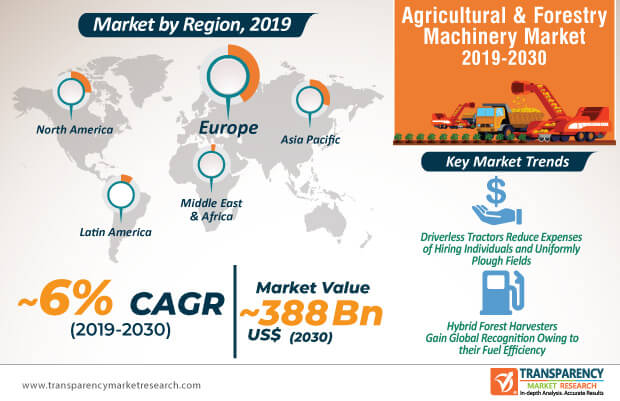
There is a growing demand for low-cost innovations in the agricultural & forestry machinery market. This demand has led to innovations in driverless tractors. For instance, the driverless tractor introduced by Yogesh, a first-year engineering student in Rajasthan, India, is gaining increased recognition in India’s agricultural & forestry machinery market that eliminates the costs associated with hiring a driver. India, being one of the leading economies in Asia Pacific, is contributing toward its highest estimated revenue among all regions by the end of 2030, with a global market value reaching ~US$ 400 Bn. Hence, companies in the market for agricultural & forestry machineries should collaborate with budding engineering talents to further innovate in driverless tractors.
Driverless tractors are also being highly publicized for uniformly ploughing the fields. Even a slight acceleration or sudden brake by the driver results in furrows that are too deep or too shallow. Hence, companies in the agricultural & forestry machinery market should increase the availability of driverless tractors to overcome such challenges of tractor owners.
Hybrid forest harvesters are gaining increased popularity for their fuel efficiency. For instance, Logset Oy— a Finnish forest machine manufacturer, is gaining global recognition for its 8H GTE hybrid harvester that is improving ergonomics for operators in the agricultural & forestry machinery market. As such, companies in the market for agricultural & forestry machineries are participating in international trade events and exhibitions to gain increased visibility and acknowledgment in the global market landscape.
Small design hybrid harvester models are being increasingly talked about in the agricultural & forestry machinery market, after the wheel-based harvesters. Manufacturers in the market for agricultural & forestry machineries are increasing efforts to meet the demand for sustainable, productive, and economical solutions for the modern forestry industry. Hence, they are increasing their R&D efforts to introduce small and compact harvesters with electric motors and supercapacitors that are used for energy storage.
Forests play a crucial role in the procurement of building materials and biomass to deploy renewable energy. Hence, the European Union’s Horizon 2020 research and innovation program, announced the launch of a €3 Mn undertaking for the Forwarder2020 project to strike the right balance between commercial applications and the need to safeguard forest covers. Thus, the trend of sustainable wood production and smart logging is gaining popularity in the agricultural & forestry machinery market. Hence, companies in the market for agricultural & forestry machineries are manufacturing forwarders that help to reduce fuel consumption and lower the impact of the machine on the soil in order to deploy sustainable logging.
Reduced ground pressure under the wheels of forwarders offering high travel speeds are some of the key focus points for equipment manufacturers of the agricultural & forestry machinery market.
Analysts’ Viewpoint
The Association of Equipment Manufacturers (AEM), North America, is urging the government to streamline existing manufacturing programs amidst the COVID-19 crisis. Driverless tractors are being associated with work and cost cuts for farm owners.
The agricultural & forestry machinery market is estimated to progress at a CAGR of ~6% during the forecast period. However, the need for sustainable, productive, and economical machinery solutions are not being met in all countries of the market. Hence, companies should indulge in development programs such as innovate in hybrid harvesters that offer fuel and ergonomic efficiency. Several workers have associated themselves with forestry development projects to buy forwarders that are comfortable and reliable in operation.
The global Agricultural & Forestry Machinery Market is projected to reach a value of US$ 400 Bn by the end of 2029
Key players in the global Agricultural & Forestry Machinery Market include Deere & Company, AGCO Corporation, Caterpillar Inc., Kubota Corporation, Class KGaA mbH, and Mahindra & Mahindra.
Rising food demand has encouraged the adoption of advanced farming and forestry practices to increase crop yields, which is further resulting in the demand for agricultural machinery globally.
The forecast period considered for the Agricultural & Forestry Machinery Market is 2020 - 2029
Asia Pacific is more attractive region for vendors in the Agricultural & Forestry Machinery Market
Section 1. Preface
1.1. Market Definition and Scope
1.2. Market Segmentation
1.3. Key Research Objectives
1.4. Research Highlights
Section 2. Assumptions
Section 3. Research Methodology
Section 4. Executive Summary
Section 5. Market Overview
5.1. Introduction
5.2. Market Dynamics
5.2.1. Drivers
5.2.2. Restraints
5.2.3. Opportunities
5.3. Key Trends Analysis
5.3.1. Demand Side Analysis
5.3.2. Supply Side Analysis
5.4. Key Market Indicators
5.4.1. Overall Agricultural Industry Overview
5.4.2. Overall Forestry Industry Overview
5.5. Porter’s Five Forces Analysis
5.6. Value Chain Analysis
5.7. Industry SWOT Analysis
5.8. Key Trends Analysis
5.8.1. Supplier Side
5.8.2. Demand Side
5.9. Global Agricultural & Forestry Machinery Market Analysis and Forecast, 2020 - 2029
5.9.1. Market Revenue Projections (US$ Mn)
5.9.2. Market Volume Projections (Thousand Units)
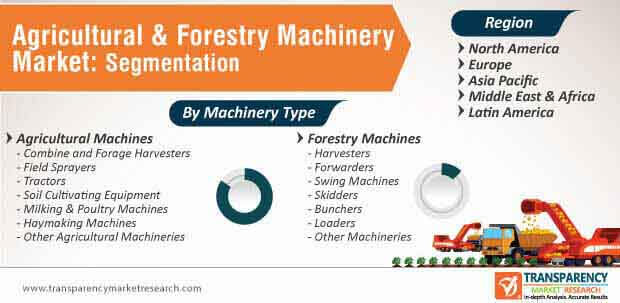
Section 6. Global Agricultural & Forestry Machinery Market Analysis and Forecast, By Machinery Type
6.1. Global Agricultural & Forestry Machinery Market Size (US$ Mn) Forecast, By Machinery Type, 2020 - 2029
6.1.1. Agricultural Machines
6.1.1.1. Combine and forage harvesters
6.1.1.2. Field Sprayers
6.1.1.3. Tractors
6.1.1.4. Soil cultivating equipment
6.1.1.5. Milking & poultry machines
6.1.1.6. Haymaking machines
6.1.1.7. Other Agricultural Machineries
6.1.2. Forestry Machines
6.1.2.1. Harvesters
6.1.2.2. Forwarders
6.1.2.3. Swing Machines
6.1.2.4. Skidders
6.1.2.5. Bunchers
6.1.2.6. Loaders
6.1.2.7. Other Machineries
6.2. Incremental Opportunity, By Machinery Type
Section 7. Global Agricultural & Forestry Machinery Market Analysis and Forecast, By Region
7.1. Global Agricultural & Forestry Machinery Market Size (US$ Mn & Thousand Units) Forecast, By Region, 2020 - 2029
7.1.1. North America
7.1.2. Europe
7.1.3. Asia Pacific
7.1.4. Middle East & Africa
7.1.5. Latin America
7.2. Incremental Opportunity, By Region
Section 8. North America Agricultural & Forestry Machinery Market Analysis and Forecast
8.1. Regional Snapshot
8.2. Key Trends Analysis
8.2.1. Supplier Side
8.2.2. Demand Side
8.3. Agricultural & Forestry Machinery Market Size (US$ Mn & Thousand Units) Forecast, By Machinery Type, 2020 - 2029
8.3.1. Agricultural Machines
8.3.1.1. Combine and forage harvesters
8.3.1.2. Field Sprayers
8.3.1.3. Tractors
8.3.1.4. Soil cultivating equipment
8.3.1.5. Milking & poultry machines
8.3.1.6. Haymaking machines
8.3.1.7. Other Agricultural Machineries
8.3.2. Forestry Machines
8.3.2.1. Harvesters
8.3.2.2. Forwarders
8.3.2.3. Swing Machines
8.3.2.4. Skidders
8.3.2.5. Bunchers
8.3.2.6. Loaders
8.3.2.7. Other Machineries
8.4. Agricultural & Forestry Machinery Market Size (US$ Mn & Thousand Units) Forecast, By Country & Sub-region, 2020 - 2029
8.4.1. U.S.
8.4.2. Canada
8.4.3. Rest of North America
8.5. Incremental Opportunity Analysis
Section 9. Europe Agricultural & Forestry Machinery Market Analysis and Forecast
9.1. Regional Snapshot
9.2. Key Trends Analysis
9.2.1. Supplier Side
9.2.2. Demand Side
9.3. Agricultural & Forestry Machinery Market Size (US$ Mn & Thousand Units) Forecast, By Machinery Type, 2020 - 2029
9.3.1. Agricultural Machines
9.3.1.1. Combine and forage harvesters
9.3.1.2. Field Sprayers
9.3.1.3. Tractors
9.3.1.4. Soil cultivating equipment
9.3.1.5. Milking & poultry machines
9.3.1.6. Haymaking machines
9.3.1.7. Other Agricultural Machineries
9.3.2. Forestry Machines
9.3.2.1. Harvesters
9.3.2.2. Forwarders
9.3.2.3. Swing Machines
9.3.2.4. Skidders
9.3.2.5. Bunchers
9.3.2.6. Loaders
9.3.2.7. Other Machineries
9.4. Agricultural & Forestry Machinery Market Size (US$ Mn & Thousand Units) Forecast, By Country & Sub-region, 2020 - 2029
9.4.1. Germany
9.4.2. France
9.4.3. Italy
9.4.4. Spain
9.4.5. U.K.
9.4.6. Benelux
9.4.7. Nordic
9.4.8. Russia
9.4.9. Poland
9.4.10. Rest of Europe
9.5. Incremental Opportunity Analysis
Section 10. Asia Pacific Agricultural & Forestry Machinery Market Analysis and Forecast
10.1. Key Trends Analysis
10.1.1. Supplier Side
10.1.2. Demand Side
10.2. Agricultural & Forestry Machinery Market Size (US$ Mn & Thousand Units) Forecast, By Machinery Type, 2020 - 2029
10.2.1. Agricultural Machines
10.2.1.1. Combine and forage harvesters
10.2.1.2. Field Sprayers
10.2.1.3. Tractors
10.2.1.4. Soil cultivating equipment
10.2.1.5. Milking & poultry machines
10.2.1.6. Haymaking machines
10.2.1.7. Other Agricultural Machineries
10.2.2. Forestry Machines
10.2.2.1. Harvesters
10.2.2.2. Forwarders
10.2.2.3. Swing Machines
10.2.2.4. Skidders
10.2.2.5. Bunchers
10.2.2.6. Loaders
10.2.2.7. Other Machineries
10.3. Agricultural & Forestry Machinery Market Size (US$ Mn & Thousand Units) Forecast, By Country & Sub-region, 2020 - 2029
10.3.1. China
10.3.2. India
10.3.3. ASEAN
10.3.4. South Korea
10.3.5. Oceania
10.3.6. Japan
10.4. Incremental Opportunity Analysis
Section 11. Middle East & Africa Agricultural & Forestry Machinery Market Analysis and Forecast
11.1. Regional Snapshot
11.2. Key Trends Analysis
11.2.1. Supplier Side
11.2.2. Demand Side
11.3. Agricultural & Forestry Machinery Market Size (US$ Mn & Thousand Units) Forecast, By Machinery Type, 2020 - 2029
11.3.1. Agricultural Machines
11.3.1.1. Combine and forage harvesters
11.3.1.2. Field Sprayers
11.3.1.3. Tractors
11.3.1.4. Soil cultivating equipment
11.3.1.5. Milking & poultry machines
11.3.1.6. Haymaking machines
11.3.1.7. Other Agricultural Machineries
11.3.2. Forestry Machines
11.3.2.1. Harvesters
11.3.2.2. Forwarders
11.3.2.3. Swing Machines
11.3.2.4. Skidders
11.3.2.5. Bunchers
11.3.2.6. Loaders
11.3.2.7. Other Machineries
11.4. Agricultural & Forestry Machinery Market Size (US$ Mn & Thousand Units) Forecast, By Country & Sub-region, 2020- 2029
11.4.1. GCC
11.4.2. South Africa
11.4.3. Turkey
11.4.4. Iran
11.4.5. Israel
11.4.6. Rest of Middle East & Africa
11.5. Incremental Opportunity Analysis
Section 12. Latin America Agricultural & Forestry Machinery Market Analysis and Forecast
12.1. Regional Snapshot
12.2. Key Trends Analysis
12.2.1. Supplier Side
12.2.2. Demand Side
12.3. Agricultural & Forestry Machinery Market Size (US$ Mn & Thousand Units) Forecast, By Machinery Type, 2020 - 2029
12.3.1. Agricultural Machines
12.3.1.1. Combine and forage harvesters
12.3.1.2. Field Sprayers
12.3.1.3. Tractors
12.3.1.4. Soil cultivating equipment
12.3.1.5. Milking & poultry machines
12.3.1.6. Haymaking machines
12.3.1.7. Other Agricultural Machineries
12.3.2. Forestry Machines
12.3.2.1. Harvesters
12.3.2.2. Forwarders
12.3.2.3. Swing Machines
12.3.2.4. Skidders
12.3.2.5. Bunchers
12.3.2.6. Loaders
12.3.2.7. Other Machineries
12.4. Agricultural & Forestry Machinery Market Size (US$ Mn & Thousand Units) Forecast, By Country & Sub-region, 2020 –2029
12.4.1. Brazil
12.4.2. Mexico
12.4.3. Chile
12.4.4. Peru
12.4.5. Argentina
12.4.6. Rest of Latin America
12.5. Incremental Opportunity Analysis
Section 13. Competition Landscape
13.1. Market Player – Competition Dashboard
13.2. Company Profiles (Details – Company Overview, Sales Area/Geographical Presence, Revenue,
13.2.1. Deere & Company
13.2.1.1. Company Overview
13.2.1.2. Sales Area/Geographical Presence
13.2.1.3. Revenue
13.2.2. AGCO Corporation
13.2.2.1. Company Overview
13.2.2.2. Sales Area/Geographical Presence
13.2.2.3. Revenue
13.2.3. Komatsu Ltd.
13.2.3.1. Company Overview
13.2.3.2. Sales Area/Geographical Presence
13.2.3.3. Revenue
13.2.4. Caterpillar Inc.
13.2.4.1. Company Overview
13.2.4.2. Sales Area/Geographical Presence
13.2.4.3. Revenue
13.2.5. Alamo Group, Inc.
13.2.5.1. Company Overview
13.2.5.2. Sales Area/Geographical Presence
13.2.5.3. Revenue
13.2.6. Mahindra & Mahindra Ltd.
13.2.6.1. Company Overview
13.2.6.2. Sales Area/Geographical Presence
13.2.6.3. Revenue
13.2.7. J C Bamford Excavators Ltd.
13.2.7.1. Company Overview
13.2.7.2. Sales Area/Geographical Presence
13.2.7.3. Revenue
13.2.8. Kesla Oyj
13.2.8.1. Company Overview
13.2.8.2. Sales Area/Geographical Presence
13.2.8.3. Revenue
13.2.9. Ponsse Oyj
13.2.9.1. Company Overview
13.2.9.2. Sales Area/Geographical Presence
13.2.9.3. Revenue
13.2.10. Kubota Corporation
13.2.10.1. Company Overview
13.2.10.2. Sales Area/Geographical Presence
13.2.10.3. Revenue
13.2.11. EXEL Industries SA
13.2.11.1. Company Overview
13.2.11.2. Sales Area/Geographical Presence
13.2.11.3. Revenue
13.2.12. Tigercat International Inc.
13.2.12.1. Company Overview
13.2.12.2. Sales Area/Geographical Presence
13.2.12.3. Revenue
13.2.13. Escorts Group
13.2.13.1. Company Overview
13.2.13.2. Sales Area/Geographical Presence
13.2.13.3. Revenue
13.2.14. CNH Industrial N.V.
13.2.14.1. Company Overview
13.2.14.2. Sales Area/Geographical Presence
13.2.14.3. Revenue
13.2.15. Iseki & Co. Ltd.
13.2.15.1. Company Overview
13.2.15.2. Sales Area/Geographical Presence
13.2.15.3. Revenue
13.2.16. SDF Group
13.2.16.1. Company Overview
13.2.16.2. Sales Area/Geographical Presence
13.2.16.3. Revenue
13.2.17. CLAAS KGaA mbH
13.2.17.1. Company Overview
13.2.17.2. Sales Area/Geographical Presence
13.2.17.3. Revenue
13.2.18. The Heico Companies LLC
13.2.18.1. Company Overview
13.2.18.2. Sales Area/Geographical Presence
13.2.18.3. Revenue
13.2.19. AB Volvo
13.2.19.1. Company Overview
13.2.19.2. Sales Area/Geographical Presence
13.2.19.3. Revenue
13.2.20. Rottne Industri AB
13.2.20.1. Company Overview
13.2.20.2. Sales Area/Geographical Presence
13.2.20.3. Revenue
Section 14. Key Takeaway
List of Tables
Table 1: Global Agricultural & Forestry Machinery Market Value Size & Forecast, Machinery Type, US$ Mn,2020-2029
Table 2: Global Agricultural & Forestry Machinery Market Volume Size & Forecast, Machinery Type, Thousand Units,2020-2029
Table 3: Global Agricultural & Forestry Machinery Market Value Size & Forecast, By Region, US$ Mn,2020-2029
Table 4: Global Agricultural & Forestry Machinery Market Volume Size & Forecast, By Region, Thousand Units, 2020-2029
Table 5: North America Agricultural & Forestry Machinery Market Value Size & Forecast, Machinery Type, US$ Mn,2020-2029
Table 6: North America Agricultural & Forestry Machinery Market Volume Size & Forecast, Machinery Type, Thousand Units, 2020-2029
Table 7: North America Agricultural & Forestry Machinery Market Value Size & Forecast, By Country, US$ Mn,2020-2029
Table 8: North America Agricultural & Forestry Machinery Market Volume Size & Forecast, By Country, Thousand Units,2020-2029
Table 9: Latin America Agricultural & Forestry Machinery Market Value Size & Forecast, Machinery Type, US$ Mn,2020-2029
Table 10: Latin America Agricultural & Forestry Machinery Market Volume Size & Forecast, Machinery Type, Thousand Units, 2020-2029
Table 11: Latin America Agricultural & Forestry Machinery Market Value Size & Forecast, By Country, US$ Mn,2020-2029
Table 12: Latin America Agricultural & Forestry Machinery Market Volume Size & Forecast, By Country, Thousand Units,2020-2029
Table 13: Europe Agricultural & Forestry Machinery Market Value Size & Forecast, Machinery Type, US$ Mn,2020-2029
Table 14: Europe Agricultural & Forestry Machinery Market Volume Size & Forecast, Machinery Type, Thousand Units,2020-2029
Table 15: Europe Agricultural & Forestry Machinery Market Value Size & Forecast, By Country, US$ Mn,2020-2029
Table 16: Europe Agricultural & Forestry Machinery Market Volume Size & Forecast, By Country, Thousand Units, 2020-2029
Table 17: Asia Pacific Agricultural & Forestry Machinery Market Value Size & Forecast, Machinery Type, US$ Mn,2020-2029
Table 18: Asia Pacific Agricultural & Forestry Machinery Market Volume Size & Forecast, Machinery Type, Thousand Units, 2020-2029
Table 19: Asia Pacific Agricultural & Forestry Machinery Market Value Size & Forecast, By Country, US$ Mn,2020-2029
Table 20: Asia Pacific Agricultural & Forestry Machinery Market Volume Size & Forecast, By Country, Thousand Units,2020-2029
Table 21: Middle East & Africa Agricultural & Forestry Machinery Market Value Size & Forecast, Machinery Type, US$ Mn,2020-2029
Table 22: Middle East & Africa Agricultural & Forestry Machinery Market Volume Size & Forecast, Machinery Type, Thousand Units, 2020-2029
Table 23: Middle East & Africa Agricultural & Forestry Machinery Market Value Size & Forecast, By Country, US$ Mn,2020-2029
Table 24: Middle East & Africa Agricultural & Forestry Machinery Market Volume Size & Forecast, By Country, Thousand Units, 2020-2029
List of Figure
Figure 1: Global Agricultural & Forestry Machinery Market Projections by Machine Type, Thousand Units, 2020-2029
Figure 2: Global Agricultural & Forestry Machinery Market Projections by Machine Type, US$ Mn, 2020-2029
Figure 3: Global Agricultural & Forestry Machinery Market, Market Attractiveness, by Machine Type, US$ Mn, 2020-2029
Figure 4: Global Agricultural & Forestry Machinery Market Projections by Region, Thousand Units, 2020-2029
Figure 5: Global Agricultural & Forestry Machinery Market Projections by Region, US$ Mn, 2020-2029
Figure 6: Global Agricultural & Forestry Machinery Market, Market Attractiveness, by Region, US$ Mn, 2020-2029
Figure 7: North America Agricultural & Forestry Machinery Market Projections by Machine Type, Thousand Units, 2020-2029
Figure 8: North America Agricultural & Forestry Machinery Market Projections by Machine Type, US$ Mn, 2020-2029
Figure 9: North America Agricultural & Forestry Machinery Market, Market Attractiveness, by Machine Type, US$ Mn, 2020-2029
Figure 10: North America Agricultural & Forestry Machinery Market Projections by Country, Thousand Units, 2020-2029
Figure 11: North America Agricultural & Forestry Machinery Market Projections by Country, US$ Mn, 2020-2029
Figure 12: North America Agricultural & Forestry Machinery Market, Market Attractiveness, by Country, US$ Mn, 2020-2029
Figure 13: Latin America Agricultural & Forestry Machinery Market Projections by Machine Type, Thousand Units, 2020-2029
Figure 14: Latin America Agricultural & Forestry Machinery Market Projections by Machine Type, US$ Mn, 2020-2029
Figure 15: Latin America Agricultural & Forestry Machinery Market, Market Attractiveness, by Machine Type, US$ Mn, 2020-2029
Figure 16: Latin America Agricultural & Forestry Machinery Market Projections by Country, Thousand Units, 2020-2029
Figure 17: Latin America Agricultural & Forestry Machinery Market Projections by Country, US$ Mn, 2020-2029
Figure 18: Latin America Agricultural & Forestry Machinery Market, Market Attractiveness, by Country, US$ Mn, 2020-2029
Figure 19: Europe Agricultural & Forestry Machinery Market Projections by Machine Type, Thousand Units, 2020-2029
Figure 20: Europe Agricultural & Forestry Machinery Market Projections by Machine Type, US$ Mn, 2020-2029
Figure 21: Europe Agricultural & Forestry Machinery Market, Market Attractiveness, by Machine Type, US$ Mn, 2020-2029
Figure 22: Europe Agricultural & Forestry Machinery Market Projections by Country, Thousand Units, 2020-2029
Figure 23: Europe Agricultural & Forestry Machinery Market Projections by Country, US$ Mn, 2020-2029
Figure 24: Europe Agricultural & Forestry Machinery Market, Market Attractiveness, by Country, US$ Mn, 2020-2029
Figure 25: Asia Pacific Agricultural & Forestry Machinery Market Projections by Machine Type, Thousand Units, 2020-2029
Figure 26: Asia Pacific Agricultural & Forestry Machinery Market Projections by Machine Type, US$ Mn, 2020-2029
Figure 27: Asia Pacific Agricultural & Forestry Machinery Market, Market Attractiveness, by Machine Type, US$ Mn, 2020-2029
Figure 28: Asia Pacific Agricultural & Forestry Machinery Market Projections by Country, Thousand Units, 2020-2029
Figure 29: Asia Pacific Agricultural & Forestry Machinery Market Projections by Country, US$ Mn, 2020-2029
Figure 30: Asia Pacific Agricultural & Forestry Machinery Market, Market Attractiveness, by Country, US$ Mn, 2020-2029
Figure 31: Middle East & Africa Agricultural & Forestry Machinery Market Projections by Machine Type, Thousand Units, 2020-2029
Figure 32: Middle East & Africa Agricultural & Forestry Machinery Market Projections by Machine Type, US$ Mn, 2020-2029
Figure 33: Middle East & Africa Agricultural & Forestry Machinery Market, Market Attractiveness, by Machine Type, US$ Mn, 2020-2029
Figure 34: Middle East & Africa Agricultural & Forestry Machinery Market Projections by Country, Thousand Units, 2020-2029
Figure 35: Middle East & Africa Agricultural & Forestry Machinery Market Projections by Country, US$ Mn, 2020-2029
Figure 36: Middle East & Africa Agricultural & Forestry Machinery Market, Market Attractiveness, by Country, US$ Mn, 2020-2029
Copyright © Transparency Market Research, Inc. All Rights reserved
Trust Online


Agricultural & Forestry Machinery Market
